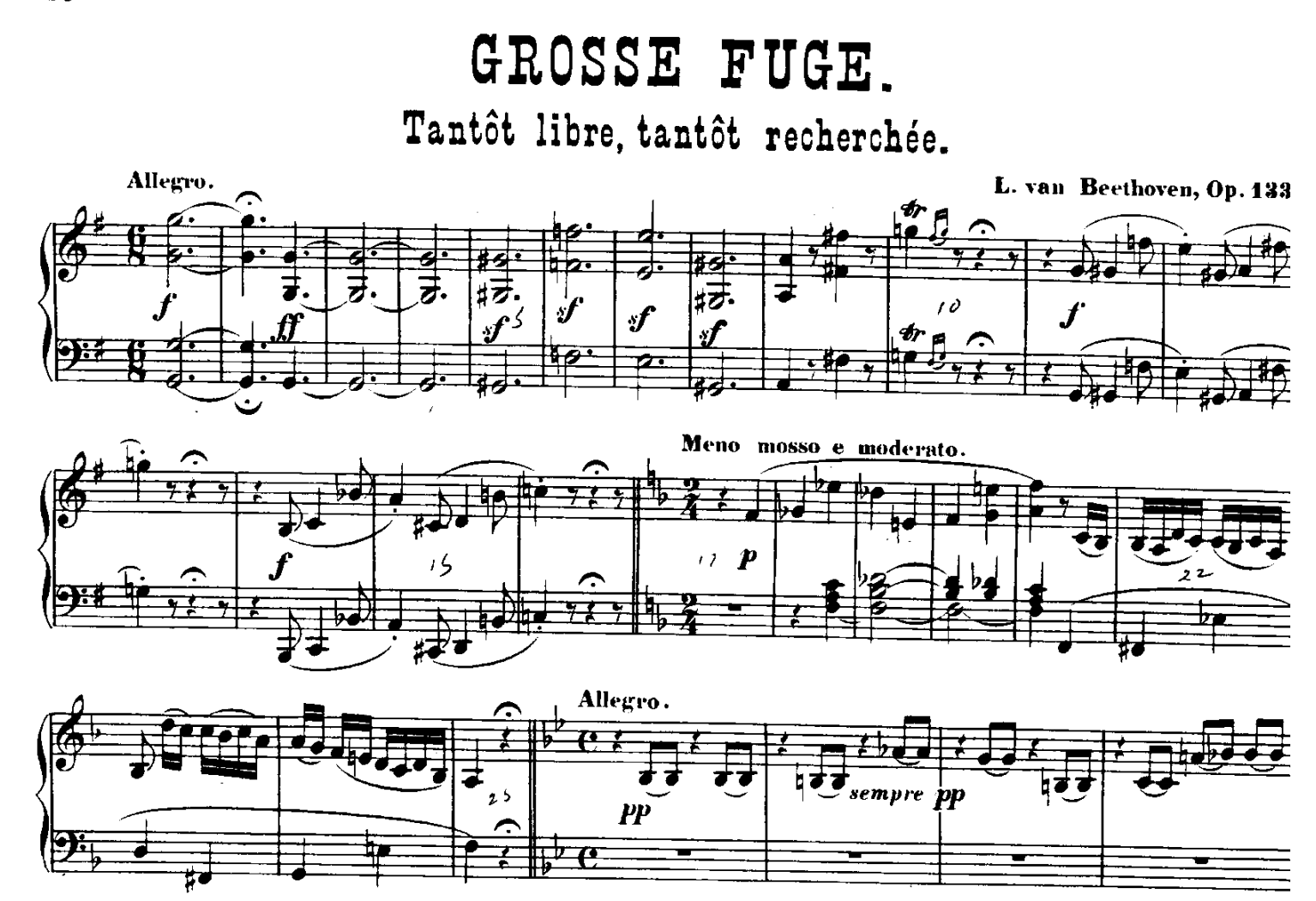
Ludwig van Beethoven, a musical genius of unparalleled stature, left an indelible mark on the world of classical music. Among his many masterpieces, the Great Fugue, Op. 133 stands out as a testament to his unparalleled creativity and innovation. Originally composed as the final movement of his String Quartet No. 13, Beethoven later transcribed it for piano, allowing a broader audience to experience the intensity and complexity of this remarkable work.
The Great Fugue is a musical journey that demands both technical prowess and a deep understanding of Beethoven’s compositional intricacies. As a pianist ventures into interpreting this masterpiece, they are met with a tapestry of intertwining voices, challenging counterpoint, and dynamic contrasts that showcase Beethoven’s unparalleled ability to push the boundaries of musical expression.
The skill level required to tackle Beethoven’s Great Fugue is undeniably advanced. This composition is not for the faint of heart, demanding a high level of technical proficiency, finger agility, and interpretive skill. Pianists who embark on this musical adventure should possess a thorough understanding of polyphony and a keen sensitivity to the emotional nuances embedded in each note.