
Grieg – Lyric Pieces Op.71

Home » Piano Sheet Music » Grieg – Lyric Pieces Op.71

“Lyric Pieces, Op. 71” is a collection of piano pieces composed by the Norwegian composer Edvard Grieg. This set of compositions was published in 1901, which was relatively late in Grieg’s career. It consists of six short pieces, each with its unique character and charm. These pieces, like many of Grieg’s works, are known for their lyrical melodies and nationalistic themes, reflecting the composer’s deep connection to Norwegian folk music.

Here is a brief overview of the pieces in Op. 71:

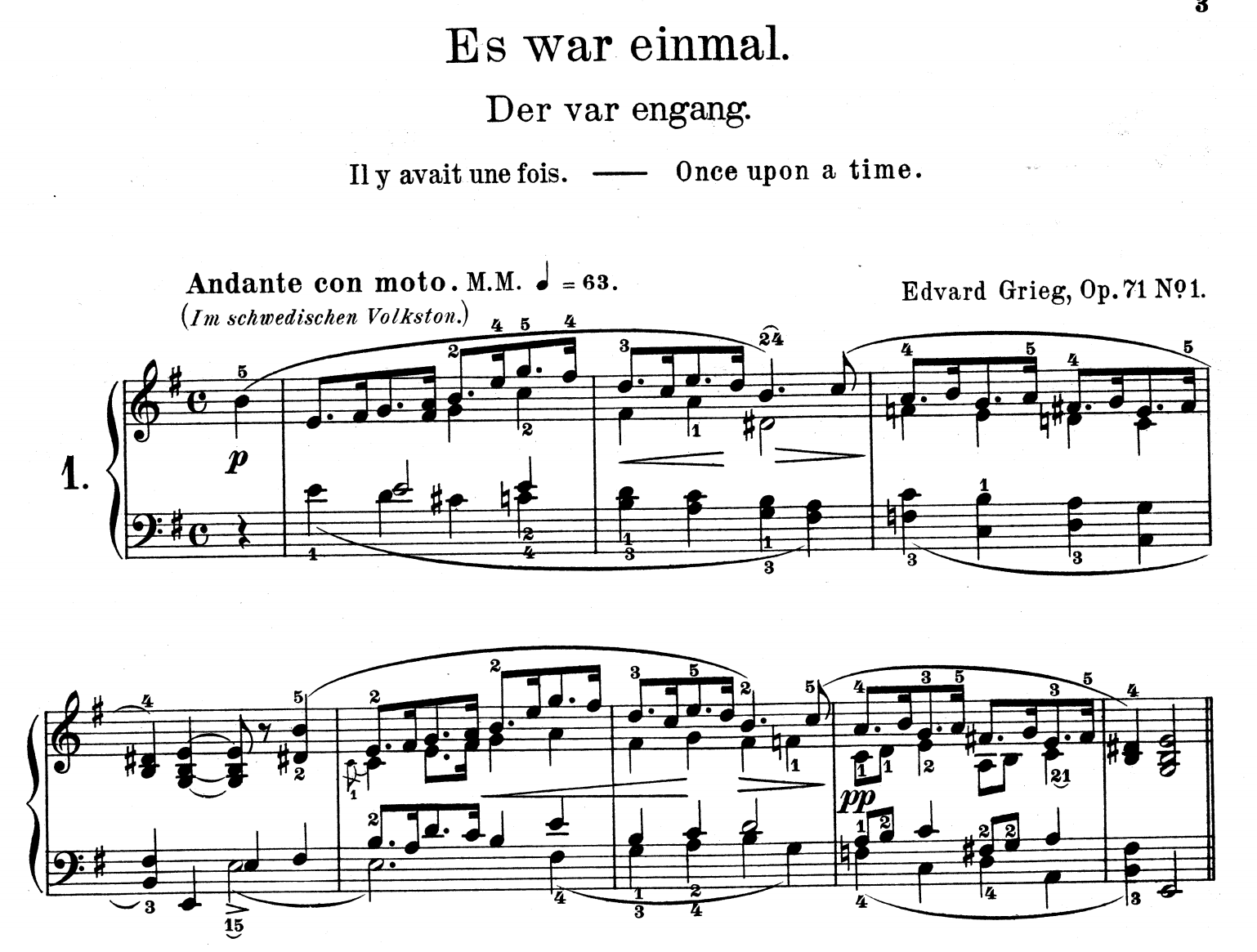
  1. “Det var engang” (Once upon a time) – This piece has a nostalgic and dreamy quality, capturing the essence of a fairy tale or a distant memory.
  2. “Sommerfugl” (Butterfly) – “Sommerfugl” is a delicate and whimsical piece that evokes the light and graceful flight of a butterfly.
  3. “Småtrold” (Puck) – This piece has a playful and mischievous character, inspired by the mythical creature “Puck” from Shakespeare’s “A Midsummer Night’s Dream.”
  4. “Sangen har ordet” (The Singer’s Voice) – This piece is a lyrical and introspective composition, emphasizing the importance of the singer’s voice.
  5. “For dine føtter” (At Your Feet) – “For dine føtter” is a gentle and heartfelt piece that seems to convey a sense of devotion and humility.
  6. “Bådnlåt” (At the Cradle) – The final piece in Op. 71 is a tender lullaby, evoking a scene of a mother gently rocking her child to sleep.

The skill level required to play Grieg’s Lyric Pieces Op. 71 varies across the six compositions. “Det var engang” and “Sommeraften” are relatively approachable for intermediate-level pianists. These pieces demand a nuanced touch and an understanding of phrasing to convey the nostalgic and lyrical qualities embedded in Grieg’s writing.

“Småtrold” and “Skovstier” introduce a slightly higher level of difficulty, requiring more advanced finger dexterity and control. Pianists exploring these pieces will encounter brisk tempos, playful rhythms, and dynamic contrasts that contribute to the overall charm of Grieg’s work.
PREVIEW

Free Piano Sheet Music

Kabalevsky’s Piano Sonata No. 3, Op. 46, is a part of his series of piano sonatas known for their accessibility and tuneful melodies. This particular sonata maintains a lively and engaging character throughout its three movements. Kabalevsky’s music often features lively and rhythmic elements. Pay close attention to rhythmic precision, particularly in the first and third movements, to capture the …

Tchaikovsky’s Valse Sentimentale, Op. 51 No. 6, is a jewel of late-Romantic piano music, its poignant melody and delicate textures capturing the essence of a bittersweet waltz. But what if this tender serenade found a new voice, a whisper instead of a sigh, on the ivory keys of the piano? Gone is the orchestral cushion, the lush support of strings …

Mozart’s Piano Sonata No 12 in F major, K. 332 is a delightful and vibrant piece, often referred to as the “Sunshine Sonata” for its bright and cheerful character. Remains a popular choice for pianists of all levels, offering both technical challenges and musical rewards. Three movements, each displaying Mozart’s signature blend of charm and complexity: In terms of skill …

Among the Finnish composer Jean Sibelius’ later works, a set of five piano pieces titled “The Trees” stands out for its evocative simplicity. The fifth piece, Op. 75 No. 5 titled “The Spruce”, is a captivating miniature that captures the essence of its namesake with a blend of Nordic melancholy and serene beauty. Now, you can bring this musical forest …

“Dance of the Knights,” also known as “Montagues and Capulets,” is one of the most striking and recognizable movements from Sergei Prokofiev’s ballet “Romeo and Juliet” Op.64 The piano adaptation captures the grandeur and intensity of the original orchestral version while allowing for a solo performance. The distinctive 5/4 time signature adds an element of rhythmic complexity. Ensure a strong …

Bach’s Badinerie, nestled within his Orchestral Suite No. 2 in B minor, isn’t just a piece of music; it’s a sunbeam caught in notes, a playful melody dancing across the keyboard. While often associated with the grand orchestra, this effervescent piece blossoms anew when translated to the solo piano, transforming the ivory keys into a sun-drenched stage for a musical …

Ralph Vaughan Williams‘ “The Lark Ascending“ is a cornerstone of English music, a soaring melody that captures the essence of a skylark’s song and its ascent into the heavens. While most familiar in its orchestral form, the piece also exists in a charming arrangement for violin and piano, offering a unique and intimate experience for both performers and listeners. Composed …

Carl Philipp Emanuel Bach, the legendary “Empfindsamer” son of Johann Sebastian Bach, gifted the world with a treasure trove of captivating keyboard music. Amongst these gems shine the Württemberg Sonatas, six sonatas that offer pianists of all levels a chance to delve into the expressive depths of the Baroque and early Classical style. Named after the patron who inspired their …

Composed in the 18th century, the Minuet in G is part of Beethoven’s collection of six minuets for piano, WoO 10. Although originally attributed to Johann Sebastian Bach, modern scholars have confirmed Beethoven’s authorship. The piece exudes elegance and grace, featuring a charming melody accompanied by a dance-like rhythm. Its simplicity and clarity make it an ideal choice for pianists …

Imagine yourself bathed in the soft glow of the stage lights, fingers skimming the ivories as Mozart‘s timeless opera “Le Nozze di Figaro” (K.492) comes alive under your hands. The infectious Overture bursts forth, its vibrant crescendos and playful counterpoint painting a picture of bustling Seville on a whirlwind wedding day. This isn’t just sheet music; it’s a portal to …