810
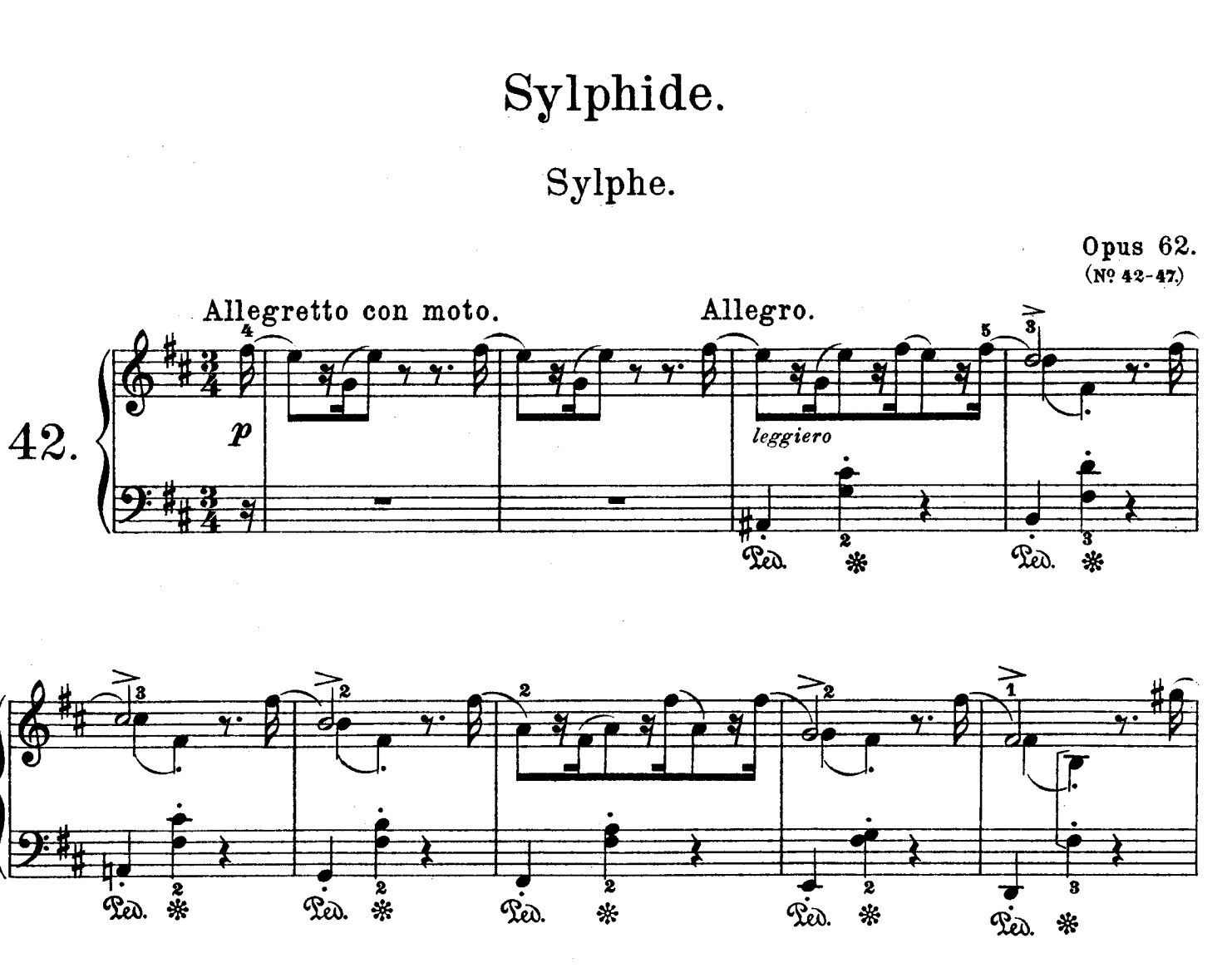
“Lyric Pieces, Op. 62” is a set of piano compositions composed by the Norwegian composer Edvard Grieg. These pieces were published in 1895 and are a part of his larger collection of “Lyric Pieces,” which are known for their evocative storytelling through music.
Here is an overview of the pieces in Op. 62:
- “Solveigs sang” (Solveig’s Song) – “Solveigs sang” is perhaps one of Grieg’s most famous compositions. It’s named after a character from Henrik Ibsen’s play “Peer Gynt.” This piece is a lyrical and emotive portrayal of the character Solveig, conveying a sense of love, longing, and tenderness.
- “Gangar” (Peasant’s Song) – This piece has a rustic and folk-like character, evoking the lively and rhythmic tunes of Norwegian peasants.
- “Til våren” (To Spring) – “Til våren” also appears in Op. 65, and it’s celebrated for its depiction of the arrival of spring, with its optimistic and vibrant atmosphere.
- “Salong” (Salon) – “Salong” has an elegant and salon-style character, reflecting the fashionable and refined atmosphere of a salon or drawing-room gathering.
- “Trolltog” (March of the Trolls) – “Trolltog” is a whimsical and imaginative piece, transporting the listener to a world of trolls and goblins with its playful and mischievous melodies.
- “Småtrold” (Puck) – “Småtrold” also appears in Op. 68, and it conveys a sense of playfulness and mischief, much like the character Puck from Shakespeare’s “A Midsummer Night’s Dream.”
Intermediate pianists will find Grieg’s Op. 62 accessible yet rewarding. The technical demands are moderate, allowing players to focus on the emotive and narrative aspects of the music. The use of contrasting dynamics, phrasing, and nuanced expression is key to capturing the essence of Grieg’s intentions.