
Twinkle Twinkle Little Star

Home » Violin Sheet Music » Easy Violin Sheet Music » Twinkle Twinkle Little Star

The melody for “Twinkle, Twinkle, Little Star” is also the same as that of the French nursery rhyme “Ah! vous dirai-je, maman” and Wolfgang Amadeus Mozart famously used this melody for his variations for piano, K. 265/300e. The simple and repetitive nature of the rhyme makes it a favorite for young children and is often one of the first songs they learn to sing. This one is the arrangement for easy violin beginner sheet music.
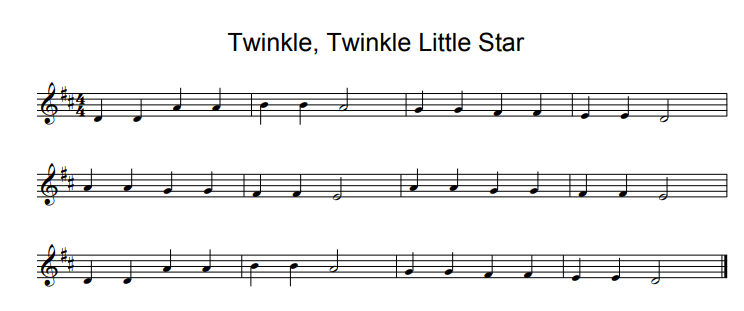
PREVIEW

Free Violin Sheet Music

Handel’s Rinaldo, with its heroic aria “Lascia ch’io pianga,” might be better known for its operatic grandeur, but within its score lies a treasure for violinists: a wealth of virtuosic passages and expressive melodies just waiting to be unleashed. While not originally conceived for the violin, adapting Rinaldo’s vocal gems for the instrument can be a thrilling and rewarding challenge, …

Schumann’s Symphony No. 4, Op. 120, is a splendid example of Schumann’s romantic symphonic style. Its history of revisions and its rich, emotional content make it an intriguing piece for both performers and listeners. The first movement opens with a rich and expressive melody, demonstrating Schumann’s melodic prowess. The Romanza is lyrical and introspective, providing a stark contrast to the …

This cantata was composed by Johann Sebastian Bach in the early 18th century, likely in 1718. It is categorized as a solo cantata, which means it features a single vocal soloist accompanied by a small ensemble. The cantata is structured into several movements, including recitatives and arias. The music is filled with dance-like rhythms and intricate vocal lines that convey …

Mozart‘s Symphony No. 27 in G Major, K. 199, is a vibrant gem in his orchestral crown. Composed in 1773, at the tender age of 17, it’s a testament to his precocious talent and enduring musicality. For violinists, playing this symphony is a chance to dance through sunshine-filled melodies, engage in playful counterpoint, and experience the pure joy of Mozartian …

Tchaikovsky’s Symphony No. 6 in B minor, Op. 74, also known as the “Pathétique Symphony” which he composed during a tumultuous period in his life. It’s often described as autobiographical, reflecting the composer’s inner struggles and personal turmoil. The symphony consists of four movements: Performing Tchaikovsky’s Symphony No. 6 on the violin is a formidable task that necessitates advanced technical …

“Night on Bald Mountain” (Ночь на Лысой горе), also known as “Night on Bare Mountain,” is one of Modest Mussorgsky’s most famous and evocative compositions. This tone poem, written in 1867, captures a vivid and macabre scene of a witches’ sabbath on St. John’s Eve atop a bald mountain. Mussorgsky drew inspiration from Russian folklore and legends, particularly the idea …

“Czardas” is a well-known composition for violin and orchestra by Italian composer Vittorio Monti. It is one of Monti’s most famous works and is often performed in both classical and folk music settings. “Czardas” is characterized by its fiery and virtuosic violin passages, making it a favorite among violinists for showcasing their technical skills. The piece is named after the …

Bartók’s “For Children” (Sz. 42) is a delightful collection of short piano pieces that has captivated young musicians for generations. But did you know this enchanting set can also be a wonderful introduction to the violin for beginners? With its simple melodies, catchy rhythms, and playful spirit, “For Children” offers violinists a fun and accessible way to develop their skills …

The Prelude serves as an introduction to “Tristan und Isolde,” setting the stage for the opera’s dramatic love story. It leads directly into the first act, where the story unfolds. Due to its beauty and significance, the Prelude is often performed in concert settings as a standalone piece. It has become one of the most iconic and frequently performed orchestral …

Sarasate’s Zigeunerweisen, Gypsy Airs Op 20 , is a tempestuous masterpiece, a whirlwind of virtuosic violin writing often associated with the fiery passion and flamboyant flair of Gypsy music. But what if this passionate dance took to the stage not with a full orchestra, but with the intimate voice of a solo violin? Playing Zigeunerweisen on violin is more than …

“The Four Seasons” (Italian: “Le quattro stagioni”) is a set of four violin concertos composed by Antonio Vivaldi, an Italian Baroque composer. Each concerto in the set represents a different season of the year, and “Winter” (Italian: “L’inverno”) is one of the four concertos. The full title of this concerto is “Concerto No. 4 in F minor, Op. 8, RV …

Ignacy Jan Paderewski’s Piano Concerto in A minor, Op. 17, is a testament to his contributions to both the world of music and Polish history. He played a crucial role in Polish politics and diplomacy in the early 20th century, and his music continues to be celebrated for its Romantic beauty and pianistic brilliance. The skill level required for a …

Composed in the 19th century, this piece showcases Wieniawski’s brilliance as a violinist and composer. Wieniawski’s Fantaisie Brillante is based on themes from Charles Gounod’s opera “Faust.” It was a common practice in the Romantic era for composers to create virtuosic works based on popular operatic themes. The piece weaves together various themes from “Faust,” allowing the violinist to explore …

Symphony No. 6 in D major, “Le Matin” (Morning) was composed by Haydn in 1761-1763, during his early years with the Esterházy court. The nickname “Le Matin” suggests a morning or sunrise theme, though it is not entirely clear why this nickname was attached to the symphony. Some believe it could be due to the bright and cheerful character of …

Mahler’s “Kindertotenlieder” (Songs on the Death of Children) is known for its exquisite and deeply emotional music, characterized by lush orchestration and profound vocal lines. The cycle is often performed by a mezzo-soprano or baritone, and it’s a deeply moving experience for both performers and listeners. Nun will die Sonn’ so hell aufgeh’n (Now the sun wants to rise as …