
Gade – Christmas Tree Op.36 No.2

Home » Piano Sheet Music » Gade – Christmas Tree Op.36 No.2

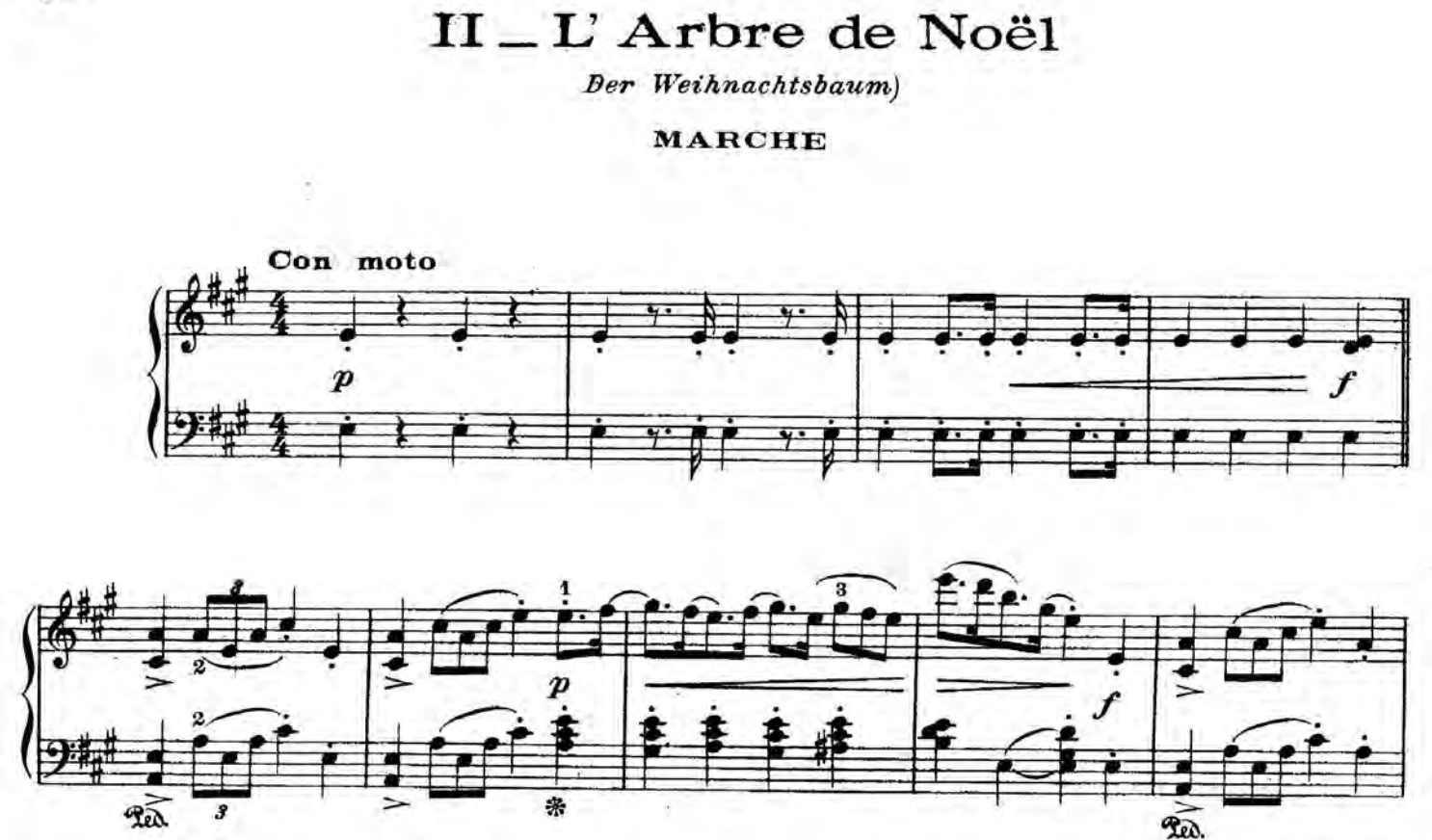
Niels Gade, a Danish composer and conductor of the Romantic era, created the “Christmas Tree” as part of a set of piano pieces dedicated to his children. Op.36 No.2 is particularly charming, with its playful melodies and evocative harmonies that transport listeners to a winter wonderland adorned with twinkling lights and festive decorations. The piece is characterized by its joyous character, making it a perfect addition to any holiday piano repertoire.

While Gade’s “Christmas Tree” is accessible to a wide range of pianists, it is generally considered suitable for intermediate players. The piece requires a moderate level of technical proficiency, including a comfortable command of basic hand coordination, familiarity with common piano textures, and a reasonable understanding of musical expression. Pianists with a solid foundation in key signatures, basic ornamentation, and dynamics will find this piece both enjoyable and rewarding.
PREVIEW

Christmas Sheet Music

“Jesus Christ the Apple Tree” is a popular English hymn that dates back to the 18th century. The lyrics of this hymn are often attributed to an unknown author. It is sometimes referred to as “The Apple-Tree Song” or simply “The Apple Tree.” The hymn uses the metaphor of an apple tree to represent Jesus Christ, drawing parallels between the …

The melody used in “Joy to the World” is actually from Handel’s Messiah, but the lyrics were written by Watts to celebrate the second coming of Jesus Christ, rather than his birth. The song has since become associated with Christmas and is commonly sung during the holiday season.

“Cathedral Windows” Op. 106, composed in 1914, showcases Karg-Elert’s innovative approach to harmonies, textures, and registrations. “Cathedral Windows” is a set of six pieces, each named after a specific stained glass window in a cathedral. Karg-Elert employs rich harmonies, intricate counterpoint, and expressive melodic lines to evoke the majestic and contemplative atmosphere of these imagined windows. The movements are titled: …

Tchaikovsky’s “Dance of the Sugar Plum Fairy” from the timeless ballet “The Nutcracker” is a masterpiece that has captivated audiences for generations. Bringing this enchanting piece to life on the piano requires skill and finesse, making it a delightful challenge for pianists of different levels. The delicate and magical melody of the “Dance of the Sugar Plum Fairy” is characterized …

The carol “The First Nowell” is a beautiful and reverent song that reflects the wonder and adoration surrounding the birth of Jesus. It is often sung in church services and during Christmas celebrations, and its timeless message of the nativity story continues to resonate with people during the holiday season. “The First Noel” offers a delightful journey for violinists of …

“German Dance, K.605 No.3” or “Sleigh Ride” or in German “Die Schlittenfahrt” from the set of Three German Dances, K.605 is a lively and festive composition that captures the joyful spirit of a sleigh ride. “Die Schlittenfahrt” is originally a piano piece, but its lively and spirited character makes it a perfect candidate for adaptation to the violin. In terms …

The “Sonata in C major, K. 513” is often referred to as the “Pastorale” due to its charming and pastoral character. Scarlatti’s keyboard sonatas are known for their virtuosity, inventive use of keyboard techniques, and exploration of various styles and moods. Sonata Pastorale is characterized by its pastoral charm, with a lively tempo and playful melodies that evoke images of …

“Gentle Mary Laid Her Child” is a traditional Christmas carol that reflects on the peaceful and tender scene of Mary laying the infant Jesus in a manger. The lyrics often evoke a sense of serenity and devotion, capturing the essence of the Nativity. The carol’s portrayal of the intimate moments surrounding the birth of Jesus makes it a fitting addition …

“Silent Night” (German: “Stille Nacht, heilige Nacht”) is a widely cherished Christmas carol known for its simple and serene melody. It was originally written in German by Joseph Mohr, with music composed by Franz Xaver Gruber.

“Jingle Bells” is one of the most well-known and beloved Christmas songs worldwide. It was composed by James Lord Pierpont and was published under the title “One Horse Open Sleigh” in 1857. “Jingle Bells” is a jolly and upbeat song that captures the spirit of the holiday season. Its simple yet catchy melody makes it a perfect choice for pianists …

The authorship of “Rise Up, Shepherds, and Follow” is not definitively attributed to a single individual, as it is a traditional African-American spiritual that has been passed down through generations. The song tells the story of the shepherds’ journey to witness the birth of Jesus and encourages others to follow in their footsteps. While the technical demands of “Rise Up …

Three of the most popular Christmas carols in the world: “The First Noel”, “Once in Royal David’s City”, “Dong Dong Merrily on High” arranged for flute duet sheet music.

The Russian Trepak, also known as the “Russian Dance,” is a lively and energetic piece from Tchaikovsky’s Nutcracker Suite. It captures the spirit of Russian folk dance, complete with its lively tempo and infectious melodies. The music is characterized by its brisk pace, intricate rhythms, and triumphant flair, making it a favorite among both performers and listeners. While Tchaikovsky originally …

“O Come, All Ye Faithful,” also known as “Adeste Fideles” in Latin, is a classic Christmas carol. The original Latin text is attributed to John Francis Wade, an 18th-century hymnist, and the English translation is often attributed to Frederick Oakeley. The melody is believed to have been written by John Reading in the 18th century. It is typically performed in …

“Fum, Fum, Fum” is a traditional Christmas carol that originated in Catalonia, a region in northeastern Spain. The lyrics of the carol are simple and joyful. The word “fum” means “smoke” in Catalan, and the repeated “fum, fum, fum” in the song is often interpreted as an onomatopoeic representation of a drum or a strumming sound. The carol typically celebrates …