
Far Far Away on Judea’s Plains

Home » Piano Sheet Music » Far Far Away on Judea’s Plains

The traditional Christmas carol “Far, Far Away on Judea’s Plains” is often attributed to John Menzies Macfarlane, a Scottish-born Canadian composer and music educator. He lived during the 19th and 20th centuries and is known for his contributions to choral and vocal music.

“Far, Far Away on Judea’s Plains” is a hymn that reflects on the nativity story and is often sung during the Christmas season. The lyrics convey a sense of peace and reverence as they describe the scene of the birth of Jesus.

The beauty of “Far Far Away on Judea’s Plains” lies in its accessibility to a wide range of pianists. While the piece incorporates nuanced dynamics and phrasing, it is well-suited for intermediate to advanced players. Pianists with a solid foundation in fundamental techniques will find the piece both challenging and rewarding.
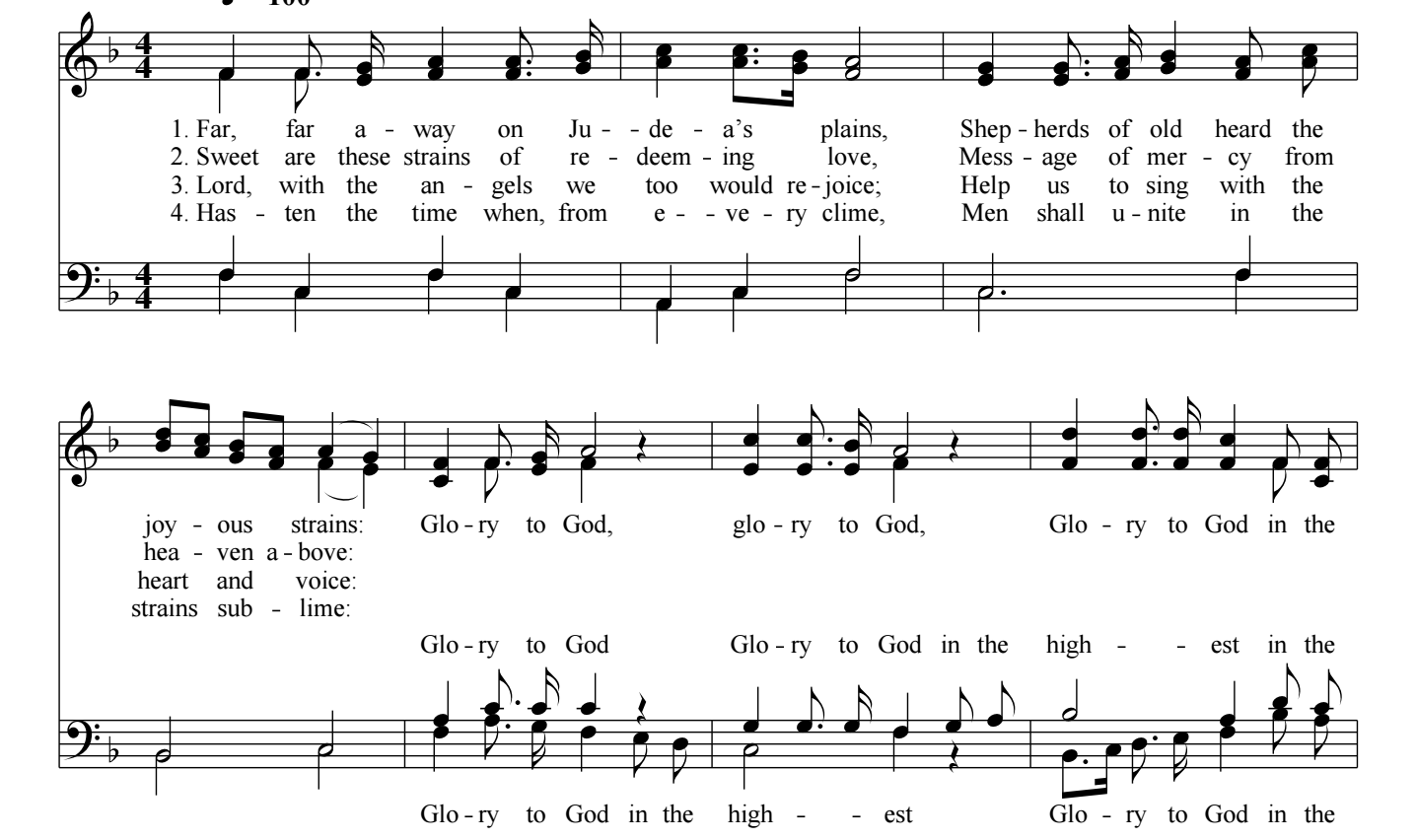
PREVIEW

Christmas Sheet Music

“Ding Dong Merrily on High” is a traditional Christmas carol with a lively, joyful tune. The melody dates back to the 16th century, composed by French composer Jehan Tabourot, and the lyrics were later added in the 19th century by English composer George Ratcliffe Woodward. The carol is known for its uplifting melody and distinctive “Gloria” refrain. “Ding Dong Merrily …

“Angels We Have Heard on High” is a traditional Christmas carol, originating from France. The song is best known for its “Gloria in excelsis Deo” refrain, which reflects the biblical story of angels proclaiming the birth of Jesus to shepherds. The melody, known as “Gloria”, is believed to have been written in the 18th century, while the English lyrics were …

The Coventry Carol is a traditional English Christmas carol dating back to the 16th century. It was originally part of a mystery play called The Pageant of the Shearmen and Tailors, which depicted the biblical story of the Massacre of the Innocents, where King Herod ordered the killing of male infants. The carol is a haunting lullaby sung by mothers …

Tchaikovsky’s March from the Nutcracker is a spirited composition characterized by its brisk tempo, playful dynamics, and captivating melodies. The piece captures the essence of a grand procession, making it an ideal choice for pianists who want to showcase their technical prowess and musical expression. The lively nature of the March, combined with Tchaikovsky’s brilliant orchestration, translates seamlessly to the …

“Cathedral Windows” Op. 106, composed in 1914, showcases Karg-Elert’s innovative approach to harmonies, textures, and registrations. “Cathedral Windows” is a set of six pieces, each named after a specific stained glass window in a cathedral. Karg-Elert employs rich harmonies, intricate counterpoint, and expressive melodic lines to evoke the majestic and contemplative atmosphere of these imagined windows. The movements are titled: …

“Ave Maria” in A major is part of his larger work, the “Six Duets for Two Voices and Organ,” Op. 10. This collection includes settings of various sacred texts, and the “Ave Maria” in A major is one of the pieces within this set. These duets were composed in 1858 and showcase Saint-Saëns’s mastery of choral writing and his ability …

“Fum, Fum, Fum” is a traditional Christmas carol that originated in Catalonia, a region in northeastern Spain. The lyrics of the carol are simple and joyful. The word “fum” means “smoke” in Catalan, and the repeated “fum, fum, fum” in the song is often interpreted as an onomatopoeic representation of a drum or a strumming sound. The carol typically celebrates …

“Ding Dong! Merrily on High” is a popular Christmas carol with French origins. The lyrics were written by English composer George Ratcliffe Woodward, and the melody is based on a 16th-century French dance tune. The title of the carol is derived from the sound of bells, which is often associated with the Christmas season. The organ, with its majestic pipes …

“I Know That My Redeemer Liveth” is one of the most popular and recognizable movements from Handel’s Messiah. The aria opens with a powerful ascending melody sung by the soprano, conveying a sense of faith and hope. The music shifts between moments of quiet introspection and triumphant pronouncements, reflecting the text’s emotional journey. For pianists aspiring to master “I Know …

“The Twelve Days of Christmas” is a traditional English Christmas carol that dates back to the 18th century. The song is cumulative in nature, with each verse adding a new gift to the list. It is believed to have originated in France before coming to England and has become one of the most well-known and enduring Christmas songs. The song …

Gounod’s “L’Angelus” captures the solemnity and reverence of the Angelus prayer through its expressive melodies and harmonies. The title is French for “The Angelus,” and the music aims to convey the spirit of this prayerful moment. “L’Angelus” is a vocal work that draws inspiration from the traditional Catholic devotion known as the Angelus, commemorating the Annunciation. The piece is typically …

“Good King Wenceslas” is a Christmas carol that tells the story of a generous and kind-hearted Bohemian king who braved harsh winter weather to provide charity to a poor peasant. The lyrics, penned by John Mason Neale in the 19th century, are set to the melody of a 13th-century spring carol called “Tempus adest floridum.” The combination of the heartwarming …

The Russian Trepak, also known as the “Russian Dance,” is a lively and energetic piece from Tchaikovsky’s Nutcracker Suite. It captures the spirit of Russian folk dance, complete with its lively tempo and infectious melodies. The music is characterized by its brisk pace, intricate rhythms, and triumphant flair, making it a favorite among both performers and listeners. While Tchaikovsky originally …

“German Dance, K.605 No.3” or “Sleigh Ride” or in German “Die Schlittenfahrt” from the set of Three German Dances, K.605 is a lively and festive composition that captures the joyful spirit of a sleigh ride. Arranged for violin.

Rimsky-Korsakov’s Christmas Eve Suite is a collection of orchestral pieces inspired by Ukrainian and Russian folklore. The suite draws from various traditional tunes, weaving them into a vibrant tapestry of sound that captures the festive spirit of Christmas. The movements are characterized by their rich orchestrations, evocative melodies, and rhythmic vitality, making it a joyous experience for both performers and …