
Scarlatti – Sonata Pastorale

Home » Piano Sheet Music » Scarlatti – Sonata Pastorale

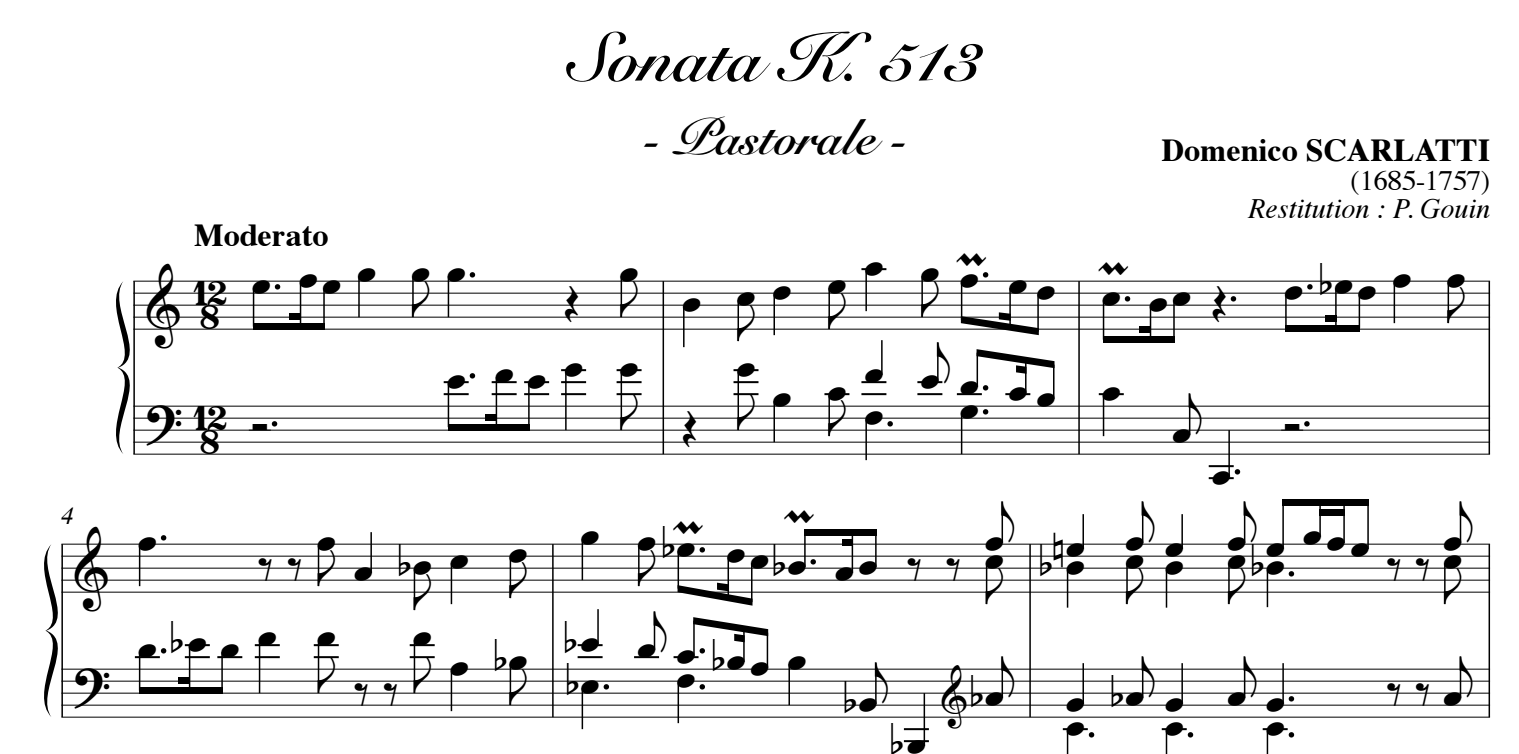
The “Sonata in C major, K. 513” is often referred to as the “Pastorale” due to its charming and pastoral character. Scarlatti’s keyboard sonatas are known for their virtuosity, inventive use of keyboard techniques, and exploration of various styles and moods.

Sonata Pastorale is characterized by its pastoral charm, with a lively tempo and playful melodies that evoke images of rustic landscapes and joyful celebrations. The piece is written in binary form, showcasing Scarlatti’s mastery in crafting concise and expressive musical ideas. It is a wonderful addition to a pianist’s repertoire, providing an opportunity to develop technical skills and musical sensitivity.

In terms of difficulty, Sonata Pastorale is generally considered suitable for intermediate-level pianists. While it does not demand the virtuosic flair required for some of Scarlatti’s more challenging sonatas, it still presents its own set of technical and interpretative challenges. Pianists at an intermediate level should have a good command of basic piano techniques, including finger independence, dynamic control, and an understanding of Baroque ornamentation.
PREVIEW

Christmas Sheet Music

“Wachet auf, ruft uns die Stimme” BWV 645 is part of Bach’s Orgelbüchlein (Little Organ Book), which is a collection of chorale preludes for the organ. This particular chorale prelude is based on the hymn of the same name by Philipp Nicolai. The hymn itself is associated with the Advent season and is often used in church services. The piece …

“Sing, O Sing, This Blessed Morn” is a traditional Christmas carol that has been adapted for the piano. Its jubilant and uplifting tune resonates with the joy and celebration of the holiday season, making it a perfect addition to your repertoire during Christmas gatherings or solo performances. The piece is characterized by its cheerful melody, adorned with lively rhythms and …

“Hark! The Herald Angels Sing” is a popular Christmas carol with lyrics written by Charles Wesley in 1739. The music for the carol was composed by Felix Mendelssohn in 1840. The carol is traditionally sung to celebrate the birth of Jesus Christ and is a staple in Christmas celebrations and church services. The carol goes on to tell the story …

“Nun komm, der Heiden Heiland, BWV 659” is a chorale prelude composed by Johann Sebastian Bach. It is part of his larger collection of organ works, particularly those that involve chorale settings. The title translates to “Now come, Savior of the Gentiles” in English. The skill level required to play “Nun Komm der Heiden Heiland” on the piano can be …

“Cathedral Windows” Op. 106, composed in 1914, showcases Karg-Elert’s innovative approach to harmonies, textures, and registrations. “Cathedral Windows” is a set of six pieces, each named after a specific stained glass window in a cathedral. Karg-Elert employs rich harmonies, intricate counterpoint, and expressive melodic lines to evoke the majestic and contemplative atmosphere of these imagined windows. The movements are titled: …

Also known as “See Amid the Winter’s Snow” is a traditional Christmas carol with lyrics written by Edward Caswall and music composed by Sir John Goss. It was first published in 1854. This carol is known for its serene and reflective lyrics that tell the story of the birth of Jesus Christ and the adoration of the shepherds and angels. …

“O Come, O Come, Emmanuel” is a well-known Christmas carol with its origins in medieval Latin hymns. It is a hymn of anticipation, longing for the coming of the Messiah. The lyrics are based on a set of seven Advent antiphons, each addressing a different name or attribute of Christ and used in the seven days leading up to Christmas. …

“Let Our Gladness Have No End” is a hymn that celebrates joy and gratitude and a great addition to your Christmas song list! “Let Our Gladness Have No End” is a delightful addition to any pianist’s repertoire. Its joyful and celebratory nature makes it an uplifting piece to play, and with dedication and practice, intermediate to advanced pianists can bring …

“Away in a Manger” flute sheet music. Despite its uncertain origins, “Away in a Manger” remains a cherished part of the Christmas music tradition and is associated with the peaceful and humble nativity scene of Jesus’ birth. It continues to be sung by people of all ages during the Christmas season.

“Silent Night” (German: “Stille Nacht, heilige Nacht”) is a widely cherished Christmas carol known for its simple and serene melody. It was originally written in German by Joseph Mohr, with music composed by Franz Xaver Gruber.

“Amazing Grace” is a traditional hymn with uncertain authorship. It is often attributed to John Newton, a former slave trader turned Christian minister, who wrote the lyrics in the late 18th century. However, the melody used today is believed to have been added later. The melody used for “Amazing Grace” is simple yet deeply moving. It is typically sung in …

Schubert’s “Ave Maria” is a poignant and reverent piece that has been embraced for its emotional depth and melodic richness. It has been widely used in religious ceremonies, including weddings and other solemn occasions. The lyrics are based on a German translation of Sir Walter Scott’s poem “The Lady of the Lake.”

“It’s Beginning to Look a Lot Like Christmas” is a popular Christmas song written by Meredith Willson. The song was originally composed in 1951 and has been performed by numerous artists over the years. It has become a classic holiday tune that is widely recognized and loved during the Christmas season.

“What Child Is This?” is a popular Christmas carol that is often sung during the holiday season. The lyrics are set to the tune of the English folk song “Greensleeves.” The carol is known for its serene and reflective tone, and it focuses on the nativity story of the birth of Jesus Christ. While “What Child Is This” may seem …

“The Sussex Mummers’ Christmas Carol” lyrics often vary, as is common with many traditional folk carols, but the general narrative involves Mary asking Joseph to pick cherries from a tree to satisfy her cravings. Joseph reacts with surprise, expressing doubt about the child’s parentage. In the carol, the angel Gabriel appears to Joseph, explaining the divine nature of Mary’s pregnancy. …