
Gounod – L’Angelus

Home » Piano Sheet Music » Gounod – L’Angelus

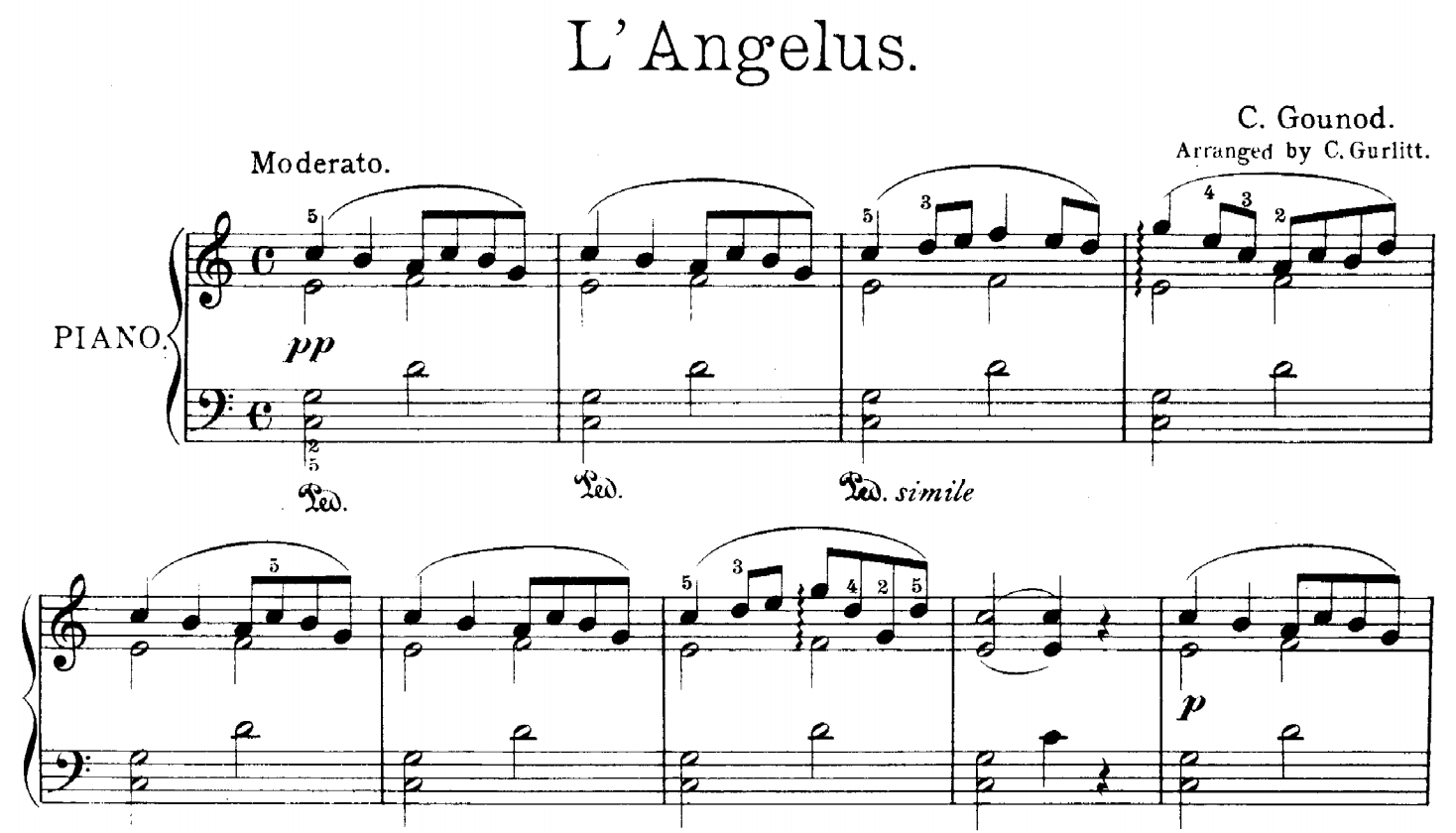
Gounod’s “L’Angelus” captures the solemnity and reverence of the Angelus prayer through its expressive melodies and harmonies. The title is French for “The Angelus,” and the music aims to convey the spirit of this prayerful moment.

“L’Angelus” is a vocal work that draws inspiration from the traditional Catholic devotion known as the Angelus, commemorating the Annunciation. The piece is typically scored for voice and piano, creating a contemplative and devotional atmosphere.

“L’Angelus” is best suited for pianists at the late beginner to early intermediate level. Players should be comfortable with basic hand coordination, reading musical notation, and have a reasonable grasp of fundamental piano techniques. While the piece does not require advanced virtuosity, it does call for a sensitive touch and an ability to convey the emotional depth embedded in the composition.
PREVIEW

Christmas Sheet Music

“Go Tell It on the Mountain” is a traditional African-American spiritual and Christmas gospel song that has become a well-loved and widely performed piece. It is believed to have roots in the African-American slave tradition, where enslaved individuals used music to express their faith and communicate messages. The lyrics convey the message of proclaiming the news of the birth of …

“What Child Is This?” is a popular Christmas carol that is often sung during the holiday season. The lyrics are set to the tune of the English folk song “Greensleeves.” The carol is known for its serene and reflective tone, and it focuses on the nativity story of the birth of Jesus Christ. While “What Child Is This” may seem …

“Gentle Mary Laid Her Child” is a traditional Christmas carol that reflects on the peaceful and tender scene of Mary laying the infant Jesus in a manger. The lyrics often evoke a sense of serenity and devotion, capturing the essence of the Nativity. The carol’s portrayal of the intimate moments surrounding the birth of Jesus makes it a fitting addition …

As the holiday season approaches, nothing captures the spirit of Christmas quite like music. Whether you’re a seasoned pianist or just starting to tickle the ivories, there’s something magical about playing beloved Christmas tunes. If you’re on the hunt for the perfect piano sheet music to add to your repertoire, look no further than “Have Yourself a Merry Little Christmas.” …

“The Night Before Christmas” also known as “A Visit from St. Nicholas,” is a famous poem written by Clement Clarke Moore. It was first published anonymously in 1823 and has since become a beloved and iconic Christmas poem. The poem is known for its depiction of Santa Claus and his reindeer on Christmas Eve, as they deliver presents to children. …

Holst composed the music for this carol in 1906 as part of his collection of choral settings titled “Two Carols,” which also included “A Christmas Carol.” Holst’s musical setting of “In the Bleak Midwinter” has become one of the most well-known and beloved renditions of the carol, and it is often performed during the Christmas season.

The exact origins of “God Rest Ye Merry, Gentlemen” are not well-documented, but it is believed to date back to the 16th century or earlier. It is one of the many traditional carols that have been passed down through generations. The phrase “God rest ye merry” is often misunderstood in modern English. In this context, “rest” means “keep” or “make,” …

“It Came Upon a Midnight Clear” is a Christmas carol that was written by American pastor and poet Edmund Hamilton Sears in 1849. The carol is set to music composed by Richard Storrs Willis, and it was first published in the “Christian Register” in Boston in December 1850. The lyrics of the carol reflect themes of peace and the message …

Max Reger’s Opus 17, No. 9 “Weihnachtstraum” refers to one of the pieces in his collection of solo piano works. It is a German phrase that translates to “Christmas dream” in English. It evokes a sense of the holiday season and the magical, dreamlike atmosphere that often accompanies Christmas celebrations. Reger’s “Silent Night” arrangement, also known as “Weihnachtstraum,” offers a …

Pyotr Ilyich Tchaikovsky’s “Waltz of the Snowflakes” is a mesmerizing piece of classical music that captures the enchantment and beauty of winter. Originally composed for the ballet “The Nutcracker,” this waltz has become a timeless favorite, evoking images of swirling snowflakes dancing in a winter wonderland. The “Waltz of the Snowflakes” is part of the second act of “The Nutcracker” …

Bach’s Christmas Oratorio is a monumental work composed for the Christmas season, celebrating the birth of Christ through vibrant choruses, arias, and recitatives. It is written for a full choir, soloists, and orchestra, with text from the Gospels of Luke and Matthew, and draws on both sacred and secular themes. The six parts of the oratorio each have their own …

“Christmas Chimes” (Juleklokkerne in Danish) is one of Gade’s compositions, and it’s a festive piece that captures the spirit of the holiday season. It’s often performed during Christmas concerts and celebrations. Niels Gade was a prominent Romantic composer, conductor, and violinist, known for his contributions to Danish music in the 19th century. Christmas Chimes Op.36 No.1 is well-suited for intermediate …

“In Dulci Jubilo,” which translates to “In Sweet Rejoicing,” is a traditional German carol that dates back to the 14th century. Its jubilant melody and lively rhythm make it a perfect choice for violinists seeking to showcase their skills while spreading holiday cheer. The piece is characterized by its dance-like quality, combining elements of medieval and Renaissance music with a …

“In Dulci Jubilo” is a traditional Christmas carol that originated in Germany in the Middle Ages. The title is often translated as “In Sweet Rejoicing” or “In Sweet Jubilation.” The lyrics are written in a mix of Latin and German, and the melody is upbeat and festive. The piece is characterized by its lively tempo and jubilant spirit, making it …

Schubert’s “Ave Maria” is a poignant and reverent piece that has been embraced for its emotional depth and melodic richness. It has been widely used in religious ceremonies, including weddings and other solemn occasions. The lyrics are based on a German translation of Sir Walter Scott’s poem “The Lady of the Lake.”