
Liszt – Formerly

Home » Piano Sheet Music » Liszt – Formerly

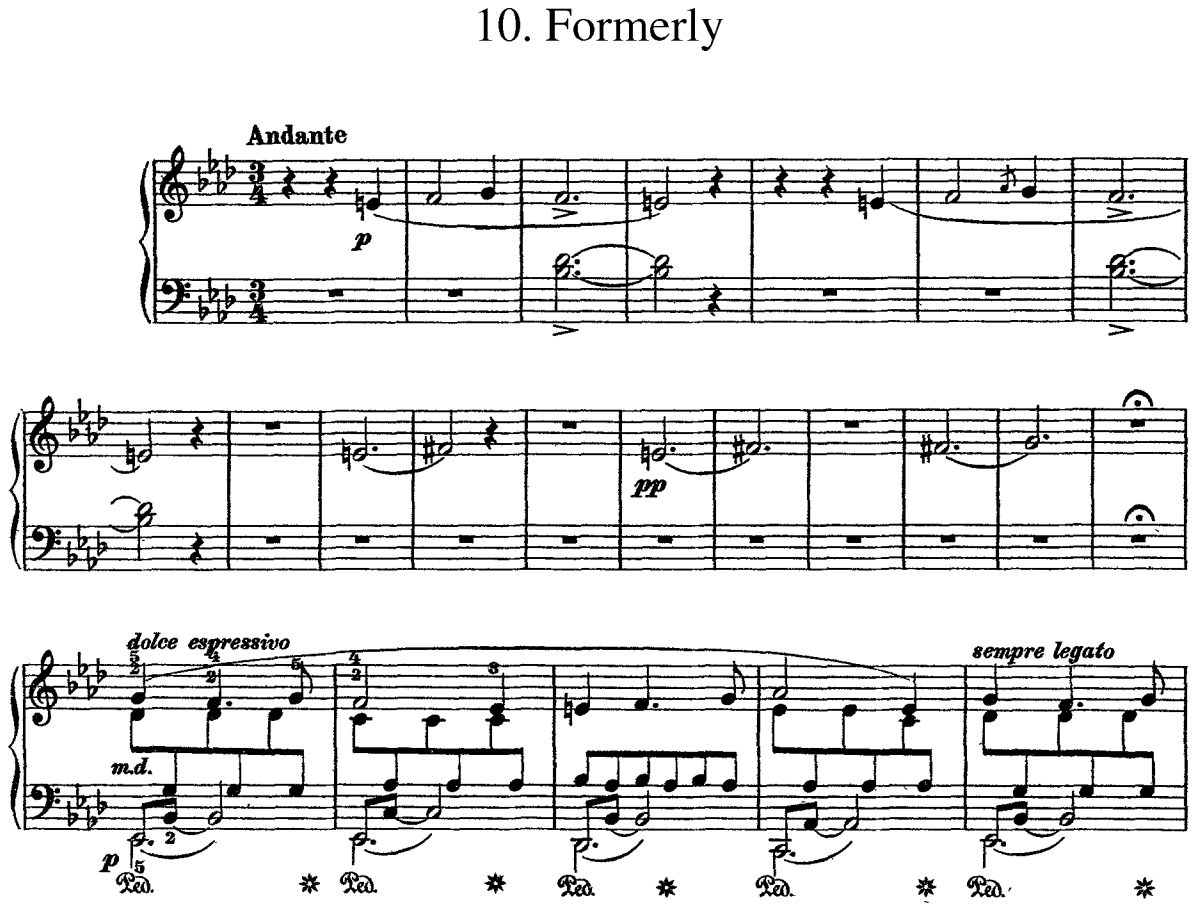
“Formerly” is one of the delightful pieces from Franz Liszt’s “Weihnachtsbaum” (The Christmas Tree) collection. This collection, composed in 1874, consists of 12 short piano pieces, each inspired by different aspects of the Christmas season.

“Formerly” is a charming and nostalgic piece that reflects on the joys and memories of Christmases past. Liszt’s musical language beautifully captures the sentiment of looking back on cherished moments.

“Formerly” from The Christmas Tree is generally considered suitable for intermediate-level pianists. Players with a solid foundation in piano technique, including proficiency in hand independence, finger dexterity, and an understanding of musical interpretation, will find this piece both enjoyable and manageable. While it may not be suitable for beginners, those who have progressed beyond the early stages of piano learning will appreciate the challenges and rewards offered by Liszt’s festive creation.
PREVIEW

Christmas Sheet Music

“Nun komm, der Heiden Heiland, BWV 659” is a chorale prelude composed by Johann Sebastian Bach. It is part of his larger collection of organ works, particularly those that involve chorale settings. The title translates to “Now come, Savior of the Gentiles” in English. The skill level required to play “Nun Komm der Heiden Heiland” on the piano can be …

“O Come, Little Children” is a traditional German Christmas carol originally titled “Ihr Kinderlein, kommet.” The lyrics were written by Christoph von Schmid in the early 19th century, and the music was composed by Johann Abraham Peter Schulz. It is a gentle and tender carol that welcomes children to the Christmas celebration. The melody of “O Come, Little Children” is …

The “Christmas Eve Suite” is a collection of orchestral pieces derived from Nikolai Rimsky-Korsakov’s opera “Christmas Eve,” also known as “Noch’ pered Rozhdestvom” in Russian. The suite consists of several delightful and festive movements that capture the spirit of the holiday season.

Carl Thiel (1902–1982) was a German composer and arranger known for his contributions to piano music. Thiel’s arrangements often featured a delicate balance of technical proficiency and emotional expressiveness, making them accessible to a wide range of pianists. Carl Thiel’s arrangement of “In Dulci Jubilo” for piano is a delightful and uplifting piece that brings the joy of the holiday …

Camille Saint-Saëns’ “Oratorio de Noël,” also known as his Christmas Oratorio, Op. 12, is a splendid and spiritually evocative composition. Written in 1858, this oratorio reflects Saint-Saëns’ mastery in blending sacred and festive elements. The piano rendition of Saint-Saëns’ Christmas Oratorio Op. 12 demands a pianist with an intermediate to advanced skill level. The piece presents challenges in terms of …

“Shepherds, Shake Off Your Drowsy Sleep” is a traditional Christmas carol. The song’s lyrics encourage shepherds to wake up and go to Bethlehem to witness the birth of Jesus. The carol reflects the Biblical account of the shepherds who were visited by angels and instructed to go and see the newborn Christ. Due to the technical demands and the need …

Franz Liszt’s “Carillon” is a delightful and evocative piano composition. Liszt, a prominent figure in the Romantic era of classical music, composed this piece as part of his larger work titled “Années de pèlerinage” (Years of Pilgrimage). “Années de pèlerinage” is a collection of three suites for solo piano, and “Carillon” is part of the first suite, “Suisse” (Switzerland). “Carillon” …

“Jesus Christ the Apple Tree” is a popular English hymn that dates back to the 18th century. The lyrics of this hymn are often attributed to an unknown author. It is sometimes referred to as “The Apple-Tree Song” or simply “The Apple Tree.” The hymn uses the metaphor of an apple tree to represent Jesus Christ, drawing parallels between the …

“Jingle Bells” was written by James Lord Pierpont and published under the title “One Horse Open Sleigh” in 1857. The song’s catchy melody and upbeat lyrics have made it a holiday classic that is often associated with the joy and festivities of the Christmas season. It is a relatively simple song to play on the piano, making it a popular …

“In Dulci Jubilo,” which translates to “In Sweet Rejoicing,” is a traditional German carol that dates back to the 14th century. Its jubilant melody and lively rhythm make it a perfect choice for violinists seeking to showcase their skills while spreading holiday cheer. The piece is characterized by its dance-like quality, combining elements of medieval and Renaissance music with a …

“The Twelve Days of Christmas” is a traditional English Christmas carol that dates back to the 18th century. The song is cumulative in nature, with each verse adding a new gift to the list. It is believed to have originated in France before coming to England and has become one of the most well-known and enduring Christmas songs. The song …

The “Chinese Dance” is part of Act II of “The Nutcracker” and is also known as the “Tea Dance.” This act is set in the Land of Sweets, where various international character dances are performed to entertain Clara and the Nutcracker Prince. This dance represents Chinese culture and is characterized by its distinctive and exotic musical motifs. Tchaikovsky employs pentatonic …

“The Holly and the Ivy” is a traditional English Christmas carol that dates back to the 18th century, although some sources suggest that it may have even earlier origins. The song is a celebration of the holly and the ivy, two evergreen plants that are often associated with the Christmas season. “The Holly and the Ivy” is a classic Christmas …

The word “mirliton” refers to a toy kazoo-like instrument made from a paper tube and waxed paper, which produces a buzzing sound. The French translation aptly captures the lighthearted and playful nature of the music and choreography in this part of Tchaikovsky’s ballet classic, The Nutcracker. The music is characterized by its high-pitched, staccato notes, which mimic the sound of mirlitons.

“Quem Pastores Laudavere” is a traditional German Christmas carol that has been cherished for centuries. The title translates to “Whom the Shepherds Praised” in English. The origins of “Quem Pastores Laudavere” can be traced back to medieval Germany, likely around the 14th century. This carol has endured the test of time and has become a beloved part of the Christmas …