
beethoven-sheet-music

Free Beethoven Sheet Music

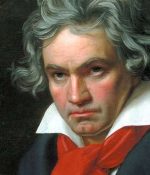
Beethoven (1770-1827) was a renowned German composer and pianist. Beethoven's piano music is extensive and includes sonatas, concertos, and shorter works like bagatelles. His 32 piano sonatas are particularly renowned, with "Sonata No. 8 in C minor" (Pathétique), "Sonata No. 14 in C-sharp minor" (Moonlight), and "Sonata No. 23 in F minor" (Appassionata) being favorites among pianists and audiences alike.  Beethoven's late string quartets, including the "Grosse Fuge," are considered some of the most profound and experimental works in the chamber music repertoire. The "Emperor Concerto" is among his most famous piano works.

Popular Beethoven Sheet Music

The “Moonlight Sonata” is the common name for Ludwig van Beethoven’s Piano Sonata No. 14 in C-sharp minor “Quasi una fantasia,” Op. 27, No. 2. It was composed in 1801 and is one of Beethoven’s most famous and beloved compositions. Beethoven’s Moonlight Sonata, a beacon of introspective beauty, can seem like a celestial body too distant for novice pianists to …

Composed in the 18th century, the Minuet in G is part of Beethoven’s collection of six minuets for piano, WoO 10. Although originally attributed to Johann Sebastian Bach, modern scholars have confirmed Beethoven’s authorship. The piece exudes elegance and grace, featuring a charming melody accompanied by a dance-like rhythm. Its simplicity and clarity make it an ideal choice for pianists …

Beethoven’s “Für Elise” might be classical music royalty, but for beginners, it can feel like a daunting fortress. Fear not, music lovers! Easy piano arrangements simplify this iconic piece, opening its beauty to even the youngest or most novice players. Easy versions such as this one retain the melody’s essence, replacing intricate passages with smoother, achievable sequences. Gone are the …

The “Grosse Fuge” is celebrated for its extraordinary complexity, bold experimentation, and profound musical expression. It is a massive and intricate fugue, a form of composition characterized by its contrapuntal texture and a single subject that is imitated and developed throughout the piece. This work consists of several sections and is often described as an intellectual tour de force. It …

Beethoven’s Violin Sonata No. 9 in A major, Op. 47, “Kreutzer Sonata,” is a monument of chamber music, its emotional depths and technical demands towering over the landscape of violin repertoire. While traditionally performed by violin and piano, the idea of embarking on this monumental journey with just the violin is an audacious and intriguing one. Stripped of the piano’s …

Beethoven‘s “Ode to Joy” is a timeless melody that has resonated with audiences for centuries. Its uplifting message of unity and brotherhood makes it a universal anthem, and its instantly recognizable tune has become a cultural touchstone. But what if you’re a beginner pianist, yearning to play this iconic piece but intimidated by its complexity? Fear not! With a little …

Beethoven’s use of unexpected harmonic shifts and innovative structures in this concerto foreshadows his later groundbreaking compositions. Piano Concerto No. 3 is notable for its seamless integration of the solo piano and orchestra, with both elements engaging in a dynamic and intricate dialogue throughout the work. Typically, a violinist tackling this piece should have reached an advanced to virtuoso level. …

Ludwig van Beethoven, the titan of German Romanticism, may not be the first composer one thinks of when it comes to beginner piano pieces. However, nestled amongst his monumental symphonies and sonatas lies a charming little gem: the Ecossaise in E-flat Major, WoO 86. This lively dance, inspired by the traditional Scottish “Ecossaise,” is surprisingly accessible to pianists of all …