
Silent Night

Home » Cello Sheet Music » Silent Night

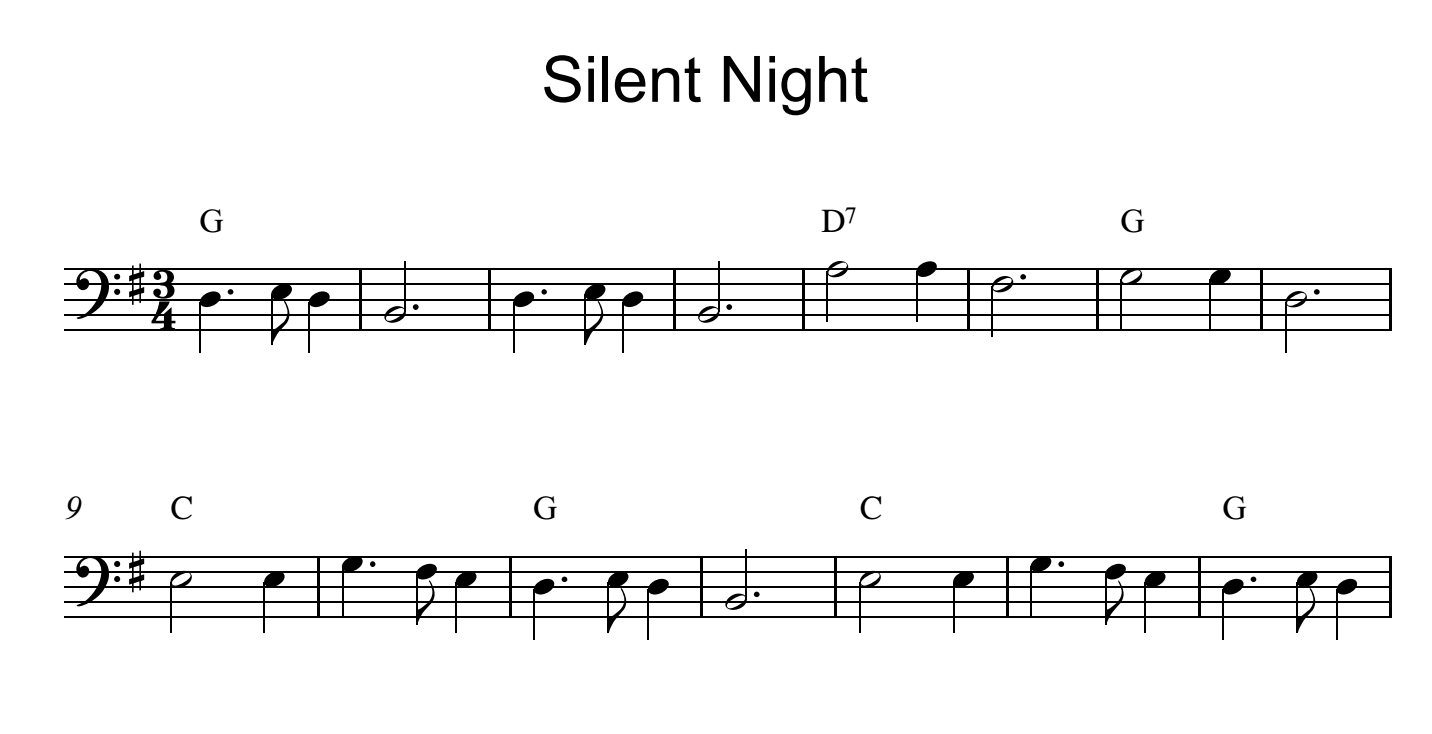
“Silent Night,” the beloved Christmas carol composed by Franz Xaver Gruber in 1818, is cherished for its gentle melody and timeless sense of peace. Playing this carol on the cello allows musicians to evoke its deep warmth and calm beauty. “Silent Night” is an excellent piece for beginner cellists due to its slow tempo, simple melody, and opportunities to develop expressive bowing techniques. The piece focuses on legato phrasing and gentle dynamics, making it a great choice for practicing control, tone, and expression.
PREVIEW

Christmas Sheet Music

“O Come, All Ye Faithful” is a popular Christmas carol that is also known by its Latin title, “Adeste Fideles.” The carol is traditionally sung during the Christmas season and is often heard in churches, as well as in various secular settings. It’s a joyful and uplifting hymn that celebrates the birth of Jesus Christ and encourages all believers to …

“Nun komm, der Heiden Heiland, BWV 659” is a chorale prelude composed by Johann Sebastian Bach. It is part of his larger collection of organ works, particularly those that involve chorale settings. The title translates to “Now come, Savior of the Gentiles” in English. This chorale prelude is based on the hymn “Nun komm, der Heiden Heiland,” which is attributed …

“Hark! The Herald Angels Sing” is often performed with organ accompaniment, and it sounds particularly majestic when played on an organ due to the instrument’s rich and powerful sound. The organ arrangement of the carol can vary in complexity, with some versions featuring intricate harmonies and ornamentation. The music for the carol was composed by Felix Mendelssohn in 1840. The …

Composed by Arthur Foote (1853–1937), an American composer “And There Were Shepherds” is a common phrase found in the Christmas story from the Bible, specifically in the account of the birth of Jesus in the Gospel of Luke (Luke 2:8-20). This phrase is often associated with the announcement of the angel to the shepherds in the fields. Foote’s meticulous attention …

“German Dance, K.605 No.3” or “Sleigh Ride” or in German “Die Schlittenfahrt” from the set of Three German Dances, K.605 is a lively and festive composition that captures the joyful spirit of a sleigh ride. Arranged for violin.

“Here We Come A-Wassailing” is a traditional English Christmas carol that is often sung during the holiday season. It’s a cheerful and festive song that expresses well-wishes and good cheer as people go door to door, singing and celebrating the Christmas spirit.

“All Praise to Jesus’ Hallowed Name” is a Christian hymn with lyrics written by Thomas Kelly in the early 19th century. The hymn is often set to the melody “Dix,” composed by Conrad Kocher. The text of the hymn focuses on praising the name of Jesus and acknowledging His role as Savior and Lord. When playing “All Praise to Jesus’ …

The word “mirliton” refers to a toy kazoo-like instrument made from a paper tube and waxed paper, which produces a buzzing sound. The French translation aptly captures the lighthearted and playful nature of the music and choreography in this part of Tchaikovsky’s ballet classic, The Nutcracker. The music is characterized by its high-pitched, staccato notes, which mimic the sound of mirlitons.

“Twas in the Moon of Wintertime,” also known as “Huron Carol,” is a traditional Christmas hymn that originated from the Huron people of Canada. The lyrics were written by Jean de Brébeuf, a Jesuit missionary, in the Huron-Wendat language. The melody is believed to be a French folk tune. The song beautifully depicts the Nativity story with a unique cultural …

“O Come, All Ye Faithful” is a popular Christmas carol with lyrics attributed to John Francis Wade, and it is often sung to the tune known as “Adeste Fideles.” The carol is also sometimes referred to by its Latin incipit, “Adeste Fideles.” The melody of “O Come, All Ye Faithful” is relatively straightforward, making it accessible to a broad range …

The Arabian Dance, also known as the Coffee Dance, is part of the second act of “The Nutcracker.” Tchaikovsky masterfully incorporates Middle Eastern influences, using rich and evocative melodies to transport listeners to a world of mystery and enchantment. The piano arrangement retains the exotic charm, allowing pianists to express the nuances of the original orchestral score. Pyotr Ilyich Tchaikovsky’s …

The “Christmas Eve Suite” is a collection of orchestral pieces derived from Nikolai Rimsky-Korsakov’s opera “Christmas Eve,” also known as “Noch’ pered Rozhdestvom” in Russian. The suite consists of several delightful and festive movements that capture the spirit of the holiday season.

“God Rest Ye Merry, Gentlemen” has been recorded and performed by numerous artists and choirs over the years and remains a popular and enduring part of the Christmas music tradition. It has also been adapted and arranged in various musical styles and continues to be a favorite during the holiday season. This one is arranged for the flute.

“O Nata Lux de Lumine” or “O Light Born of Light” is a hymn often associated with the Christian liturgy, particularly the office of Compline. It is commonly used during the Advent season.

Hector Berlioz’s “L’Enfance du Christ” (The Childhood of Christ) is an oratorio composed between 1853 and 1854. The work is divided into three parts and tells the story of the Holy Family’s journey to Egypt to escape the massacre of infants ordered by King Herod. The oratorio consists of the following parts: The skill level required to play Berlioz’s “L’Enfance …