
God Rest ye Merry Gentlemen

Home » Cello Sheet Music » God Rest ye Merry Gentlemen

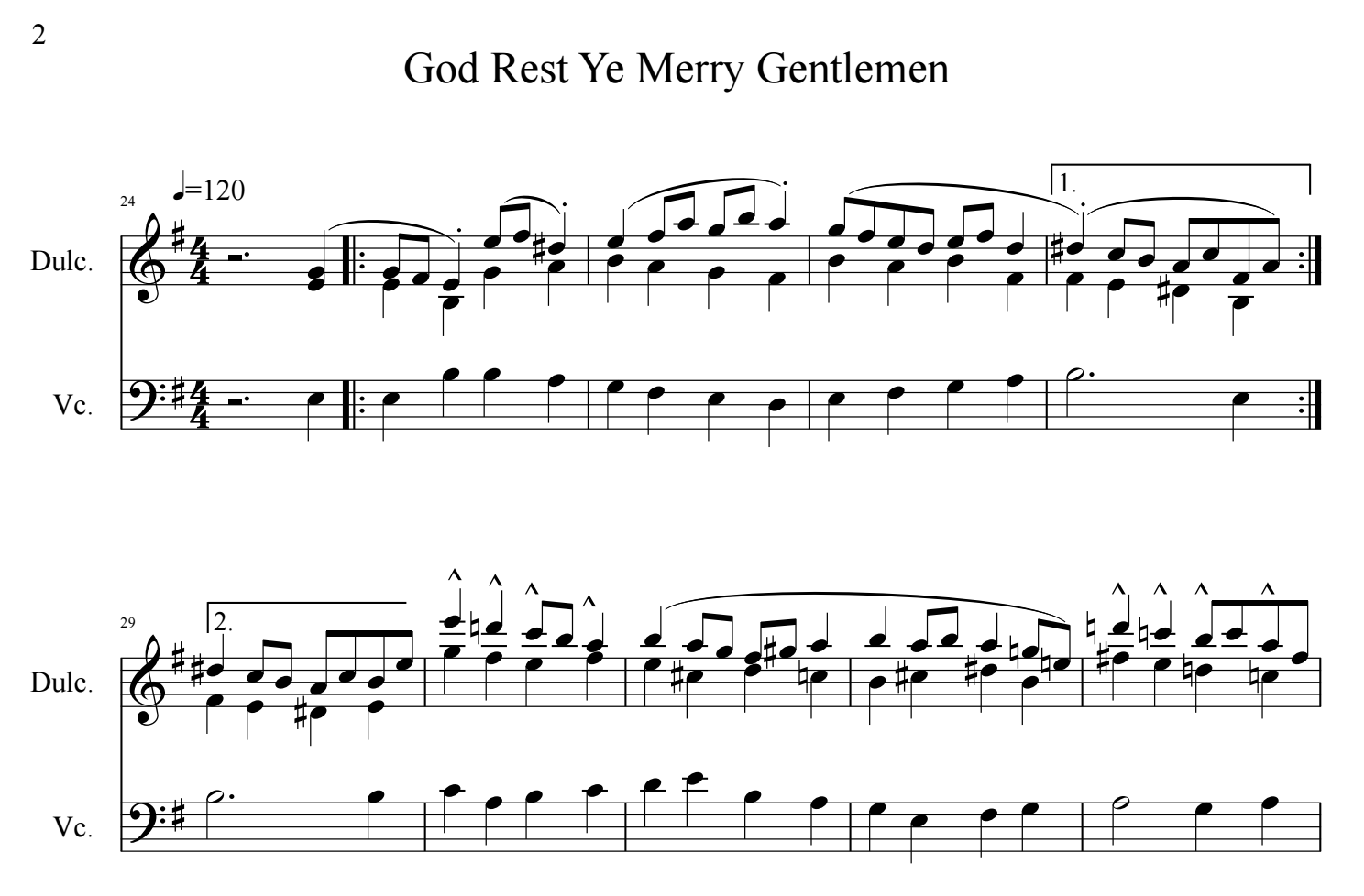
“God Rest Ye Merry, Gentlemen” is one of the most well-known traditional English Christmas carols. It dates back to the 16th century and has a timeless, solemn melody that lends itself well to a variety of arrangements, including for the cello.

This piece can benefit from dynamic contrast, especially to convey the solemn and majestic feel of the carol. Use softer dynamics (piano) for the verses and slightly increase intensity (mezzo-forte or forte) during more dramatic sections. The rhythm is straightforward in 4/4 time, but it’s essential to keep the pulse steady, especially if playing in an ensemble or accompanying other instruments or voices. Maintain a consistent tempo throughout.
PREVIEW

Christmas Sheet Music

Franz Liszt’s “An Old Christmas Carol” is a charming and evocative piano composition. It is a part of Liszt’s larger work, “Weihnachtsbaum” (The Christmas Tree), which is a collection of 12 short piano pieces, each inspired by various aspects of the Christmas season. The composition itself is characterized by its melodic richness and harmonic depth. Liszt weaves a familiar Christmas …

The carol “The First Nowell” is a beautiful and reverent song that reflects the wonder and adoration surrounding the birth of Jesus. It is often sung in church services and during Christmas celebrations, and its timeless message of the nativity story continues to resonate with people during the holiday season. “The First Noel” offers a delightful journey for violinists of …

“O Little Town of Bethlehem” is a well-known Christmas carol with lyrics written by Phillips Brooks and music composed by Lewis Redner. The song was first performed in 1868 and has become a classic in the Christmas music repertoire. It paints a peaceful and reverent picture of the town of Bethlehem on the night of Jesus’ birth. The original version …

“Frosty the Snowman” was written by Walter “Jack” Rollins and Steve Nelson. They composed the song in 1950. The song tells the story of Frosty, a snowman who comes to life when a magical hat is placed on his head. Frosty then leads the children in the song on various adventures before eventually melting away, promising to return again someday. …

“O Holy Night” (French: “Cantique de Noël”) is a Christmas carol that was written in French by poet Placide Cappeau and set to music by composer Adolphe Adam. Cappeau wrote the lyrics in 1843, and Adam composed the music later the same year. The carol was first performed in Roquemaure, France, during a midnight Mass on Christmas Eve in 1847.. …

Also known as “See Amid the Winter’s Snow” is a traditional Christmas carol with lyrics written by Edward Caswall and music composed by Sir John Goss. It was first published in 1854. This carol is known for its serene and reflective lyrics that tell the story of the birth of Jesus Christ and the adoration of the shepherds and angels. …

“The Christmas Song” is a classic Christmas song written by Mel Tormé and Bob Wells. It was first composed in 1945 and has since become one of the most iconic and beloved Christmas songs of all time. The song is also known by its opening line, “Chestnuts roasting on an open fire.” The original version of “The Christmas Song” is …

“Ding Dong! Merrily on High” is a popular Christmas carol with French origins. The lyrics were written by English composer George Ratcliffe Woodward, and the melody is based on a 16th-century French dance tune. The title of the carol is derived from the sound of bells, which is often associated with the Christmas season.

“O Holy Night” (French: “Cantique de Noël”) is a Christmas carol that was written in French by poet Placide Cappeau and set to music by composer Adolphe Adam. Cappeau wrote the lyrics in 1843, and Adam composed the music later the same year. The carol was first performed in Roquemaure, France, during a midnight Mass on Christmas Eve in 1847.. …

The Russian Trepak, also known as the “Russian Dance,” is a lively and energetic piece from Tchaikovsky’s Nutcracker Suite. It captures the spirit of Russian folk dance, complete with its lively tempo and infectious melodies. The music is characterized by its brisk pace, intricate rhythms, and triumphant flair, making it a favorite among both performers and listeners. While Tchaikovsky originally …

“The Nutcracker” is traditionally performed during the holiday season, making it a cherished part of many people’s Christmas celebrations. The ballet’s festive and magical atmosphere has made it a family favorite for generations.”The Nutcracker” is known for its iconic pieces, including the “Dance of the Sugar Plum Fairy,” the “Waltz of the Flowers,” the “Russian Dance (Trepak),” and the “March,” …

“It Came Upon a Midnight Clear” is a Christmas carol that was written by American pastor and poet Edmund Hamilton Sears in 1849. The carol is set to music composed by Richard Storrs Willis, and it was first published in the “Christian Register” in Boston in December 1850. The lyrics of the carol reflect themes of peace and the message …

“Nun komm, der Heiden Heiland, BWV 659” is a chorale prelude composed by Johann Sebastian Bach. It is part of his larger collection of organ works, particularly those that involve chorale settings. The title translates to “Now come, Savior of the Gentiles” in English. The skill level required to play “Nun Komm der Heiden Heiland” on the piano can be …

“Silent Night” (German: “Stille Nacht, heilige Nacht”) is one of the most beloved and well-known Christmas carols worldwide. It was composed by Franz Xaver Gruber, with lyrics written by Joseph Mohr. The carol was first performed in the small Austrian village of Oberndorf on Christmas Eve in 1818. Gruber’s “Silent Night” remains a timeless gem in the world of Christmas …

“O Holy Night” (French: “Cantique de Noël”) is a Christmas carol that was written in French by poet Placide Cappeau and set to music by composer Adolphe Adam. Cappeau wrote the lyrics in 1843, and Adam composed the music later the same year. The carol was first performed in Roquemaure, France, during a midnight Mass on Christmas Eve in 1847.. …