
Hark The Herald Angels Sing

Home » Flute Sheet Music » Christmas Flute Sheet Music » Hark The Herald Angels Sing

“Hark! The Herald Angels Sing” is a song that celebrates the joyous news of the birth of Jesus and is a staple of Christmas carol singing. The combination of Charles Wesley’s poetic lyrics and Felix Mendelssohn’s uplifting melody has made it a timeless favorite during the holiday season.
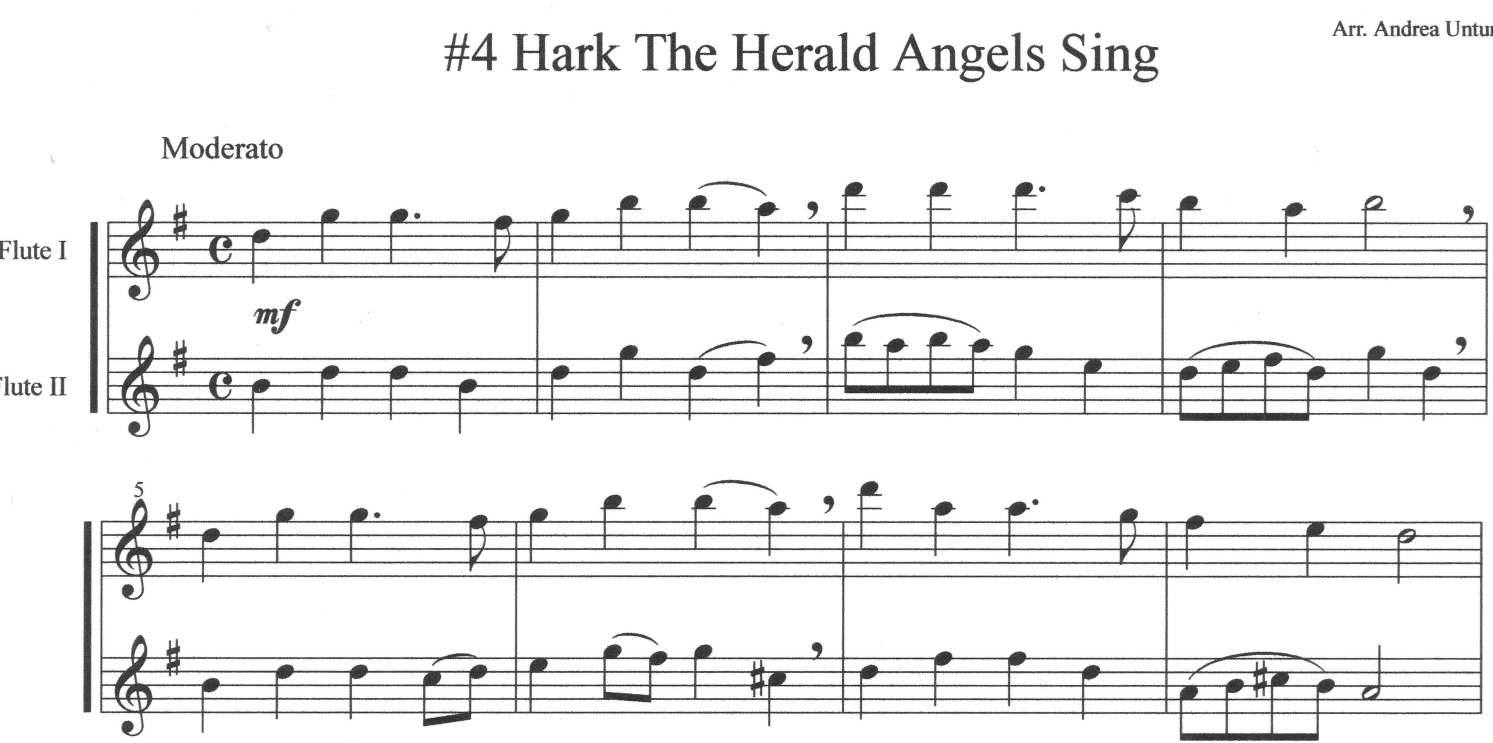
PREVIEW

Christmas Sheet Music

The carol “The First Nowell” is a beautiful and reverent song that reflects the wonder and adoration surrounding the birth of Jesus. It is often sung in church services and during Christmas celebrations, and its timeless message of the nativity story continues to resonate with people during the holiday season.

“Hark! The Herald Angels Sing” is often performed with organ accompaniment, and it sounds particularly majestic when played on an organ due to the instrument’s rich and powerful sound. The organ arrangement of the carol can vary in complexity, with some versions featuring intricate harmonies and ornamentation. The music for the carol was composed by Felix Mendelssohn in 1840. The …

Tchaikovsky’s March from the Nutcracker is a spirited composition characterized by its brisk tempo, playful dynamics, and captivating melodies. The piece captures the essence of a grand procession, making it an ideal choice for pianists who want to showcase their technical prowess and musical expression. The lively nature of the March, combined with Tchaikovsky’s brilliant orchestration, translates seamlessly to the …

“Ave Maria” in A major is part of his larger work, the “Six Duets for Two Voices and Organ,” Op. 10. This collection includes settings of various sacred texts, and the “Ave Maria” in A major is one of the pieces within this set. These duets were composed in 1858 and showcase Saint-Saëns’s mastery of choral writing and his ability …

The word “mirliton” refers to a toy kazoo-like instrument made from a paper tube and waxed paper, which produces a buzzing sound. The French translation aptly captures the lighthearted and playful nature of the music and choreography in this part of Tchaikovsky’s ballet classic, The Nutcracker. The music is characterized by its high-pitched, staccato notes, which mimic the sound of mirlitons.

Liszt’s “Slumber Song” is a lovely and tranquil piano composition that showcases the composer’s ability to create delicate and melodic pieces. Although Liszt is often associated with virtuosic and dramatic works, “Slumber Song” is a departure from his more grandiose style, offering a gentle and soothing musical experience. This composition is part of Liszt’s collection titled “Weihnachtsbaum” (The Christmas Tree), …

Composed in 1741, Handel’s Messiah was initially written for a choir and orchestra. The work is divided into three parts, each telling a different aspect of the story of Christ, from the prophecy of the Messiah’s coming to the ultimate redemption. The piece is known for its intricate choral passages, powerful melodies, and emotional depth. George Frideric Handel’s Messiah stands …

The melody used in “Joy to the World” is actually from Handel’s Messiah, but the lyrics were written by Watts to celebrate the second coming of Jesus Christ, rather than his birth. The song has since become associated with Christmas and is commonly sung during the holiday season.

Also known as “See Amid the Winter’s Snow” is a traditional Christmas carol with lyrics written by Edward Caswall and music composed by Sir John Goss. It was first published in 1854. This carol is known for its serene and reflective lyrics that tell the story of the birth of Jesus Christ and the adoration of the shepherds and angels. …

Schubert’s “Ave Maria” is a poignant and reverent piece that has been embraced for its emotional depth and melodic richness. It has been widely used in religious ceremonies, including weddings and other solemn occasions. The lyrics are based on a German translation of Sir Walter Scott’s poem “The Lady of the Lake.”

“See Amid the Winter’s Snow” is a traditional English Christmas carol with lyrics by Edward Caswall and music by Sir John Goss. Its elegant and contemplative melody has made it a favorite during the holiday season, as it reflects on the nativity of Jesus Christ. The piece is characterized by its gentle phrasing, expressive dynamics, and poignant harmonies, making it …

“Carol of the Bells” is a popular Christmas carol with a distinctive and recognizable melody. The music for this carol was composed by Mykola Leontovych, a Ukrainian composer, in 1914. The original composition is titled “Shchedryk,” which means “The Generous One” in Ukrainian and refers to a traditional Ukrainian folk chant that welcomed the New Year.

“Silver Bells” is a classic Christmas song written by Jay Livingston and Ray Evans. It was first performed by Bob Hope and Marilyn Maxwell in the 1951 film “The Lemon Drop Kid.” The song is known for its cheerful and festive lyrics, which evoke the joyful atmosphere of the holiday season in a bustling city. The original version of “Silver …

Pyotr Ilyich Tchaikovsky’s timeless ballet, “The Nutcracker,” is a masterpiece that has captivated audiences for generations. Among its enchanting compositions is the charming “Dance of the Mirlitons,” a delightful piece that translates beautifully onto the piano. The Dance of the Mirlitons, also known as the Reed Flutes, is a whimsical and lively dance that occurs in Act II of The …

“Deck the Halls” is a Welsh carol that dates back to the 16th century. The melody is believed to have originated from a traditional Welsh New Year’s Eve carol called “Nos Galan.” The song is known for its cheerful lyrics that celebrate the holiday season and the spirit of Christmas. The refrain “Fa-la-la-la-la, la-la-la-la” is a distinctive and memorable part …