
Here We Come A-Wassailing

Home » Flute Sheet Music » Christmas Flute Sheet Music » Here We Come A-Wassailing

“Here We Come A-Wassailing” is a traditional English Christmas carol that is often sung during the holiday season. It’s a cheerful and festive song that expresses well-wishes and good cheer as people go door to door, singing and celebrating the Christmas spirit.
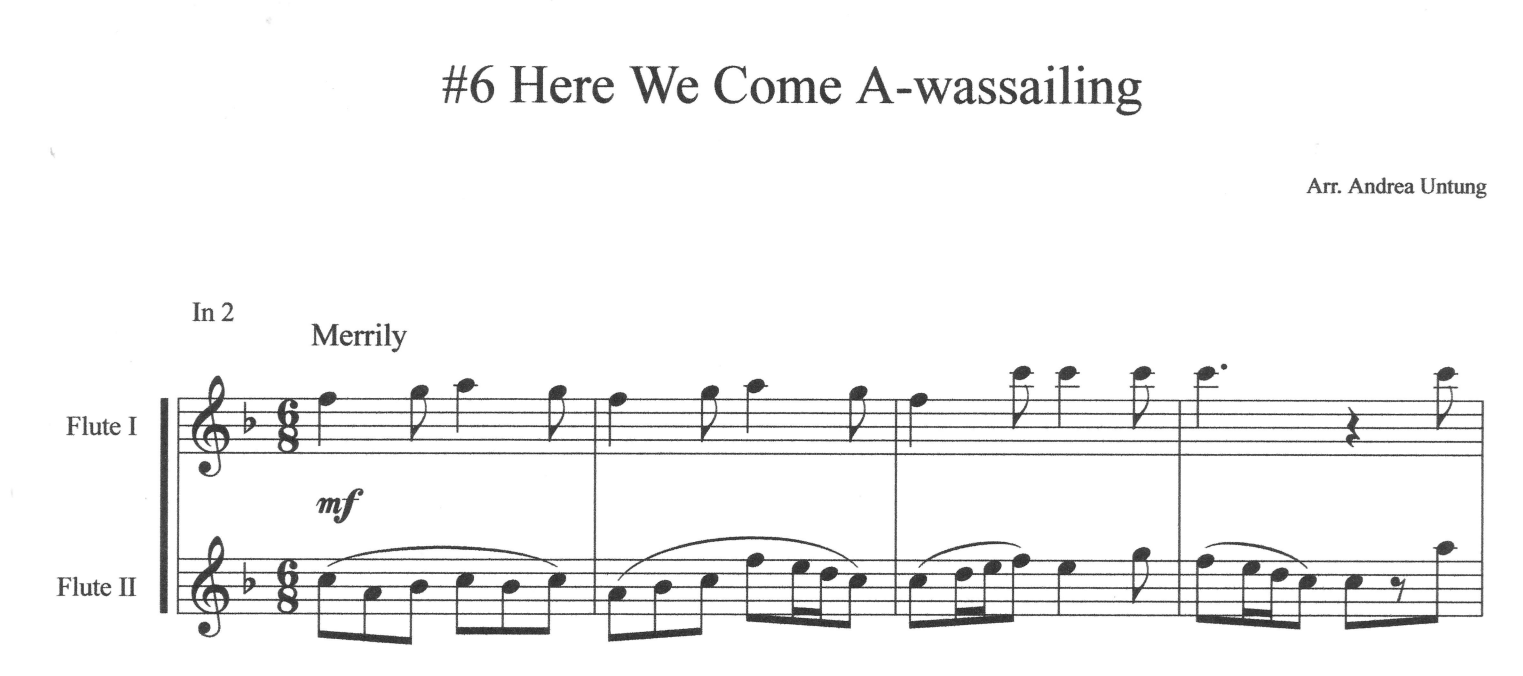
PREVIEW

Christmas Sheet Music

“Christmas Is Coming” is a traditional Christmas song that is often associated with the holiday season. It is not a well-known or widely recognized Christmas song with a distinct origin. It may be a lesser-known or regional carol, and there isn’t significant historical or cultural information available about it. However it is commonly sung as part of the Christmas carol …

The “Coventry Carol” is one of the oldest known carols, dating back to the 16th century. It is traditionally sung as part of a mystery play called the “Pageant of the Shearmen and Tailors.” The play was performed in Coventry, England, and depicted the biblical story of the Massacre of the Innocents, which is found in the Gospel of Matthew. …

“The Nutcracker” was composed by Tchaikovsky in 1891-1892. It is renowned for its enchanting melodies, vivid orchestration, and captivating storytelling. The ballet is divided into two acts and features a wide array of memorable characters and dances. “The Nutcracker” is known for its iconic pieces, including the “Dance of the Sugar Plum Fairy,” the “Waltz of the Flowers,” the “Russian …

“It’s Beginning to Look a Lot Like Christmas” is a popular Christmas song written by Meredith Willson. The song was originally composed in 1951 and has been performed by numerous artists over the years. It has become a classic holiday tune that is widely recognized and loved during the Christmas season.

“Quem Pastores Laudavere” is a traditional German Christmas carol that has been cherished for centuries. The title translates to “Whom the Shepherds Praised” in English. The origins of “Quem Pastores Laudavere” can be traced back to medieval Germany, likely around the 14th century. This carol has endured the test of time and has become a beloved part of the Christmas …

The Chorus of Shepherds is part of Reinecke’s larger body of work, which often drew inspiration from nature and storytelling. In this particular piece, Reinecke invites pianists to paint a musical picture of shepherds gathering in the countryside, their simple melodies echoing through the air. The composition is characterized by its light-hearted and joyful atmosphere, with cascading arpeggios and graceful …

“Shepherds, Shake Off Your Drowsy Sleep” is a traditional Christmas carol. The song’s lyrics encourage shepherds to wake up and go to Bethlehem to witness the birth of Jesus. The carol reflects the Biblical account of the shepherds who were visited by angels and instructed to go and see the newborn Christ. Due to the technical demands and the need …

Pyotr Ilyich Tchaikovsky’s “Waltz of the Snowflakes” is a mesmerizing piece of classical music that captures the enchantment and beauty of winter. Originally composed for the ballet “The Nutcracker,” this waltz has become a timeless favorite, evoking images of swirling snowflakes dancing in a winter wonderland. The “Waltz of the Snowflakes” is part of the second act of “The Nutcracker” …

“O Holy Night” (French: “Cantique de Noël”) is a Christmas carol that was written in French by poet Placide Cappeau and set to music by composer Adolphe Adam. Cappeau wrote the lyrics in 1843, and Adam composed the music later the same year. The carol was first performed in Roquemaure, France, during a midnight Mass on Christmas Eve in 1847. …

“Hark! The Herald Angels Sing” is a popular Christmas carol with lyrics written by Charles Wesley in 1739. The music for the carol was composed by Felix Mendelssohn in 1840. The carol is traditionally sung to celebrate the birth of Jesus Christ and is a staple in Christmas celebrations and church services. The carol goes on to tell the story …

“Carol of the Bells” is a popular Christmas carol with a distinctive and recognizable melody. The music for this carol was composed by Mykola Leontovych, a Ukrainian composer, in 1914. The original composition is titled “Shchedryk,” which means “The Generous One” in Ukrainian and refers to a traditional Ukrainian folk chant that welcomed the New Year.

“Angels from the Realms of Glory” is a traditional Christmas carol that is often sung during the holiday season. The lyrics were written by James Montgomery in 1816, and the music is usually set to the tune “Regent Square,” composed by Henry Thomas Smart in 1867.

“Three Christmas Songs” from “My First Songs” by Carl Reinecke. 1- Christmas Hymn, 2- Christmas Tree, 3- Cradle Song of the Infant Jesus Reinecke’s Three Christmas Songs are well-suited for intermediate to advanced pianists. While the technical demands are not overly challenging, a pianist with a solid foundation in technique and expressive playing will be better equipped to convey the …

“Deck the Halls” is a Welsh carol that dates back to the 16th century. The melody is believed to have originated from a traditional Welsh New Year’s Eve carol called “Nos Galan.” The song is known for its cheerful lyrics that celebrate the holiday season and the spirit of Christmas. The refrain “Fa-la-la-la-la, la-la-la-la” is a distinctive and memorable part …

Adventlied, Op. 71 is a sacred choral work for mixed voices and orchestra by Robert Schumann, composed in 1848. The text is a poem by Friedrich Rückert, “Dein König kommt in niedern Hüllen” (“Your King comes in humble guise”). The work is a festive and triumphant celebration of the coming of Christ, with a strong emphasis on hope and renewal. …