
O Holy Night

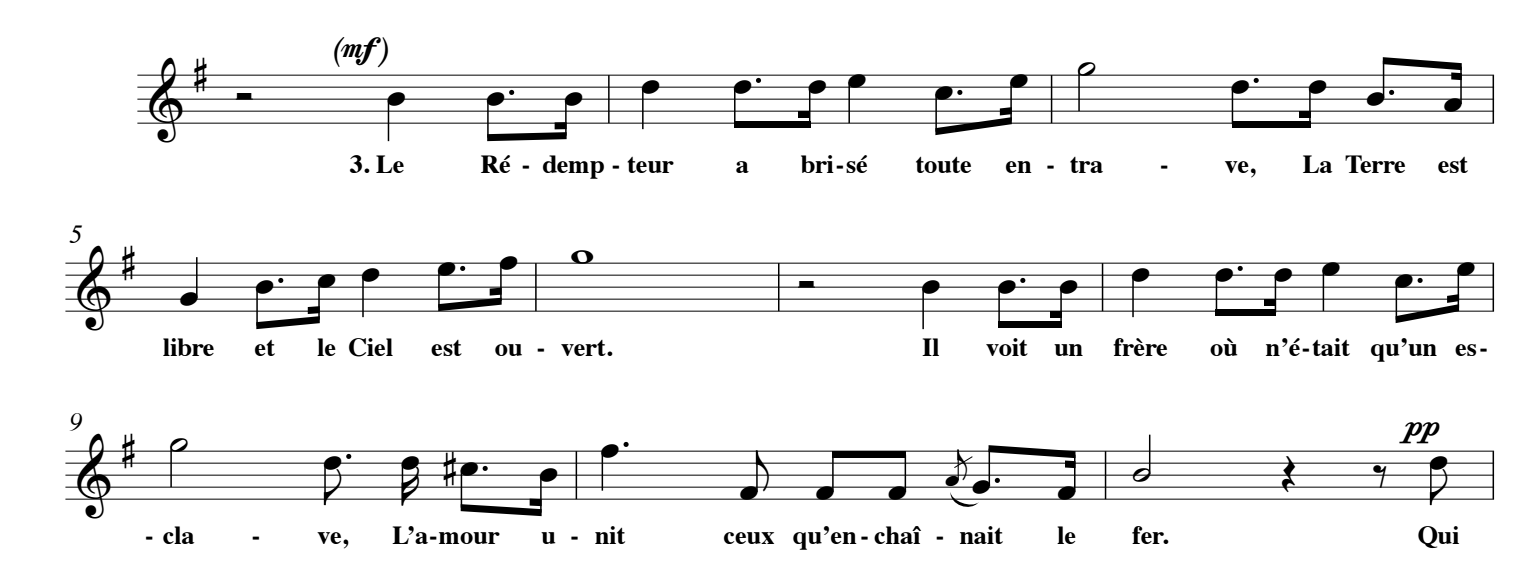
“O Holy Night” (French: “Cantique de Noël”) is a Christmas carol that was written in French by poet Placide Cappeau and set to music by composer Adolphe Adam. Cappeau wrote the lyrics in 1843, and Adam composed the music later the same year. The carol was first performed in Roquemaure, France, during a midnight Mass on Christmas Eve in 1847.. “O Holy Night” features a beautiful and expressive melody.
PREVIEW

Christmas Sheet Music

Three of the most popular Christmas carols in the world: “The First Noel”, “Once in Royal David’s City”, “Dong Dong Merrily on High” arranged for flute duet sheet music.

The “Christmas Eve Suite” is a collection of orchestral pieces derived from Nikolai Rimsky-Korsakov’s opera “Christmas Eve,” also known as “Noch’ pered Rozhdestvom” in Russian. The suite consists of several delightful and festive movements that capture the spirit of the holiday season.

Camille Saint-Saëns’ “Christmas Oratorio” (Oratorio de Noël), Op. 12, is a beautifully crafted sacred work for choir, soloists, and small orchestra. Composed in 1858, it is often performed during the Advent or Christmas season and is notable for its lyrical and serene character. The piece features 10 movements, and it is imbued with a sense of warmth and intimacy rather …

“The Twelve Days of Christmas” is a traditional English Christmas carol that dates back to the 18th century. The song is cumulative in nature, with each verse adding a new gift to the list. It is believed to have originated in France before coming to England and has become one of the most well-known and enduring Christmas songs. The song …

The authorship of “Rise Up, Shepherds, and Follow” is not definitively attributed to a single individual, as it is a traditional African-American spiritual that has been passed down through generations. The song tells the story of the shepherds’ journey to witness the birth of Jesus and encourages others to follow in their footsteps. While the technical demands of “Rise Up …

“Silent Night” (German: “Stille Nacht, heilige Nacht”) is a widely cherished Christmas carol known for its simple and serene melody. It was originally written in German by Joseph Mohr, with music composed by Franz Xaver Gruber.

Bach’s “Gloria in excelsis Deo,” BWV 191, is a separate and shorter work compared to the larger Mass in B minor. It is a sacred choral composition, and it consists of the Gloria section of the Latin Mass.

“Jesus Christ the Apple Tree” is a popular English hymn that dates back to the 18th century. The lyrics of this hymn are often attributed to an unknown author. It is sometimes referred to as “The Apple-Tree Song” or simply “The Apple Tree.” The hymn uses the metaphor of an apple tree to represent Jesus Christ, drawing parallels between the …

“Nun komm, der Heiden Heiland, BWV 659” is a chorale prelude composed by Johann Sebastian Bach. It is part of his larger collection of organ works, particularly those that involve chorale settings. The title translates to “Now come, Savior of the Gentiles” in English. The skill level required to play “Nun Komm der Heiden Heiland” on the piano can be …

Also known as “See Amid the Winter’s Snow” is a traditional Christmas carol with lyrics written by Edward Caswall and music composed by Sir John Goss. It was first published in 1854. This carol is known for its serene and reflective lyrics that tell the story of the birth of Jesus Christ and the adoration of the shepherds and angels. …

“O Holy Night” (French: “Cantique de Noël”) is a Christmas carol that was written in French by poet Placide Cappeau and set to music by composer Adolphe Adam. Cappeau wrote the lyrics in 1843, and Adam composed the music later the same year. The carol was first performed in Roquemaure, France, during a midnight Mass on Christmas Eve in 1847.. …

The “Spanish Dance” is also known as the “Chocolate Dance” in some productions. This dance is characterized by its lively, rhythmic, and spirited nature, reflecting the Spanish culture. Dancers often perform intricate footwork, creating an energetic and engaging display. This dance is often presented as a celebration of Spanish delicacies, particularly chocolate. The dancers may mimic the act of breaking …

“Hark! The Herald Angels Sing” is often performed with organ accompaniment, and it sounds particularly majestic when played on an organ due to the instrument’s rich and powerful sound. The organ arrangement of the carol can vary in complexity, with some versions featuring intricate harmonies and ornamentation. The music for the carol was composed by Felix Mendelssohn in 1840. The …

“Amazing Grace” is a well-known Christian hymn that has become a classic in the realm of religious and folk music. The lyrics were written by John Newton, a British sailor and former slave trader, and the music is a traditional tune, possibly of Scottish origin. The hymn reflects Newton’s personal spiritual transformation and his understanding of divine grace and forgiveness.

Schubert’s “Ave Maria” is a poignant and reverent piece that has been embraced for its emotional depth and melodic richness. It has been widely used in religious ceremonies, including weddings and other solemn occasions. The lyrics are based on a German translation of Sir Walter Scott’s poem “The Lady of the Lake.”