
Mendelssohn – Six Children’s Pieces

Home » Piano Sheet Music » Mendelssohn – Six Children’s Pieces

Felix Mendelssohn, a prominent figure in the Romantic era of classical music, has left behind a treasure trove of compositions that continue to captivate audiences today. Among his many works, the “Six Children’s Pieces” for piano stand out as charming and delightful gems that showcase Mendelssohn’s ability to craft music that appeals to both young and mature audiences alike.

Mendelssohn’s “Six Children’s Pieces” provide an excellent opportunity for pianists to explore the expressive and nuanced elements of the instrument. The pieces are well-suited for developing skills in phrasing, dynamic control, and delicate touch. While the technical demands are moderate, the true challenge lies in capturing the essence of each piece’s character and conveying Mendelssohn’s intentions through thoughtful interpretation.

These delightful pieces are accessible to pianists of intermediate skill levels and above. While beginners may find certain passages challenging, the overall technical demands are well within reach for those who have mastered fundamental piano techniques. The collection serves as an excellent stepping stone for pianists looking to expand their repertoire and explore the expressive nuances of Mendelssohn’s music.
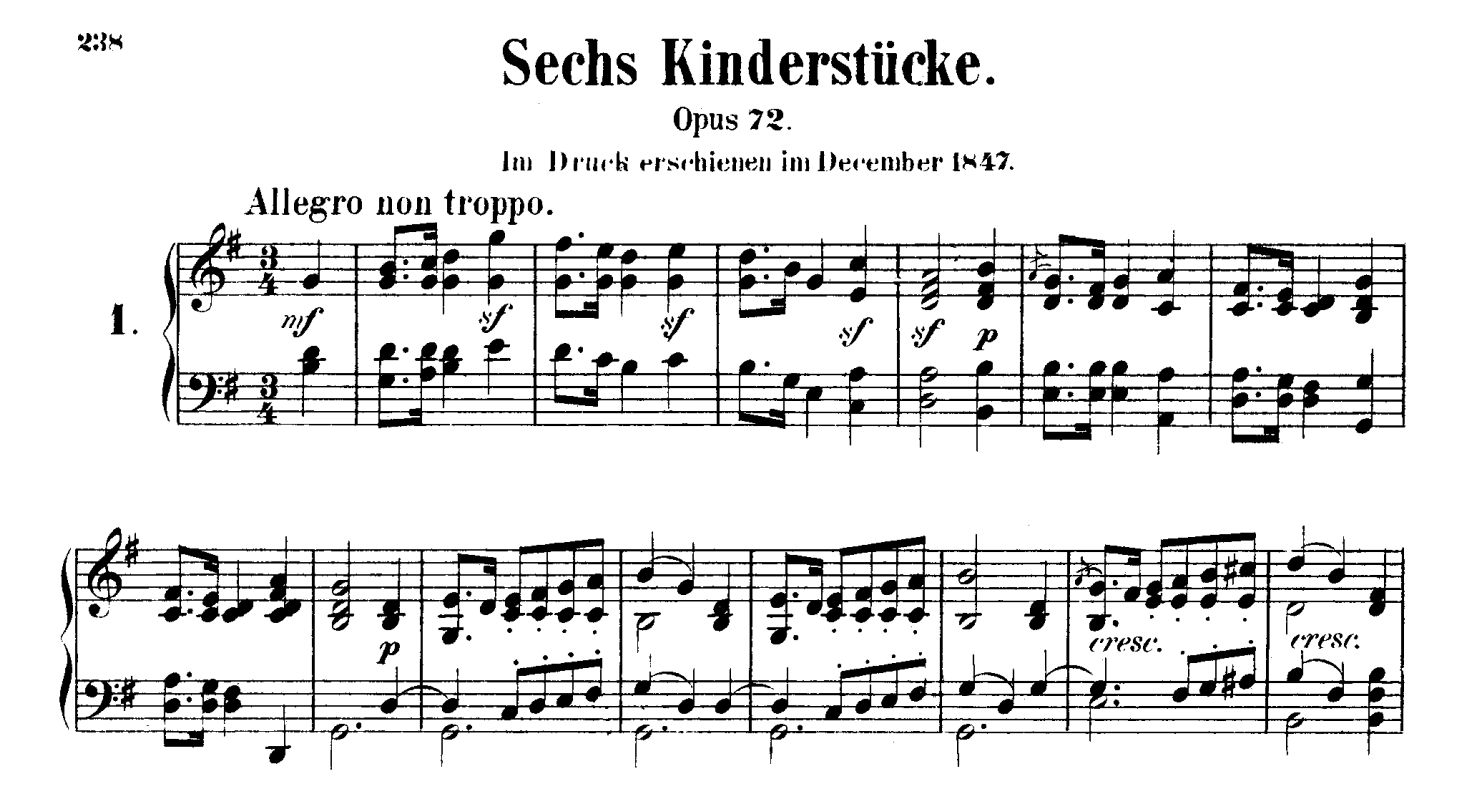
PREVIEW

Christmas Sheet Music

“The Twelve Days of Christmas” is a traditional English Christmas carol that dates back to the 18th century. The song is cumulative in nature, with each verse adding a new gift to the list. It is believed to have originated in France before coming to England and has become one of the most well-known and enduring Christmas songs. The song …

“In Dulci Jubilo,” which translates to “In Sweet Rejoicing,” is a traditional German carol that dates back to the 14th century. Its jubilant melody and lively rhythm make it a perfect choice for violinists seeking to showcase their skills while spreading holiday cheer. The piece is characterized by its dance-like quality, combining elements of medieval and Renaissance music with a …

“Once in Royal David’s City” is a popular Christmas carol that is often sung during the Christmas season. It was written by the English poet Cecil Frances Alexander and was first published in 1848. The hymn is typically sung to the tune “Irby,” which was composed by Henry John Gauntlett.

“Ave Maria” in A major is part of his larger work, the “Six Duets for Two Voices and Organ,” Op. 10. This collection includes settings of various sacred texts, and the “Ave Maria” in A major is one of the pieces within this set. These duets were composed in 1858 and showcase Saint-Saëns’s mastery of choral writing and his ability …

“O Christmas Tree,” also known as “O Tannenbaum,” is a traditional German Christmas carol. The melody for this song has been used for various purposes over the years, including other Christmas songs. The song is typically performed in a reflective and reverent manner, paying homage to the tradition of decorating Christmas trees. Whether you’re a beginner pianist embarking on your …

“Silent Night” (German: “Stille Nacht, heilige Nacht”) is a widely cherished Christmas carol known for its simple and serene melody. It was originally written in German by Joseph Mohr, with music composed by Franz Xaver Gruber.

“O Nata Lux de Lumine” or “O Light Born of Light” is a hymn often associated with the Christian liturgy, particularly the office of Compline. It is commonly used during the Advent season.

“Up on the House Top” is a popular Christmas song that was written by Benjamin Hanby in the 19th century. It’s a cheerful and catchy tune that tells the story of Santa Claus and his reindeer landing on the rooftop to deliver presents to children.

“The First Nowell,” also spelled as “The First Noel,” is a traditional English Christmas carol. The word “Noel” is an old English word derived from the French “Noël,” which means Christmas. The carol dates back to the 18th century or earlier, and it tells the story of the nativity of Jesus Christ.

The Chorus of Shepherds is part of Reinecke’s larger body of work, which often drew inspiration from nature and storytelling. In this particular piece, Reinecke invites pianists to paint a musical picture of shepherds gathering in the countryside, their simple melodies echoing through the air. The composition is characterized by its light-hearted and joyful atmosphere, with cascading arpeggios and graceful …

“Christmas in Sicily” is one of the masterpieces of Italian-American composer Pietro Alessandro Yon. Yon was a renowned organist and composer known for his contributions to sacred and holiday music.

Bartók’s Romanian Christmas Songs is a delightful collection comprising six pieces, each a musical gem reflecting the festive traditions of Romania. The composer’s keen interest in folk music is evident in the use of modal scales, rhythmic intricacies, and the incorporation of rustic dance elements. From the lively and celebratory “Dance of the Bagpipes” to the contemplative and haunting “Pillow …

Peter J. Wilhousky wrote the lyrics and music for “Carol of the Russian Children” in 1936. He is the same composer who adapted the Ukrainian folk chant “Shchedryk” (sometimes spelled “Shchedrik”) to create the English version of “Carol of the Bells.” The lyrics of “Carol of the Russian Children” celebrate the beauty of the Russian landscape, particularly the valleys and …

“Carol of the Bells” is a popular Christmas carol with a distinctive and recognizable melody. The music for this carol was composed by Mykola Leontovych, a Ukrainian composer, in 1914. The original composition is titled “Shchedryk,” which means “The Generous One” in Ukrainian and refers to a traditional Ukrainian folk chant that welcomed the New Year.

“Angels We Have Heard on High” is a traditional Christmas carol, originating from France. The song is best known for its “Gloria in excelsis Deo” refrain, which reflects the biblical story of angels proclaiming the birth of Jesus to shepherds. The melody, known as “Gloria”, is believed to have been written in the 18th century, while the English lyrics were …