
God Rest Ye Merry Gentlemen

Home » Flute Sheet Music » Christmas Flute Sheet Music » God Rest Ye Merry Gentlemen

“God Rest Ye Merry, Gentlemen” has been recorded and performed by numerous artists and choirs over the years and remains a popular and enduring part of the Christmas music tradition. It has also been adapted and arranged in various musical styles and continues to be a favorite during the holiday season. This one is arranged for the flute.
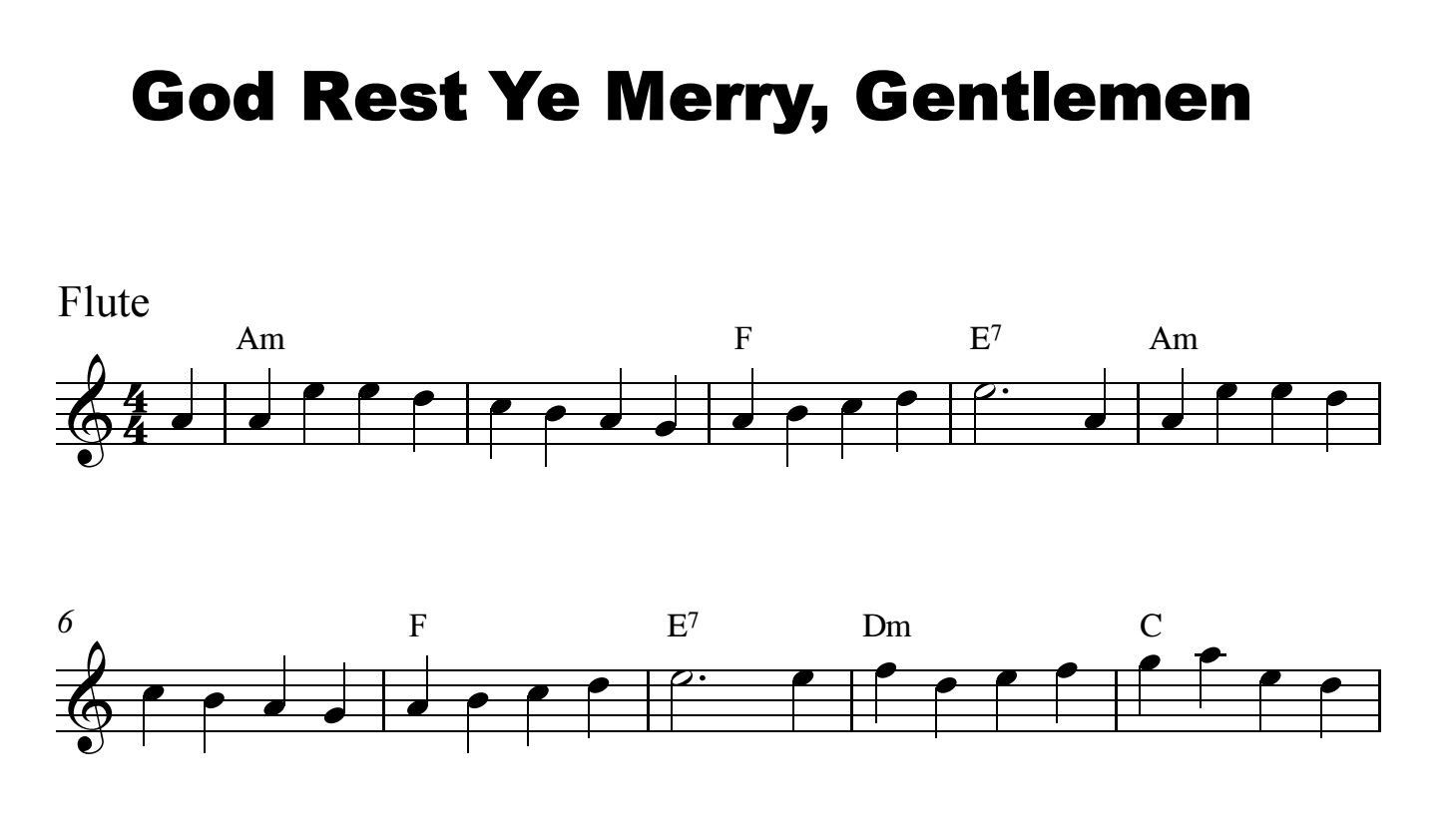
PREVIEW

Christmas Sheet Music

Niels Gade, a Danish composer and conductor of the Romantic era, created the “Christmas Tree” as part of a set of piano pieces dedicated to his children. Op.36 No.2 is particularly charming, with its playful melodies and evocative harmonies that transport listeners to a winter wonderland adorned with twinkling lights and festive decorations. The piece is characterized by its joyous …

“Weihnachtslied,” which translates to “Christmas Song” in English, is a charming piano piece that reflects Schumann’s mastery in conveying emotion through music. Composed in 1848, it is a part of his larger collection, “Album für die Jugend” (Album for the Young), which aims to provide musical education and enjoyment for young pianists. This piece is characterized by its melodic simplicity …

“We Three Kings of Orient Are” tells the story of the Magi’s journey to Bethlehem to witness the birth of Jesus. The melody, with its regal and mysterious undertones, perfectly captures the essence of the biblical narrative. Pianists are drawn to the piece not only for its festive appeal but also for the opportunity it provides to showcase their interpretive …

Composed in 1741, Handel’s Messiah was initially written for a choir and orchestra. The work is divided into three parts, each telling a different aspect of the story of Christ, from the prophecy of the Messiah’s coming to the ultimate redemption. The piece is known for its intricate choral passages, powerful melodies, and emotional depth. George Frideric Handel’s Messiah stands …

“A Great and Mighty Wonder” is a hymn with lyrics written by St. Germanus, Bishop of Constantinople, in the 7th century. The hymn reflects on the miraculous nature of the Incarnation, celebrating the birth of Jesus Christ. The text has been translated into English by various authors, and the melody is often associated with the German hymn “Es ist ein …

“Song of the Bagpipers” in Neapolitan is known as “Canzone dei Zampognari.” This traditional Neapolitan Christmas song is often associated with the image of bagpipers playing festive music during the holiday season in Southern Italy. Due to the technical demands and nuanced expression required, “Song of the Bagpipers” is best suited for intermediate to advanced pianists. A solid understanding of …

“Wachet auf, ruft uns die Stimme” BWV 645 is part of Bach’s Orgelbüchlein (Little Organ Book), which is a collection of chorale preludes for the organ. This particular chorale prelude is based on the hymn of the same name by Philipp Nicolai. The hymn itself is associated with the Advent season and is often used in church services. The piece …

“Once in Royal David’s City” is a popular Christmas carol that is often sung during the Christmas season. It was written by the English poet Cecil Frances Alexander and was first published in 1848. The hymn is typically sung to the tune “Irby,” which was composed by Henry John Gauntlett.

“O Come, Little Children” is a traditional German Christmas carol originally titled “Ihr Kinderlein, kommet.” The lyrics were written by Christoph von Schmid in the early 19th century, and the music was composed by Johann Abraham Peter Schulz. It is a gentle and tender carol that welcomes children to the Christmas celebration. The melody of “O Come, Little Children” is …

“It Came Upon the Midnight Clear” is a popular Christmas carol with lyrics written by Edmund Sears and music composed by Richard Storrs Willis. The carol was first published in 1850. The tune composed by Richard Storrs Willis is a beautiful and peaceful melody, often sung during the Christmas season to celebrate the birth of Jesus Christ and to convey …

The “Spanish Dance” is also known as the “Chocolate Dance” in some productions. This dance is characterized by its lively, rhythmic, and spirited nature, reflecting the Spanish culture. Dancers often perform intricate footwork, creating an energetic and engaging display. This dance is often presented as a celebration of Spanish delicacies, particularly chocolate. The dancers may mimic the act of breaking …

“Let Our Gladness Have No End” is a hymn that celebrates joy and gratitude and a great addition to your Christmas song list! “Let Our Gladness Have No End” is a delightful addition to any pianist’s repertoire. Its joyful and celebratory nature makes it an uplifting piece to play, and with dedication and practice, intermediate to advanced pianists can bring …

The gentle melody of Grieg’s Christmas Lullaby, also known as “Vuggesang,” paints a picture of a peaceful winter night, making it a perfect addition to any pianist’s repertoire, especially during the festive period. Playing this piece on the piano not only offers a wonderful opportunity to showcase technical skills but also allows the musician to convey the warm, comforting ambiance …

“The First Nowell,” also spelled as “The First Noel,” is a traditional English Christmas carol. The word “Noel” is an old English word derived from the French “Noël,” which means Christmas. The carol dates back to the 18th century or earlier, and it tells the story of the nativity of Jesus Christ.

“Fum, Fum, Fum” is a traditional Christmas carol that originated in Catalonia, a region in northeastern Spain. The lyrics of the carol are simple and joyful. The word “fum” means “smoke” in Catalan, and the repeated “fum, fum, fum” in the song is often interpreted as an onomatopoeic representation of a drum or a strumming sound. The carol typically celebrates …