
O Come All Ye Faithful

Home » Flute Sheet Music » O Come All Ye Faithful

“O Come, All Ye Faithful” is typically sung in churches and at Christmas gatherings as a way to celebrate the birth of Jesus and express devotion to Him. It has been covered by numerous artists and is a cherished part of the Christmas musical tradition. Arranged for the Flute.
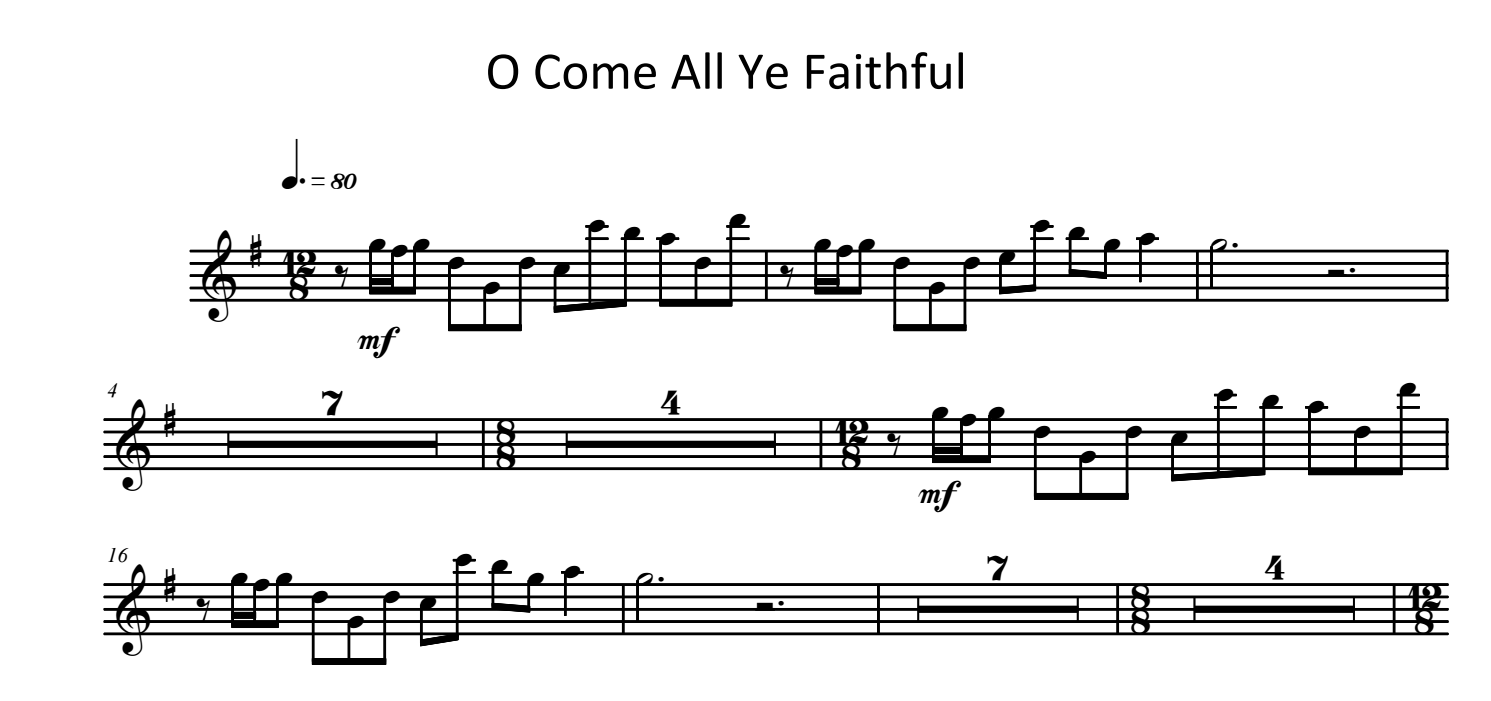
PREVIEW

Christmas Sheet Music

Camille Saint-Saëns’ “Oratorio de Noël,” also known as his Christmas Oratorio, Op. 12, is a splendid and spiritually evocative composition. Written in 1858, this oratorio reflects Saint-Saëns’ mastery in blending sacred and festive elements. The piano rendition of Saint-Saëns’ Christmas Oratorio Op. 12 demands a pianist with an intermediate to advanced skill level. The piece presents challenges in terms of …

“Die musikalische Schlittenfahrt,” which translates to “The Musical Sleigh Ride” in English, is a delightful and festive composition by the German composer Leopold Mozart. Leopold Mozart, father of the renowned Wolfgang Amadeus Mozart, was a composer, conductor, and violinist during the 18th century. Leopold Mozart’s “Die musikalische Schlittenfahrt” is a musical depiction of a sleigh ride, capturing the joy and …

The lyrics of “Gaudete” are written in Latin and are inspired by verses from the Bible, particularly Philippians 4:4-7. The carol expresses joy and celebration at the coming of Christ and encourages believers to rejoice in the Lord. It is a lively and upbeat song that is typically sung with enthusiasm and energy.

“We Wish You a Merry Christmas” is a traditional English Christmas carol that dates back to the 16th century. It’s a joyful and lively song that’s popular during the holiday season. The melody is relatively simple and repetitive, making it a great choice for beginner to intermediate cellists who are looking for festive repertoire. Since this piece has a lively …

“Les Pifferari” or “The Pipers” is a piece for piano solo composed by Fernand Halphen. The title refers to the traditional Italian bagpipers who play during the Christmas season. The piece captures the festive and lively spirit associated with these musicians. Fernand Halphen, like Gounod, was a French composer, and his works encompass various genres, including orchestral, chamber, and vocal …

“We Wish You a Merry Christmas” is a traditional English Christmas carol that dates back to the 16th century. Its cheerful melody and festive lyrics make it a popular choice during the holiday season. The song is in a lively 3/4 time signature, giving it a waltz-like feel, and is commonly arranged in the key of G major for beginners. …

“Lo, How a Rose E’er Blooming” is a classic Christmas carol that carries a rich history and deep spiritual meaning. The lyrics of the carol poetically depict the prophetic anticipation of the birth of Jesus Christ using the metaphor of a rose blooming in winter, symbolizing the unexpected and miraculous nature of the Incarnation. One of the key elements that …

Gounod’s “L’Angelus” captures the solemnity and reverence of the Angelus prayer through its expressive melodies and harmonies. The title is French for “The Angelus,” and the music aims to convey the spirit of this prayerful moment. “L’Angelus” is a vocal work that draws inspiration from the traditional Catholic devotion known as the Angelus, commemorating the Annunciation. The piece is typically …

Franz Liszt, the Hungarian composer and virtuoso pianist of the Romantic era, left an indelible mark on the world of classical music with his innovative compositions and unparalleled piano skills. One of his lesser-known yet captivating pieces is “March of The Three Magi” (S. 388), a musical gem that takes the listener on a majestic journey. Playing this piece on …

“Lighting the Candles on the Tree” captures the heartwarming and joyous moment of lighting the candles on a Christmas tree. It is a beautifully evocative piece that conveys the festive atmosphere and the magical anticipation associated with the holiday season. “Lighting the Candles on the Tree” is part of Franz Liszt’s “Weihnachtsbaum” (The Christmas Tree) collection, composed in 1874. One …

“It Came Upon the Midnight Clear” is a popular Christmas carol with lyrics written by Edmund Hamilton Sears in 1849 and music composed by Richard Storrs Willis. The song’s lyrics emphasize peace and goodwill and reflect on the angels’ message of peace to the shepherds on the night of Christ’s birth. “It Came Upon The Midnight Clear” is characterized by …

Herbert Sharpe (1876–1955) was a British composer and organist known for his contributions to choral and organ music. He held various positions as a church organist and choir director in England during his lifetime. Joyous Bells is one of his sacred works. One of the remarkable aspects of “Joyous Bells” is its versatility, making it accessible to pianists of various …

“Fum, Fum, Fum” is a traditional Christmas carol that originated in Catalonia, a region in northeastern Spain. The lyrics of the carol are simple and joyful. The word “fum” means “smoke” in Catalan, and the repeated “fum, fum, fum” in the song is often interpreted as an onomatopoeic representation of a drum or a strumming sound. The carol typically celebrates …

Also known as “See Amid the Winter’s Snow” is often sung in church services, caroling events, and Christmas concerts. Its gentle melody and lyrics capture the reverence and wonder of the Christmas story, making it a cherished carol during the holiday season.

Pyotr Ilyich Tchaikovsky’s “Waltz of the Snowflakes” is a mesmerizing piece of classical music that captures the enchantment and beauty of winter. Originally composed for the ballet “The Nutcracker,” this waltz has become a timeless favorite, evoking images of swirling snowflakes dancing in a winter wonderland. The “Waltz of the Snowflakes” is part of the second act of “The Nutcracker” …