
O Holy Night

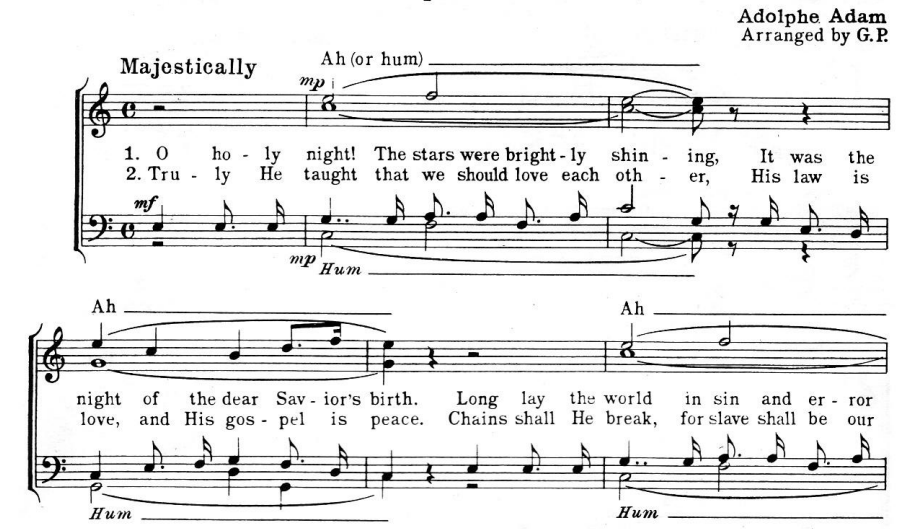
“O Holy Night” (French: “Cantique de Noël”) is a Christmas carol that was written in French by poet Placide Cappeau and set to music by composer Adolphe Adam. Cappeau wrote the lyrics in 1843, and Adam composed the music later the same year. The carol was first performed in Roquemaure, France, during a midnight Mass on Christmas Eve in 1847.. “O Holy Night” features a beautiful and expressive melody. It is typically performed in 6/8 time and in a slow, reverent manner, emphasizing the emotional and spiritual aspects of the song.

Playing “O Holy Night” on the piano is a rewarding endeavor that allows musicians to immerse themselves in the timeless beauty of this Christmas classic. While the original version poses challenges, intermediate to advanced pianists can develop their skills to master this masterpiece. With dedication and practice, pianists can create a spellbinding rendition that captures the essence of the season and resonates with the hearts of listeners.
PREVIEW

Christmas Sheet Music

“It Came Upon the Midnight Clear” is a popular Christmas carol with lyrics written by Edmund Hamilton Sears in 1849 and music composed by Richard Storrs Willis. The song’s lyrics emphasize peace and goodwill and reflect on the angels’ message of peace to the shepherds on the night of Christ’s birth. “It Came Upon The Midnight Clear” is characterized by …

“We Wish You a Merry Christmas” is a traditional English Christmas carol that dates back to the 16th century. It’s a joyful and lively song that’s popular during the holiday season. The melody is relatively simple and repetitive, making it a great choice for beginner to intermediate cellists who are looking for festive repertoire. Since this piece has a lively …

“Jingle Bells” is one of the most well-known and beloved Christmas songs worldwide. It was written by James Lord Pierpont and published under the title “One Horse Open Sleigh” in 1857.

“Hark! The Herald Angels Sing” is often performed with organ accompaniment, and it sounds particularly majestic when played on an organ due to the instrument’s rich and powerful sound. The organ arrangement of the carol can vary in complexity, with some versions featuring intricate harmonies and ornamentation. The music for the carol was composed by Felix Mendelssohn in 1840. The …

“Bells Across The Snow” is a piano piece that captures the festive spirit associated with the sound of bells during the holiday season. Gounod’s composition is characterized by its graceful phrasing, delicate dynamics, and enchanting harmonies. The piece is relatively short, making it an accessible choice for pianists looking to add a charming and expressive work to their repertoire. The …

“Amazing Grace” is a well-known Christian hymn with a history that dates back to the 18th century. The lyrics were written by the English poet and clergyman John Newton, and the music is often attributed to an anonymous composer. The hymn has become a staple in Christian worship and is widely recognized and appreciated for its profound and uplifting message.

The exact origins of “God Rest Ye Merry, Gentlemen” are not well-documented, but it is believed to date back to the 16th century or earlier. It is one of the many traditional carols that have been passed down through generations. The phrase “God rest ye merry” is often misunderstood in modern English. In this context, “rest” means “keep” or “make,” …

“The First Nowell,” also spelled as “The First Noel,” is a traditional English Christmas carol. The word “Noel” is an old English word derived from the French “Noël,” which means Christmas. The carol dates back to the 18th century or earlier, and it tells the story of the nativity of Jesus Christ.

“Angels from the Realms of Glory” is a Christmas carol with lyrics written by Scottish poet James Montgomery and music composed by Henry Thomas Smart. Smart was an English organist, composer, and conductor known for his hymn tunes. The carol was first published in 1816 in Montgomery’s newspaper, the Sheffield Iris, under the title “Nativity.” The lyrics of the carol …

“Angels We Have Heard on High” is a traditional Christmas carol, originating from France. The song is best known for its “Gloria in excelsis Deo” refrain, which reflects the biblical story of angels proclaiming the birth of Jesus to shepherds. The melody, known as “Gloria”, is believed to have been written in the 18th century, while the English lyrics were …

Gounod’s “L’Angelus” captures the solemnity and reverence of the Angelus prayer through its expressive melodies and harmonies. The title is French for “The Angelus,” and the music aims to convey the spirit of this prayerful moment. “L’Angelus” is a vocal work that draws inspiration from the traditional Catholic devotion known as the Angelus, commemorating the Annunciation. The piece is typically …

“I Heard the Bells on Christmas Day” is a Christmas carol with lyrics written by the American poet Henry Wadsworth Longfellow. The poem was initially composed on December 25, 1863, during the American Civil War. Longfellow had experienced personal tragedy, with his son Charles severely wounded in the war, and he was deeply affected by the state of the nation. …

“Les Pifferari” or “The Pipers” is a piece for piano solo composed by Fernand Halphen. The title refers to the traditional Italian bagpipers who play during the Christmas season. The piece captures the festive and lively spirit associated with these musicians. Fernand Halphen, like Gounod, was a French composer, and his works encompass various genres, including orchestral, chamber, and vocal …

Niels Gade, a Danish composer and conductor of the Romantic era, created the “Christmas Tree” as part of a set of piano pieces dedicated to his children. Op.36 No.2 is particularly charming, with its playful melodies and evocative harmonies that transport listeners to a winter wonderland adorned with twinkling lights and festive decorations. The piece is characterized by its joyous …

Good King Wenceslas is a popular Christmas carol that tells the story of the 10th-century Duke of Bohemia, Wenceslas I, who was later canonized as a saint. The carol’s lyrics were written by John Mason Neale in 1853, and the tune is based on a 13th-century spring carol, “Tempus adest floridum” (“The time is near for flowering”). The melody has …