
O Holy Night

“O Holy Night” (French: “Cantique de Noël”) is a Christmas carol that was written in French by poet Placide Cappeau and set to music by composer Adolphe Adam. Cappeau wrote the lyrics in 1843, and Adam composed the music later the same year. The carol was first performed in Roquemaure, France, during a midnight Mass on Christmas Eve in 1847.. “O Holy Night” features a beautiful and expressive melody. It is typically performed in 6/8 time and in a slow, reverent manner, emphasizing the emotional and spiritual aspects of the song.

Playing “O Holy Night” on the piano is a rewarding endeavor that allows musicians to immerse themselves in the timeless beauty of this Christmas classic. While the original version poses challenges, intermediate to advanced pianists can develop their skills to master this masterpiece. With dedication and practice, pianists can create a spellbinding rendition that captures the essence of the season and resonates with the hearts of listeners.
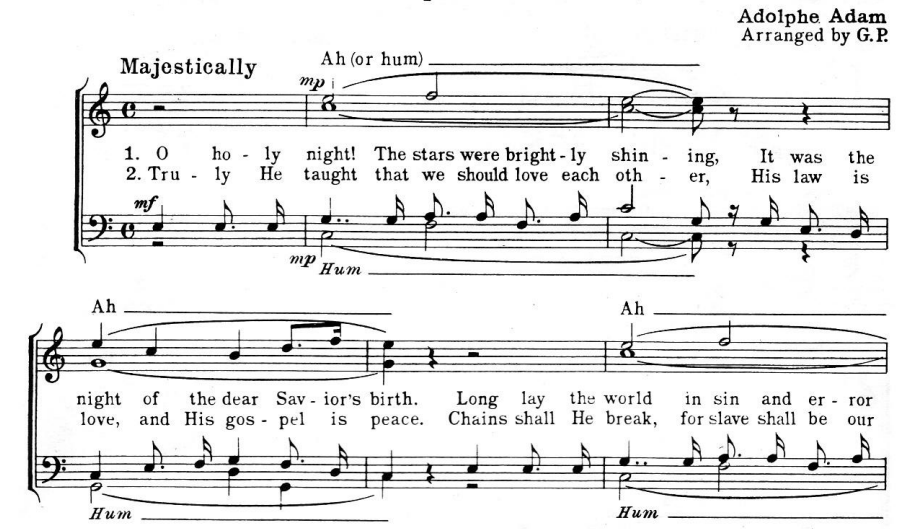
PREVIEW

Christmas Sheet Music

“We Wish You a Merry Christmas” is a traditional English Christmas carol that dates back to the 16th century. It’s a joyful and lively song that’s popular during the holiday season. The melody is relatively simple and repetitive, making it a great choice for beginner to intermediate cellists who are looking for festive repertoire. Since this piece has a lively …

The Russian Trepak, also known as the “Russian Dance,” is a lively and energetic piece from Tchaikovsky’s Nutcracker Suite. It captures the spirit of Russian folk dance, complete with its lively tempo and infectious melodies. The music is characterized by its brisk pace, intricate rhythms, and triumphant flair, making it a favorite among both performers and listeners. While Tchaikovsky originally …

“All My Heart This Night Rejoices” is a traditional German Christmas carol that originated in the 17th century. The lyrics were written by Paul Gerhardt, and the melody is attributed to Johann Georg Ebeling. The hymn beautifully captures the joy and wonder of the Christmas season, expressing gratitude for the birth of Jesus Christ. The hymn’s expressive nature invites pianists …

Claude Debussy, a prominent figure in Impressionist music, is celebrated for his innovative compositions that break away from traditional harmonic structures and embrace atmospheric and evocative tonalities. One such enchanting piece is “Noël des Enfants Qui N’ont Plus de Maison” (Christmas Carol for Children Without a Home), a piano work that captures the essence of the holiday season with a …

“O Come, O Come, Emmanuel” is a well-known Christmas carol with its origins in medieval Latin hymns. It is a hymn of anticipation, longing for the coming of the Messiah. The lyrics are based on a set of seven Advent antiphons, each addressing a different name or attribute of Christ and used in the seven days leading up to Christmas. …

“The Sussex Mummers’ Christmas Carol” is a traditional English carol that originated in the county of Sussex, England. It is also known by other titles, including “The Cherry Tree Carol” and “Joseph Was An Old Man.” The carol tells the story of the Nativity, particularly focusing on Joseph’s reaction to Mary’s pregnancy. While the piece carries a certain level of …

The song’s lyrics convey a message of comfort and joy during the Christmas season, reminding listeners to have a cheerful and steadfast spirit. The carol often features a lively and upbeat melody and is typically sung in a celebratory manner. Arranged in organ sheet music.

“What Sweeter Music” is a Christmas carol composed by British composer John Rutter. Rutter is known for his contributions to modern choral music, and “What Sweeter Music” is one of his well-known compositions. The carol reflects the joy and celebration of the Christmas season, emphasizing the birth of Jesus Christ as a cause for great rejoicing. John Rutter’s musical setting …

Felix Mendelssohn, a prominent figure in the Romantic era of classical music, has left behind a treasure trove of compositions that continue to captivate audiences today. Among his many works, the “Six Children’s Pieces” for piano stand out as charming and delightful gems that showcase Mendelssohn’s ability to craft music that appeals to both young and mature audiences alike. Mendelssohn’s …

Bartók’s Romanian Christmas Songs is a delightful collection comprising six pieces, each a musical gem reflecting the festive traditions of Romania. The composer’s keen interest in folk music is evident in the use of modal scales, rhythmic intricacies, and the incorporation of rustic dance elements. From the lively and celebratory “Dance of the Bagpipes” to the contemplative and haunting “Pillow …

Pyotr Ilyich Tchaikovsky’s “Waltz of the Snowflakes” is a mesmerizing piece of classical music that captures the enchantment and beauty of winter. Originally composed for the ballet “The Nutcracker,” this waltz has become a timeless favorite, evoking images of swirling snowflakes dancing in a winter wonderland. The “Waltz of the Snowflakes” is part of the second act of “The Nutcracker” …

“O Come, All Ye Faithful” is typically sung in churches and at Christmas gatherings as a way to celebrate the birth of Jesus and express devotion to Him. It has been covered by numerous artists and is a cherished part of the Christmas musical tradition. Arranged for the Flute.

“Christmas Chimes” (Juleklokkerne in Danish) is one of Gade’s compositions, and it’s a festive piece that captures the spirit of the holiday season. It’s often performed during Christmas concerts and celebrations. Niels Gade was a prominent Romantic composer, conductor, and violinist, known for his contributions to Danish music in the 19th century. Christmas Chimes Op.36 No.1 is well-suited for intermediate …

“Angels We Have Heard on High” is a traditional Christmas carol with French origins. The English lyrics were written by James Chadwick, an English Roman Catholic bishop, in the mid-19th century. The music for “Angels We Have Heard on High” is based on the traditional French melody of “Gloria in excelsis Deo,” which means “Glory to God in the Highest.” …

“Jolly Old Saint Nicholas” is a traditional Christmas song that dates back to the 19th century. The lyrics were written by Benjamin Hanby in 1864, and the melody is believed to be a traditional American tune. The song is a festive and lively portrayal of Santa Claus, capturing the anticipation and joy of the holiday season. “Jolly Old Saint Nicholas” …