
Purcell – Abdelazer Z.570

Home » Piano Sheet Music » Purcell – Abdelazer Z.570

“Abdelazer, or The Moor’s Revenge” is a semi-opera composed by Henry Purcell in 1695. It features spoken dialogue, instrumental music, and songs, and it is considered one of Purcell’s most famous theatrical works. The title character, Abdelazer, seeks revenge for a perceived slight, and the narrative unfolds through a combination of spoken drama and musical interludes.

The Rondeau from “Abdelazer” is particularly well-known and has been used in various adaptations, including Benjamin Britten’s “The Young Person’s Guide to the Orchestra.” The distinctive melody has made it a recognizable and enduring piece in classical music.

Purcell’s Abdelazer Z.570 is considered an intermediate to advanced-level piano piece. Pianists attempting to master this composition should possess a solid foundation in technique, finger dexterity, and control. The demanding ornamentation, intricate phrasing, and precise articulation required throughout the piece make it suitable for players who have honed their skills through years of practice.
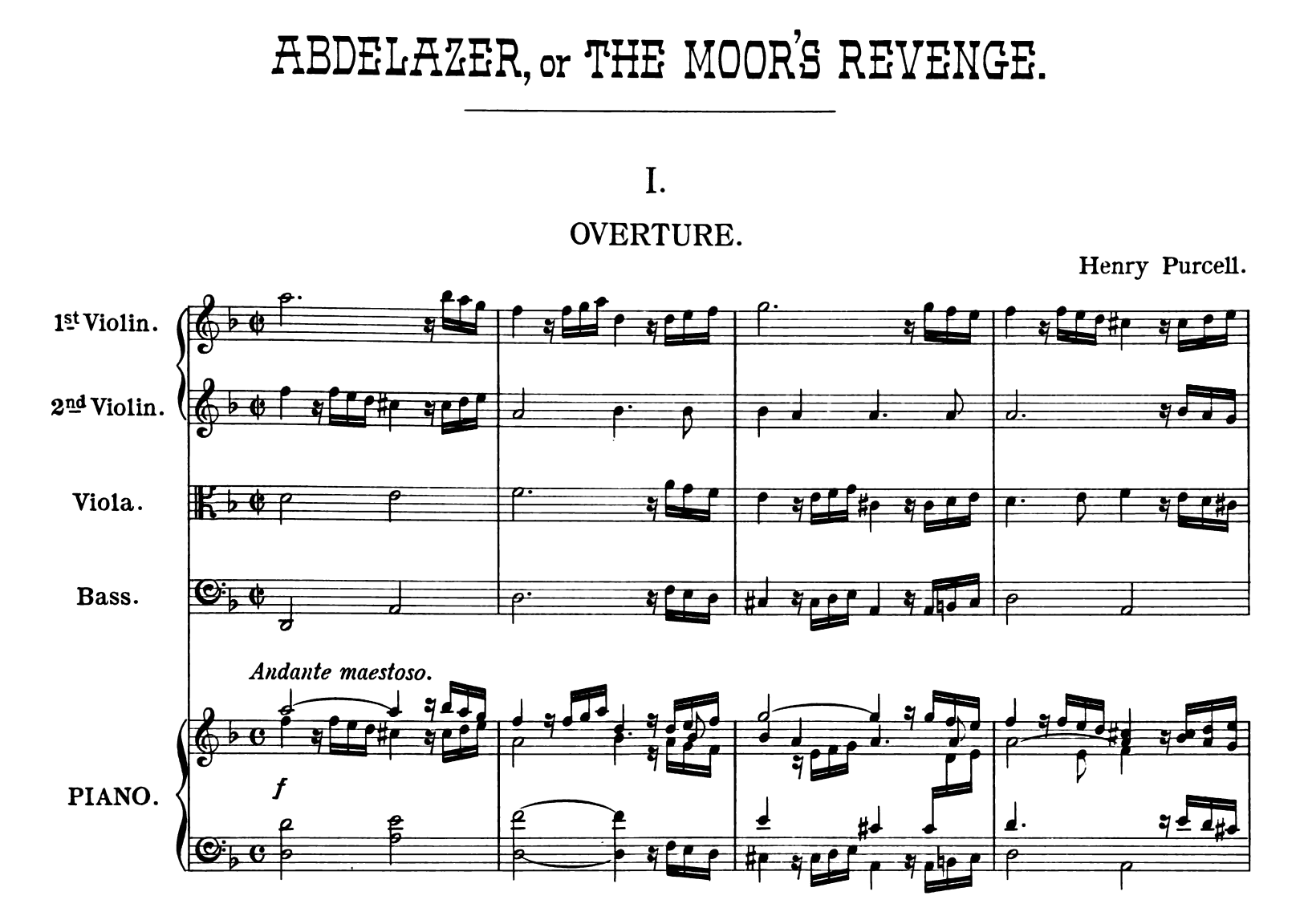
PREVIEW

Free Violin Sheet Music

Smetana, the father of Czech music, poured his soul into his compositions, capturing the spirit of his homeland in every note. Among his early gems lies the Piano Trio in G minor, Op. 15, a work that transcends its chamber music origins and speaks directly to the heart. While traditionally performed by a piano, violin, and cello, the essence of …

“Peter and the Wolf,” Op. 67, is one of Sergei Prokofiev’s most beloved and accessible compositions. It’s a symphonic fairy tale for children, narrated with music, where each character is represented by a different instrument or group of instruments. Peter – String Instruments: The character of Peter is represented by the strings, particularly the violin. “Peter and the Wolf” is …

Tchaikovsky’s Violin Concerto in D major, Op. 35, is one of the most famous and beloved works in the violin concerto repertoire. Tchaikovsky composed this concerto in 1878, and it remains a staple of the classical music canon.

Composed in the 19th century, this piece showcases Wieniawski’s brilliance as a violinist and composer. Wieniawski’s Fantaisie Brillante is based on themes from Charles Gounod’s opera “Faust.” It was a common practice in the Romantic era for composers to create virtuosic works based on popular operatic themes. The piece weaves together various themes from “Faust,” allowing the violinist to explore …

“The Blue Danube” is perhaps one of the most recognizable and celebrated waltzes in the world. It has become a symbol of Vienna and its New Year’s Concerts. The piece is known for its flowing and graceful melodies, which evoke the majestic beauty of the Danube River and the romantic charm of Vienna. The opening bars of “The Blue Danube” …

Ludwig van Beethoven’s Symphony No. 9 in D minor, Op. 125, is one of the most celebrated and iconic works in the classical music repertoire. This symphony is often referred to as the “Choral Symphony” because it includes vocal soloists and a choir in its final movement. Beethoven composed it between 1817 and 1824, and it was first performed on …

“The Wheels on the Bus” is a classic children’s song and nursery rhyme known for its catchy melody and repetitive lyrics. It’s a fun and interactive song often sung by children and adults together. This song is often sung with accompanying hand motions or actions that correspond to each verse. It’s a delightful and engaging way to entertain and educate …

The symphony No.103 “The Drumroll” begins with a dramatic and famous timpani (kettledrum) solo, earning it the nickname “Drumroll.” The movement features contrasting themes and lively orchestration. The most distinctive feature of this symphony is its timpani introduction, creating an arresting and unforgettable start. This element not only gives the symphony its nickname but also showcases Haydn’s willingness to experiment …

Henryk Wieniawski’s Violin Concerto No. 2 in D minor, Op. 22, is one of the most celebrated and frequently performed violin concertos in the Romantic repertoire. The concerto is dedicated to the famous Spanish violinist Pablo de Sarasate, who was a close friend of Wieniawski. As with many of Wieniawski’s compositions, the Second Violin Concerto is noted for its virtuosic …

Tchaikovsky’s Symphony No. 6 in B minor, Op. 74, also known as the “Pathétique Symphony” which he composed during a tumultuous period in his life. It’s often described as autobiographical, reflecting the composer’s inner struggles and personal turmoil. The symphony consists of four movements: Performing Tchaikovsky’s Symphony No. 6 on the violin is a formidable task that necessitates advanced technical …

Mozart’s “Ave verum corpus,” K. 618, is a testament to his ability to create profound and moving music, even in relatively short compositions. It remains a cherished work in sacred choral music and is celebrated for its spiritual depth and simplicity.

Symphony No. 83 in G minor, “The Hen”, like many of Haydn’s works, was composed during his time in London in 1785. It is renowned for its inventive use of musical elements, including a unique second movement that imitates the clucking of a hen, hence the nickname. This symphony showcases Haydn’s wit and creativity, making it a notable piece in …

Summer from The Four Seasons on the violin – a true masterpiece of Baroque music! Its vibrant energy and evocative imagery paint a vivid picture of the season’s sun-drenched days and languid nights. Translating this symphony through the nimble voice of the violin is not just a technical feat, but a journey into the heart of summer itself. Sun-Kissed Melodies: …

Tchaikovsky‘s String Quartet No. 1 in D major, Op. 11, is a cornerstone of chamber music repertoire, and for violinists, wielding the melody within its movements is a privilege like no other. Composed in 1871, the quartet bursts with Tchaikovsky’s signature passion, lyricism, and emotional depth, offering a violinist a canvas to paint a tapestry of sound. Tchaikovsky’s gift for …

Sarasate’s Caprice Basque, Op. 24 – a fiery tempest of Spanish rhythms and virtuosic demands that sets the violin alight! This iconic piece, while often heard in its orchestral garb, takes on a new life when entrusted to the solo violin. Stripped of its orchestral support, the violin becomes the sole voice of Sarasate’s vibrant melody. Each note dances under …