
Bach – Gloria in Excelsis Deo

Home » Organ Sheet Music » Bach – Gloria in Excelsis Deo

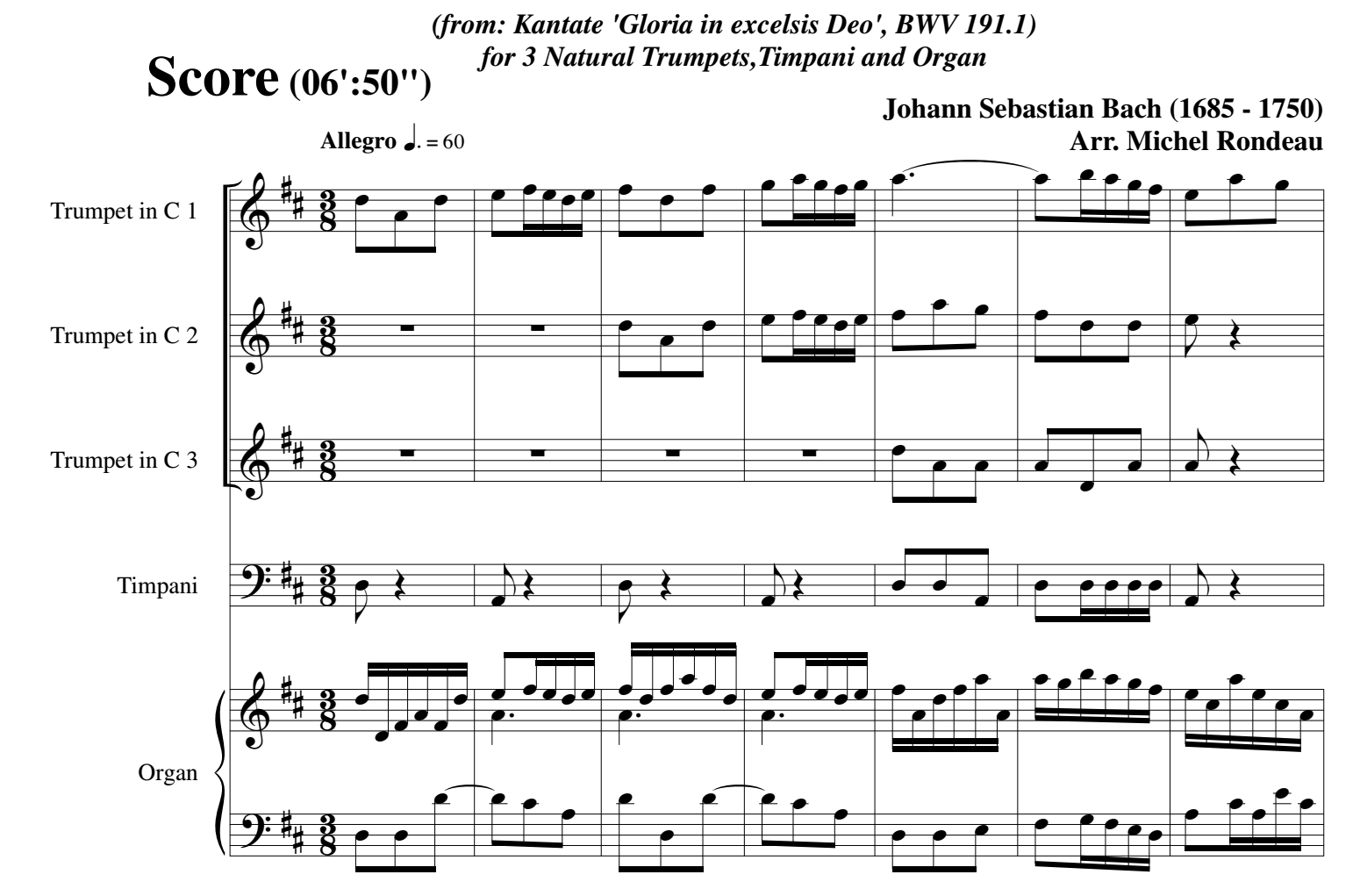
This piece is a setting of the Gloria text, a part of the Ordinary of the Roman Catholic Mass. It is a relatively concise work compared to some of Bach’s other choral compositions. The text “Gloria in excelsis Deo” is Latin for “Glory to God in the highest,” and it is a hymn of praise to the Holy Trinity. Arranged for organ.
PREVIEW

Christmas Sheet Music

“German Dance, K.605 No.3” or “Sleigh Ride” or in German “Die Schlittenfahrt” from the set of Three German Dances, K.605 is a lively and festive composition that captures the joyful spirit of a sleigh ride. Arranged for violin.

The exact origins of “God Rest Ye Merry, Gentlemen” are not well-documented, but it is believed to date back to the 16th century or earlier. It is one of the many traditional carols that have been passed down through generations. The phrase “God rest ye merry” is often misunderstood in modern English. In this context, “rest” means “keep” or “make,” …

Handel’s Hallelujah Chorus, a masterpiece from his oratorio “Messiah,” is a celebrated piece that has resonated through the ages. While originally composed for a full orchestra and choir, the transcendent beauty of the piece can be captured on a single instrument, such as the violin. Playing Handel’s Hallelujah on the violin requires a certain level of skill and technique, making …

“The Nutcracker” was composed by Tchaikovsky in 1891-1892. It is renowned for its enchanting melodies, vivid orchestration, and captivating storytelling. The ballet is divided into two acts and features a wide array of memorable characters and dances. “The Nutcracker” is known for its iconic pieces, including the “Dance of the Sugar Plum Fairy,” the “Waltz of the Flowers,” the “Russian …

The Arabian Dance, also known as the Coffee Dance, is part of the second act of “The Nutcracker.” Tchaikovsky masterfully incorporates Middle Eastern influences, using rich and evocative melodies to transport listeners to a world of mystery and enchantment. The piano arrangement retains the exotic charm, allowing pianists to express the nuances of the original orchestral score. Pyotr Ilyich Tchaikovsky’s …

“Song of the Bagpipers” in Neapolitan is known as “Canzone dei Zampognari.” This traditional Neapolitan Christmas song is often associated with the image of bagpipers playing festive music during the holiday season in Southern Italy. Due to the technical demands and nuanced expression required, “Song of the Bagpipers” is best suited for intermediate to advanced pianists. A solid understanding of …

“Cathedral Windows” Op. 106, composed in 1914, showcases Karg-Elert’s innovative approach to harmonies, textures, and registrations. “Cathedral Windows” is a set of six pieces, each named after a specific stained glass window in a cathedral. Karg-Elert employs rich harmonies, intricate counterpoint, and expressive melodic lines to evoke the majestic and contemplative atmosphere of these imagined windows. The movements are titled: …

Franz Liszt, the Hungarian composer and virtuoso pianist of the Romantic era, left an indelible mark on the world of classical music with his innovative compositions. One such gem that often goes overlooked in his extensive repertoire is “In Hungarian Style,” a delightful piece from his collection “The Christmas Tree.” This composition, rich in Hungarian folk influences, is a perfect …

The Russian Trepak, also known as the “Russian Dance,” is a lively and energetic piece from Tchaikovsky’s Nutcracker Suite. It captures the spirit of Russian folk dance, complete with its lively tempo and infectious melodies. The music is characterized by its brisk pace, intricate rhythms, and triumphant flair, making it a favorite among both performers and listeners. While Tchaikovsky originally …

Composed as part of Handel’s renowned oratorio “Messiah,” this chorus erupts with triumphant joy, announcing the birth of Jesus Christ. The soaring soprano lines and rich choral harmonies paint a vivid picture of heavenly hosts proclaiming the good news. Handel’s “For unto us a child is born” is a timeless masterpiece, a cornerstone of the Christmas season and a powerful …

“Away in a Manger” flute sheet music. Despite its uncertain origins, “Away in a Manger” remains a cherished part of the Christmas music tradition and is associated with the peaceful and humble nativity scene of Jesus’ birth. It continues to be sung by people of all ages during the Christmas season.

“O Christmas Tree,” also known as “O Tannenbaum,” is a traditional German Christmas carol. The melody for this song has been used for various purposes over the years, including other Christmas songs. The song is typically performed in a reflective and reverent manner, paying homage to the tradition of decorating Christmas trees. Whether you’re a beginner pianist embarking on your …

The Christmas Oratorio (Weihnachtsoratorium), BWV 248, is a magnificent choral work composed by Johann Sebastian Bach. Completed in 1734, it is a set of six cantatas intended for performance during the Christmas season. Each cantata corresponds to a specific feast day within the Christmas period. Here’s an overview of the structure and themes of Bach’s Christmas Oratorio.

The “Christmas Eve Suite” is a collection of orchestral pieces derived from Nikolai Rimsky-Korsakov’s opera “Christmas Eve,” also known as “Noch’ pered Rozhdestvom” in Russian. The suite consists of several delightful and festive movements that capture the spirit of the holiday season.

“The First Nowell,” also spelled as “The First Noel,” is a traditional English Christmas carol. The word “Noel” is an old English word derived from the French “Noël,” which means Christmas. The carol dates back to the 18th century or earlier, and it tells the story of the nativity of Jesus Christ.