
Jingle Bells

Home » Cello Sheet Music » Jingle Bells

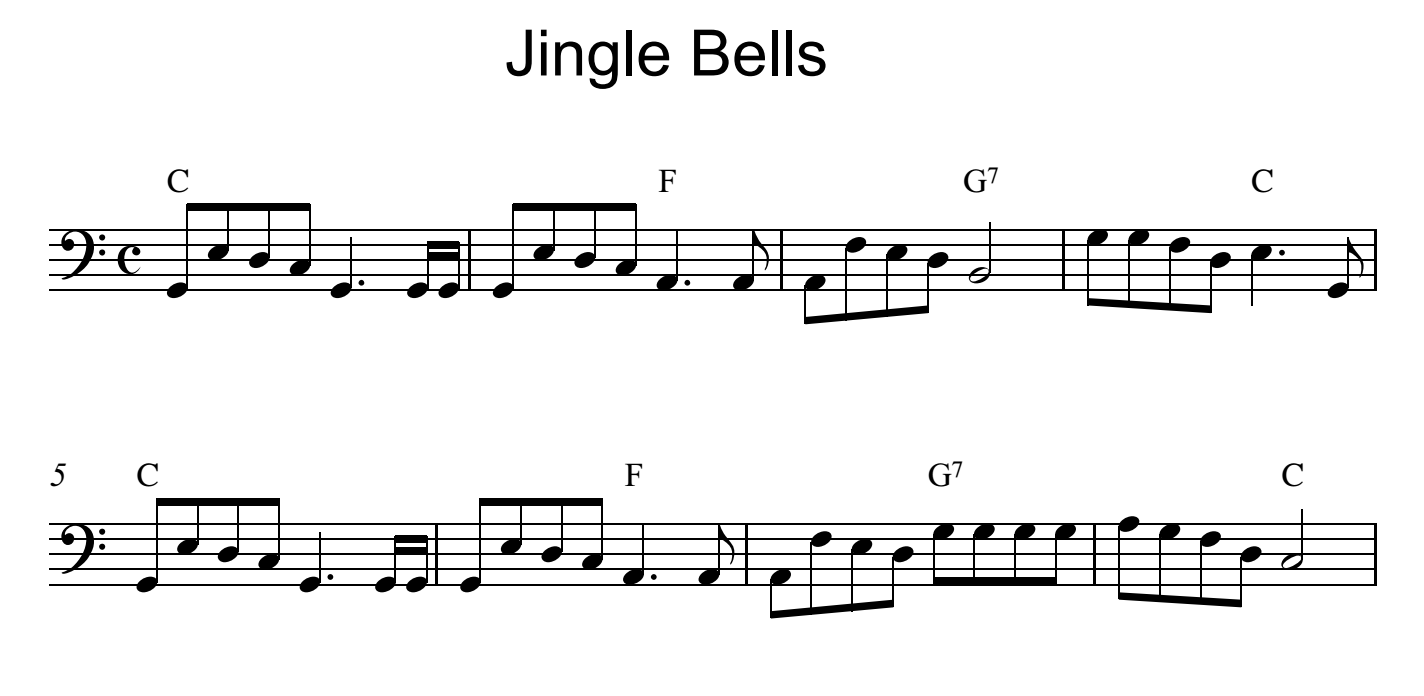
“Jingle Bells” is one of the most famous and widely recognized Christmas songs in the world. Written by James Lord Pierpont in 1857, it was originally intended to be a Thanksgiving song, but its catchy melody and festive lyrics made it a favorite during the Christmas season. Playing “Jingle Bells” on the cello can be fun and a great way to develop your skills, especially in rhythmic accuracy and expression. Use a smooth and controlled bowing technique to capture the song’s joyful feel. Keep the strokes light, especially on the repeated notes.
PREVIEW

Christmas Sheet Music

Daquin’s compositions are known for their expressive and emotive qualities. In the “Livre de Noëls,” he effectively captures the joy and spirit of the Christmas season through his inventive use of musical devices. Daquin’s “Livre de Noëls” is considered an important contribution to the French Baroque keyboard repertoire. It provides valuable insights into the musical tastes and practices of the …

“O Heilige Nacht” is the German translation of the Christmas carol “O Holy Night,” which was composed by Adolphe Adam. This piece is part of Weihnachtsbaum which is a suite of 12 pieces written by Franz Liszt in 1873–1876. The original version of “O Holy Night” is already a challenging piece for pianists due to its wide-ranging melodies and emotive content. Liszt’s arrangement …

The melody used in “Joy to the World” is actually from Handel’s Messiah, but the lyrics were written by Watts to celebrate the second coming of Jesus Christ, rather than his birth. The song has since become associated with Christmas and is commonly sung during the holiday season.

“Jolly Old Saint Nicholas” is a traditional Christmas song that dates back to the 19th century. The lyrics were written by Benjamin Hanby in 1864, and the melody is believed to be a traditional American tune. The song is a festive and lively portrayal of Santa Claus, capturing the anticipation and joy of the holiday season. “Jolly Old Saint Nicholas” …

“Amazing Grace” is a well-known Christian hymn that has become a classic in the realm of religious and folk music. The lyrics were written by John Newton, a British sailor and former slave trader, and the music is a traditional tune, possibly of Scottish origin. The hymn reflects Newton’s personal spiritual transformation and his understanding of divine grace and forgiveness.

The Arabian Dance, also known as the Coffee Dance, is part of the second act of “The Nutcracker.” Tchaikovsky masterfully incorporates Middle Eastern influences, using rich and evocative melodies to transport listeners to a world of mystery and enchantment. The piano arrangement retains the exotic charm, allowing pianists to express the nuances of the original orchestral score. Pyotr Ilyich Tchaikovsky’s …

The Alleluia from Exsultate Jubilate is a vocal motet originally composed for soprano solo and orchestra. However, its transcendent melody and harmonic richness have led to numerous arrangements for various instruments, including the piano. Playing Mozart’s Alleluia on the piano allows pianists to delve into the delicate intricacies of the composition and showcase their interpretative skills. This piece, with its …

“Here Comes Santa Claus” was written by Gene Autry, the famous American singer, actor, and cowboy entertainer, along with Oakley Haldeman. Autry recorded and released the song in 1947. Playing “Here Comes Santa Claus” on the piano can be done using standard chords and the lively melody. It’s a cheerful and upbeat song that’s perfect for spreading holiday joy and …

Liszt’s “Slumber Song” is a lovely and tranquil piano composition that showcases the composer’s ability to create delicate and melodic pieces. Although Liszt is often associated with virtuosic and dramatic works, “Slumber Song” is a departure from his more grandiose style, offering a gentle and soothing musical experience. This composition is part of Liszt’s collection titled “Weihnachtsbaum” (The Christmas Tree), …

“Nun komm, der Heiden Heiland, BWV 659” is a chorale prelude composed by Johann Sebastian Bach. It is part of his larger collection of organ works, particularly those that involve chorale settings. The title translates to “Now come, Savior of the Gentiles” in English. This chorale prelude is based on the hymn “Nun komm, der Heiden Heiland,” which is attributed …

“Knecht Ruprecht” is the fourth movement from Schumann’s piano suite titled “Album für die Jugend” (Album for the Young), Op. 68. Composed in 1848, this piece embodies the festive spirit of the holiday season, featuring playful and whimsical elements. The title refers to a traditional German Christmas character, Knecht Ruprecht, who accompanies St. Nicholas to reward or admonish children based …

The melody of “O Come, All Ye Faithful” is lyrical and flowing, which suits the cello’s natural singing tone. Focus on making each phrase sound vocal, as though you are singing through the instrument. Start gently and build towards the climactic phrase “O come, let us adore Him.” Use controlled crescendos to bring warmth and richness to the tune, especially …

“Cathedral Windows” Op. 106, composed in 1914, showcases Karg-Elert’s innovative approach to harmonies, textures, and registrations. “Cathedral Windows” is a set of six pieces, each named after a specific stained glass window in a cathedral. Karg-Elert employs rich harmonies, intricate counterpoint, and expressive melodic lines to evoke the majestic and contemplative atmosphere of these imagined windows. The movements are titled: …

Franz Liszt’s “An Old Christmas Carol” is a charming and evocative piano composition. It is a part of Liszt’s larger work, “Weihnachtsbaum” (The Christmas Tree), which is a collection of 12 short piano pieces, each inspired by various aspects of the Christmas season. The composition itself is characterized by its melodic richness and harmonic depth. Liszt weaves a familiar Christmas …

“Angels We Have Heard on High” is a traditional Christmas carol, and it can be played on various instruments, including the flute.