
Liszt-sheet-music

Free Liszt Sheet Music

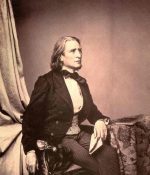
Franz Liszt (1811-1886) was a Hungarian composer, pianist, and conductor, considered one of the most prominent and influential composers and pianists of the Romantic era. Liszt was renowned for his incredible piano virtuosity. He pushed the boundaries of piano technique during his time and played a crucial role in the development of modern piano playing. Some of Liszt's most famous piano compositions include "Hungarian Rhapsodies," the "Piano Sonata in B Minor," "Transcendental Études," and the "Mephisto Waltzes."

Popular Liszt Sheet Music

Ah, “Liebestraum No. 3.” The mere mention of its name conjures visions of moonlit strolls, whispered secrets, and hearts overflowing with passionate longing. This iconic nocturne by Franz Liszt isn’t just a piece of music – it’s an experience, a love dream woven into cascading melodies and swirling harmonies. Liebestraum No. 3 opens with a hauntingly beautiful melody, sung by …

Franz Liszt’s piano composition “Un Sospiro,” is the third piece from his “Trois Études de Concert,” S. 144. Liszt’s 3 Etudes De Concert No. 3, also known as “Un Sospiro” (A Sigh), is the third in a set of three concert etudes. Composed in 1845-1849, this piece is a testament to Liszt’s ability to fuse technical brilliance with lyrical expression. …

“Sposalizio” was inspired by the painting “Sposalizio” by Raphael, which depicts the marriage of the Virgin Mary and Joseph. Liszt was deeply influenced by visual art, and he often drew inspiration from paintings when composing his music. In this piece, he captures the solemn and sacred atmosphere of the painting through his music. The composition is known for its lyrical …

Franz Liszt’s “Mephisto Waltz No. 1” is a famous and dramatic piano composition that captures the essence of the devilish and seductive character Mephistopheles from Johann Wolfgang von Goethe’s “Faust. The piece is structured as a waltz, a dance in triple time, which is traditionally associated with elegance and grace. However, Liszt’s treatment of the waltz form in this composition …

“O Heilige Nacht” is the German translation of the Christmas carol “O Holy Night,” which was composed by Adolphe Adam. This piece is part of Weihnachtsbaum which is a suite of 12 pieces written by Franz Liszt in 1873–1876. The original version of “O Holy Night” is already a challenging piece for pianists due to its wide-ranging melodies and emotive content. Liszt’s arrangement …

“Lighting the Candles on the Tree” captures the heartwarming and joyous moment of lighting the candles on a Christmas tree. It is a beautifully evocative piece that conveys the festive atmosphere and the magical anticipation associated with the holiday season. “Lighting the Candles on the Tree” is part of Franz Liszt’s “Weihnachtsbaum” (The Christmas Tree) collection, composed in 1874. One …

Franz Liszt, the Hungarian composer and virtuoso pianist of the Romantic era, left an indelible mark on the world of classical music with his innovative compositions and unparalleled piano skills. One of his lesser-known yet captivating pieces is “March of The Three Magi” (S. 388), a musical gem that takes the listener on a majestic journey. Playing this piece on …

“Formerly” is one of the delightful pieces from Franz Liszt’s “Weihnachtsbaum” (The Christmas Tree) collection. This collection, composed in 1874, consists of 12 short piano pieces, each inspired by different aspects of the Christmas season. “Formerly” is a charming and nostalgic piece that reflects on the joys and memories of Christmases past. Liszt’s musical language beautifully captures the sentiment of …