
What Child Is This

Home » Cello Sheet Music » What Child Is This

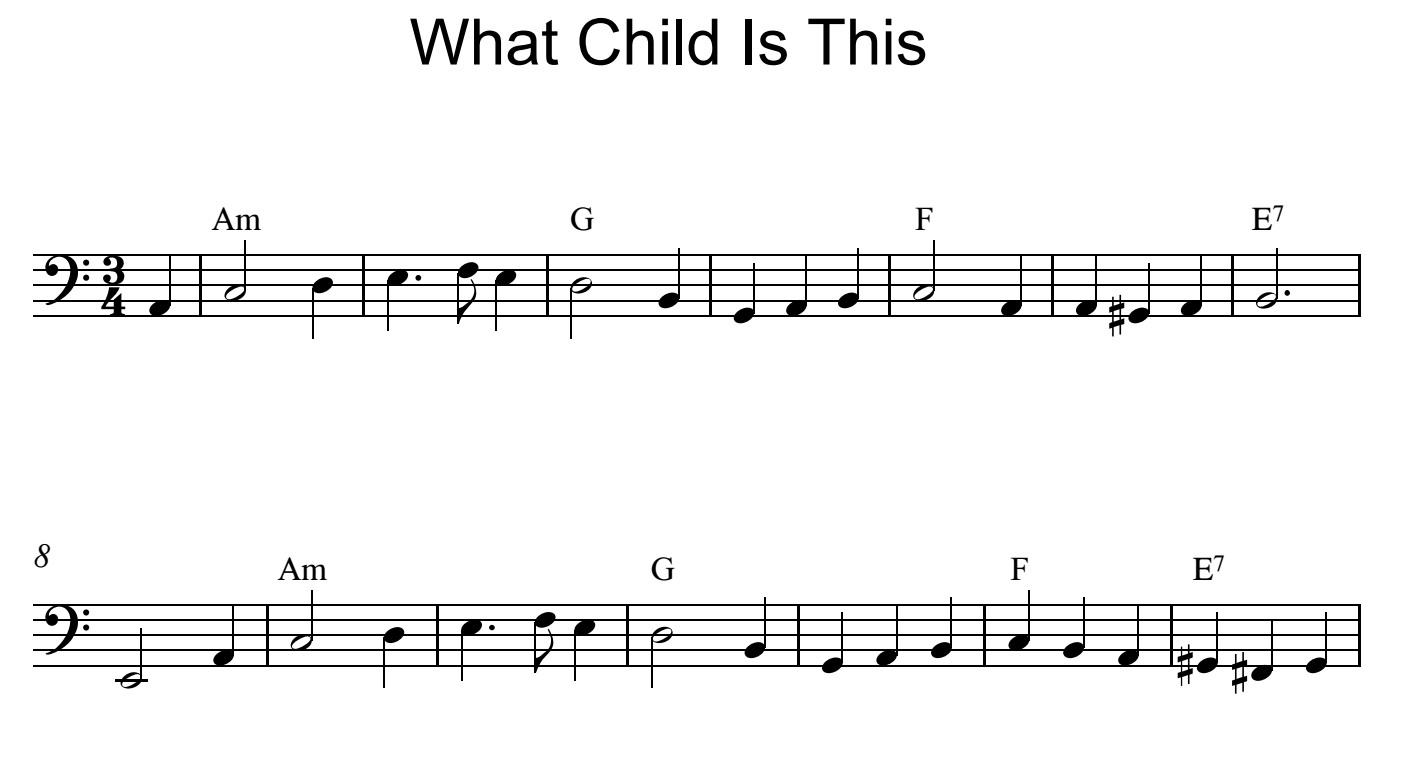
“What Child Is This?” is a traditional Christmas carol set to the tune of “Greensleeves.” Since the piece has a flowing, lyrical quality, aim for smooth, connected bow strokes. Use a full bow for longer notes and maintain even pressure. If you’re comfortable with vibrato, use it to add warmth and expression to longer notes. However, don’t overdo it; subtlety is key.

“What Child Is This?” is a beautiful piece that showcases the cello’s rich tone and expressive potential. With attention to bowing technique, dynamics, and emotional phrasing, you can create a heartfelt interpretation. Consider listening to various performances to gather interpretative ideas and discover how different artists approach the piece.
PREVIEW

Christmas Sheet Music

Camille Saint-Saëns’ “Oratorio de Noël,” also known as his Christmas Oratorio, Op. 12, is a splendid and spiritually evocative composition. Written in 1858, this oratorio reflects Saint-Saëns’ mastery in blending sacred and festive elements. The piano rendition of Saint-Saëns’ Christmas Oratorio Op. 12 demands a pianist with an intermediate to advanced skill level. The piece presents challenges in terms of …

“Amazing Grace” is a well-known Christian hymn with a history that dates back to the 18th century. The lyrics were written by the English poet and clergyman John Newton, and the music is often attributed to an anonymous composer. The hymn has become a staple in Christian worship and is widely recognized and appreciated for its profound and uplifting message.

“Jingle Bells” was written by James Lord Pierpont and published under the title “One Horse Open Sleigh” in 1857. The song’s catchy melody and upbeat lyrics have made it a holiday classic that is often associated with the joy and festivities of the Christmas season. It is a relatively simple song to play on the piano, making it a popular …

Carl Thiel (1902–1982) was a German composer and arranger known for his contributions to piano music. Thiel’s arrangements often featured a delicate balance of technical proficiency and emotional expressiveness, making them accessible to a wide range of pianists. Carl Thiel’s arrangement of “In Dulci Jubilo” for piano is a delightful and uplifting piece that brings the joy of the holiday …

Pyotr Ilyich Tchaikovsky’s timeless ballet, “The Nutcracker,” is a masterpiece that has captivated audiences for generations. Among its enchanting compositions is the charming “Dance of the Mirlitons,” a delightful piece that translates beautifully onto the piano. The Dance of the Mirlitons, also known as the Reed Flutes, is a whimsical and lively dance that occurs in Act II of The …

“We Three Kings of Orient Are” tells the story of the Magi’s journey to Bethlehem to witness the birth of Jesus. The melody, with its regal and mysterious undertones, perfectly captures the essence of the biblical narrative. Pianists are drawn to the piece not only for its festive appeal but also for the opportunity it provides to showcase their interpretive …

“Quem Pastores Laudavere” is a traditional German Christmas carol that has been cherished for centuries. The title translates to “Whom the Shepherds Praised” in English. The origins of “Quem Pastores Laudavere” can be traced back to medieval Germany, likely around the 14th century. This carol has endured the test of time and has become a beloved part of the Christmas …

Bach – Christmas Oratorio (Weihnachtsoratorium) completed in 1734, it is a set of six cantatas intended for performance during the Christmas season. Each cantata corresponds to a specific feast day within the Christmas period.

The English lyrics for “Carol of the Bells” were written by Peter J. Wilhousky in 1936. Wilhousky’s version of the song tells the story of the bells announcing the arrival of Christmas. The melody for “Carol of the Bells” is derived from a Ukrainian folk chant called “Shchedryk” (sometimes spelled “Shchedrik”), which was composed by Mykola Leontovych in 1916. The …

“We Wish You a Merry Christmas” is a traditional English Christmas carol that dates back to the 16th century. Its cheerful melody and festive lyrics make it a popular choice during the holiday season. The song is in a lively 3/4 time signature, giving it a waltz-like feel, and is commonly arranged in the key of G major for beginners. …

“Here Comes Santa Claus” was written by Gene Autry, the famous American singer, actor, and cowboy entertainer, along with Oakley Haldeman. Autry recorded and released the song in 1947. Playing “Here Comes Santa Claus” on the piano can be done using standard chords and the lively melody. It’s a cheerful and upbeat song that’s perfect for spreading holiday joy and …

Dandrieu’s “A la Venue de Noël” is a lively and celebratory piece that perfectly embodies the warmth and excitement of Christmas. The composition is characterized by its spirited melodies, playful rhythmic elements, and joyful harmonies, making it an ideal choice for pianists looking to infuse their repertoire with a festive atmosphere. To bring out the essence of “A la Venue …

“In the Bleak Midwinter” is a Christmas carol that reflects on the nativity of Jesus Christ and the humility of the setting in which he was born. It describes the bleak and cold midwinter, with imagery of snow and frost, and contrasts it with the warmth and wonder of the Christ child’s arrival. The lyrics evoke a sense of awe …

“O Holy Night” (French: “Cantique de Noël”) is a Christmas carol that was written in French by poet Placide Cappeau and set to music by composer Adolphe Adam. Cappeau wrote the lyrics in 1843, and Adam composed the music later the same year. The carol was first performed in Roquemaure, France, during a midnight Mass on Christmas Eve in 1847.. …

“Cathedral Windows” Op. 106, composed in 1914, showcases Karg-Elert’s innovative approach to harmonies, textures, and registrations. “Cathedral Windows” is a set of six pieces, each named after a specific stained glass window in a cathedral. Karg-Elert employs rich harmonies, intricate counterpoint, and expressive melodic lines to evoke the majestic and contemplative atmosphere of these imagined windows. The movements are titled: …