
Here We Come A-Wassailing

Home » Flute Sheet Music » Christmas Flute Sheet Music » Here We Come A-Wassailing

“Here We Come A-Wassailing” is a traditional English Christmas carol that is often sung during the holiday season. It’s a cheerful and festive song that expresses well-wishes and good cheer as people go door to door, singing and celebrating the Christmas spirit.
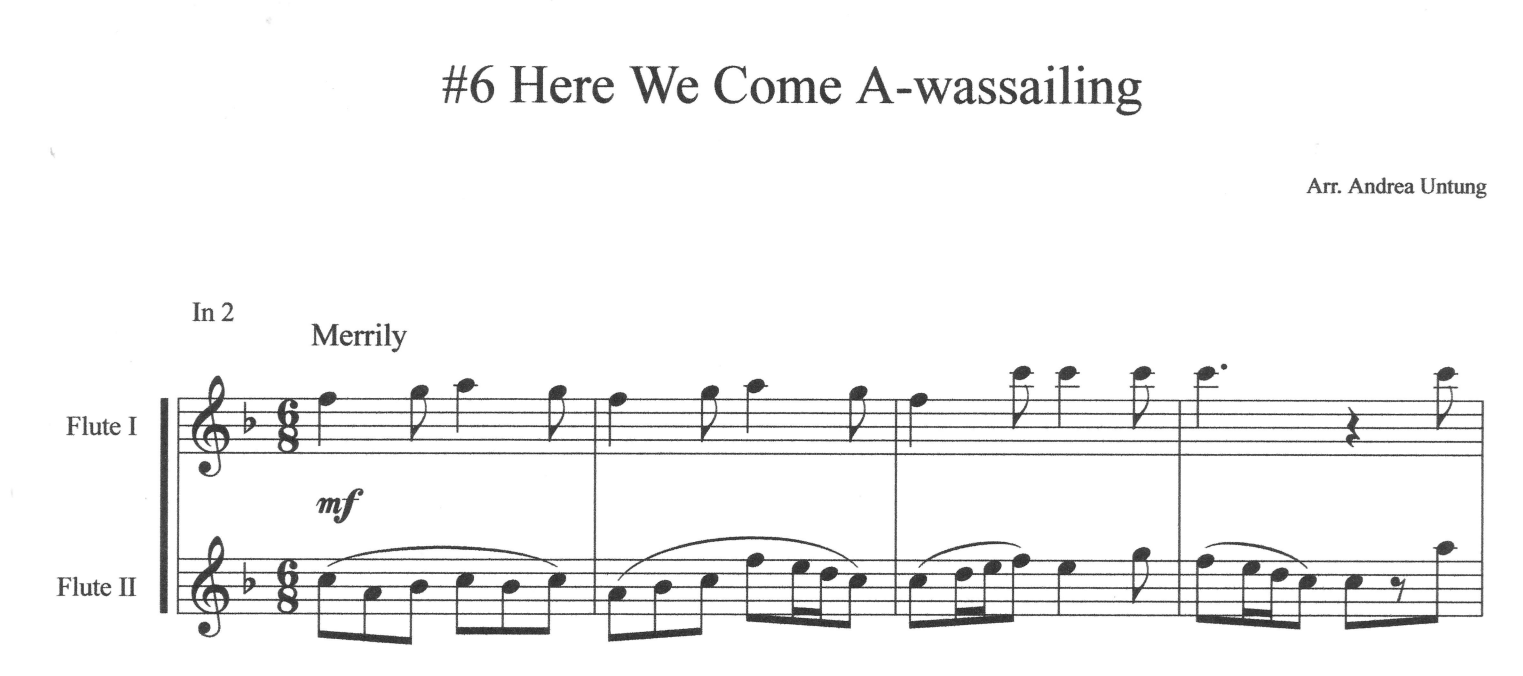
PREVIEW

Christmas Sheet Music

“Hark! The Herald Angels Sing” is a popular Christmas carol with lyrics written by Charles Wesley in 1739. The music for the carol was composed by Felix Mendelssohn in 1840. The carol is traditionally sung to celebrate the birth of Jesus Christ and is a staple in Christmas celebrations and church services. The carol goes on to tell the story …

The exact origins of “God Rest Ye Merry, Gentlemen” are not well-documented, but it is believed to date back to the 16th century or earlier. It is one of the many traditional carols that have been passed down through generations. The phrase “God rest ye merry” is often misunderstood in modern English. In this context, “rest” means “keep” or “make,” …

The full title of Cantata BWV 191 “Gloria in excelsis Deo” is often attributed to Bach. However, there is some debate among scholars about its authorship, and some suggest that it may have been composed by someone else in the Bach family or a student of Bach. This piece is a setting of the Gloria text, a part of the …

“Nun komm, der Heiden Heiland, BWV 659” is a chorale prelude composed by Johann Sebastian Bach. It is part of his larger collection of organ works, particularly those that involve chorale settings. The title translates to “Now come, Savior of the Gentiles” in English. The skill level required to play “Nun Komm der Heiden Heiland” on the piano can be …

Frank Loesser wrote “Baby, It’s Cold Outside” in 1944. The song features a playful and flirtatious duet between a man (referred to as “the Wolf” in the original sheet music) and a woman (referred to as “the Mouse”). In the song, the woman is expressing her reluctance to leave the man’s company due to the cold weather outside, while the …

“Away in a Manger” is a traditional Christmas carol, often associated with nativity celebrations. Its origins are somewhat disputed, with the first two verses historically attributed to Martin Luther, though this claim is debated. The melody, most commonly associated with this carol, comes in two popular versions: one by William J. Kirkpatrick (1887) and another by James R. Murray (1885). …

Christmas piano sheet music by the Welsh composer Brinley Richards. This composition is alternatively known as Carillon de Noel or Weihnachtslauten. Richard’s “Christmas Bell Op.32” is a delightful piano composition that embodies the essence of the holiday season. The piece is characterized by its charming melodies, evocative harmonies, and the subtle incorporation of bell-like tones that add a magical touch. …

Gounod’s “L’Angelus” captures the solemnity and reverence of the Angelus prayer through its expressive melodies and harmonies. The title is French for “The Angelus,” and the music aims to convey the spirit of this prayerful moment. “L’Angelus” is a vocal work that draws inspiration from the traditional Catholic devotion known as the Angelus, commemorating the Annunciation. The piece is typically …

Max Reger’s Opus 17, No. 9 “Weihnachtstraum” refers to one of the pieces in his collection of solo piano works. It is a German phrase that translates to “Christmas dream” in English. It evokes a sense of the holiday season and the magical, dreamlike atmosphere that often accompanies Christmas celebrations. Reger’s “Silent Night” arrangement, also known as “Weihnachtstraum,” offers a …

“Hark! The Herald Angels Sing” is often performed with organ accompaniment, and it sounds particularly majestic when played on an organ due to the instrument’s rich and powerful sound. The organ arrangement of the carol can vary in complexity, with some versions featuring intricate harmonies and ornamentation. The music for the carol was composed by Felix Mendelssohn in 1840. The …

Pyotr Ilyich Tchaikovsky’s timeless ballet, “The Nutcracker,” is a masterpiece that has captivated audiences for generations. Among its enchanting compositions is the charming “Dance of the Mirlitons,” a delightful piece that translates beautifully onto the piano. The Dance of the Mirlitons, also known as the Reed Flutes, is a whimsical and lively dance that occurs in Act II of The …

Also known as “Concerto Grosso in G minor, Op. 6, No. 8,” The Christmas Concerto is a particularly festive and joyful composition, fitting for the holiday season. It features a lively and celebratory character, capturing the spirit of Christmas with its vibrant melodies and spirited dance movements. Corelli’s skillful use of the concerto grosso form, where a small group of …

Good King Wenceslas is a popular Christmas carol that tells the story of the 10th-century Duke of Bohemia, Wenceslas I, who was later canonized as a saint. The carol’s lyrics were written by John Mason Neale in 1853, and the tune is based on a 13th-century spring carol, “Tempus adest floridum” (“The time is near for flowering”). The melody has …

“The Nutcracker” is traditionally performed during the holiday season, making it a cherished part of many people’s Christmas celebrations. The ballet’s festive and magical atmosphere has made it a family favorite for generations.”The Nutcracker” is known for its iconic pieces, including the “Dance of the Sugar Plum Fairy,” the “Waltz of the Flowers,” the “Russian Dance (Trepak),” and the “March,” …

“Christmas Chimes” (Juleklokkerne in Danish) is one of Gade’s compositions, and it’s a festive piece that captures the spirit of the holiday season. It’s often performed during Christmas concerts and celebrations. Niels Gade was a prominent Romantic composer, conductor, and violinist, known for his contributions to Danish music in the 19th century. Christmas Chimes Op.36 No.1 is well-suited for intermediate …