
Deck The Halls

Home » Cello Sheet Music » Deck The Halls

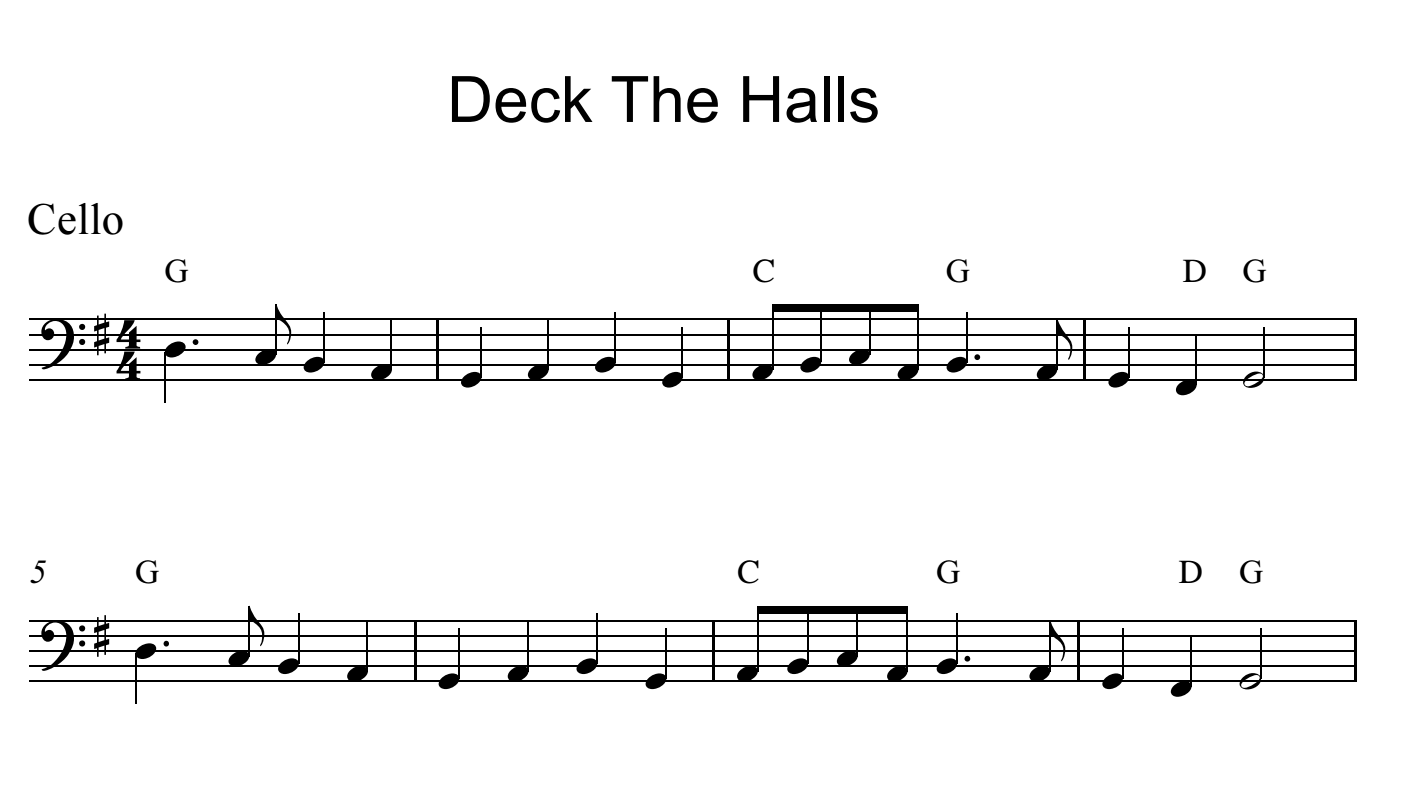
“Deck the Halls” is a well-known traditional Christmas carol with Welsh origins, dating back to the 16th century. Its lively and festive melody is perfect for the holiday season. The carol is in a major key and follows a cheerful, upbeat rhythm, making it popular for group performances.

Use smooth legato bowing for the longer phrases and short, crisp staccato for the “Fa la la” sections to capture the lively spirit of the song. Maintain a steady tempo; “Deck the Halls” is often played briskly, but be careful not to rush, especially on the repeated “Fa la la” phrases.
PREVIEW

Christmas Sheet Music

The “Sonata in C major, K. 513” is often referred to as the “Pastorale” due to its charming and pastoral character. Scarlatti’s keyboard sonatas are known for their virtuosity, inventive use of keyboard techniques, and exploration of various styles and moods. Sonata Pastorale is characterized by its pastoral charm, with a lively tempo and playful melodies that evoke images of …

“Es ist ein Ros entsprungen” is a traditional German Christmas carol. This version is the number 8 of Brahm’s 11 Chorale Preludes from Op. 122.

“Joy to the World” is a popular Christmas carol with lyrics written by Isaac Watts and music based on a melody by Lowell Mason. It was first published in 1719 and has since become a classic holiday song. The lyrics of the song celebrate the arrival of the Savior and the joy this event brings to the world. It is …

“Deck the Halls” is a traditional Christmas carol that is typically sung during the holiday season. It’s a cheerful and festive song that encourages people to decorate their homes and celebrate the Christmas spirit.

“Here Comes Santa Claus” was written by Gene Autry, the famous American singer, actor, and cowboy entertainer, along with Oakley Haldeman. Autry recorded and released the song in 1947. Playing “Here Comes Santa Claus” on the piano can be done using standard chords and the lively melody. It’s a cheerful and upbeat song that’s perfect for spreading holiday joy and …

Camille Saint-Saëns’ “Christmas Oratorio” (Oratorio de Noël), Op. 12, is a beautifully crafted sacred work for choir, soloists, and small orchestra. Composed in 1858, it is often performed during the Advent or Christmas season and is notable for its lyrical and serene character. The piece features 10 movements, and it is imbued with a sense of warmth and intimacy rather …

Also known as “See Amid the Winter’s Snow” is often sung in church services, caroling events, and Christmas concerts. Its gentle melody and lyrics capture the reverence and wonder of the Christmas story, making it a cherished carol during the holiday season.

“Cathedral Windows” Op. 106, composed in 1914, showcases Karg-Elert’s innovative approach to harmonies, textures, and registrations. “Cathedral Windows” is a set of six pieces, each named after a specific stained glass window in a cathedral. Karg-Elert employs rich harmonies, intricate counterpoint, and expressive melodic lines to evoke the majestic and contemplative atmosphere of these imagined windows. The movements are titled: …

Frank Loesser wrote “Baby, It’s Cold Outside” in 1944. The song features a playful and flirtatious duet between a man (referred to as “the Wolf” in the original sheet music) and a woman (referred to as “the Mouse”). In the song, the woman is expressing her reluctance to leave the man’s company due to the cold weather outside, while the …

Gounod’s “L’Angelus” captures the solemnity and reverence of the Angelus prayer through its expressive melodies and harmonies. The title is French for “The Angelus,” and the music aims to convey the spirit of this prayerful moment. “L’Angelus” is a vocal work that draws inspiration from the traditional Catholic devotion known as the Angelus, commemorating the Annunciation. The piece is typically …

The Sussex Mummers’ Christmas Carol is a traditional English Christmas carol, often performed during the holiday season. This carol is characterized by its lively melody and festive spirit, making it a popular choice for both choral and instrumental arrangements. The carol has roots in the Sussex region of England and is associated with the local Christmas traditions and mummers’ plays, …

“Ding Dong! Merrily on High” is a popular Christmas carol with French origins. The lyrics were written by English composer George Ratcliffe Woodward, and the melody is based on a 16th-century French dance tune. The title of the carol is derived from the sound of bells, which is often associated with the Christmas season.

Pyotr Ilyich Tchaikovsky’s “Waltz of the Snowflakes” is a mesmerizing piece of classical music that captures the enchantment and beauty of winter. Originally composed for the ballet “The Nutcracker,” this waltz has become a timeless favorite, evoking images of swirling snowflakes dancing in a winter wonderland. The “Waltz of the Snowflakes” is part of the second act of “The Nutcracker” …

“Wachet auf, ruft uns die Stimme” BWV 645 is part of Bach’s Orgelbüchlein (Little Organ Book), which is a collection of chorale preludes for the organ. This particular chorale prelude is based on the hymn of the same name by Philipp Nicolai. The hymn itself is associated with the Advent season and is often used in church services. The piece …

“Amazing Grace” is a well-known Christian hymn that has become a classic in the realm of religious and folk music. The lyrics were written by John Newton, a British sailor and former slave trader, and the music is a traditional tune, possibly of Scottish origin. The hymn reflects Newton’s personal spiritual transformation and his understanding of divine grace and forgiveness.