
Ding Dong Merrily on High

Home » Organ Sheet Music » Ding Dong Merrily on High

“Ding Dong! Merrily on High” is a popular Christmas carol with French origins. The lyrics were written by English composer George Ratcliffe Woodward, and the melody is based on a 16th-century French dance tune. The title of the carol is derived from the sound of bells, which is often associated with the Christmas season.

The organ, with its majestic pipes and rich tonal palette, provides a unique platform for interpreting this classic carol. The powerful chords and resonant bass notes enhance the celebratory nature of “Ding Dong Merrily on High,” making it a popular choice for organists during Christmas services and concerts.

In terms of technical challenges, the piece demands proficiency in manual dexterity, pedal technique, and a keen understanding of organ registration. The ability to balance the different voices, control dynamics, and navigate the intricate passages contributes to a polished and engaging performance.
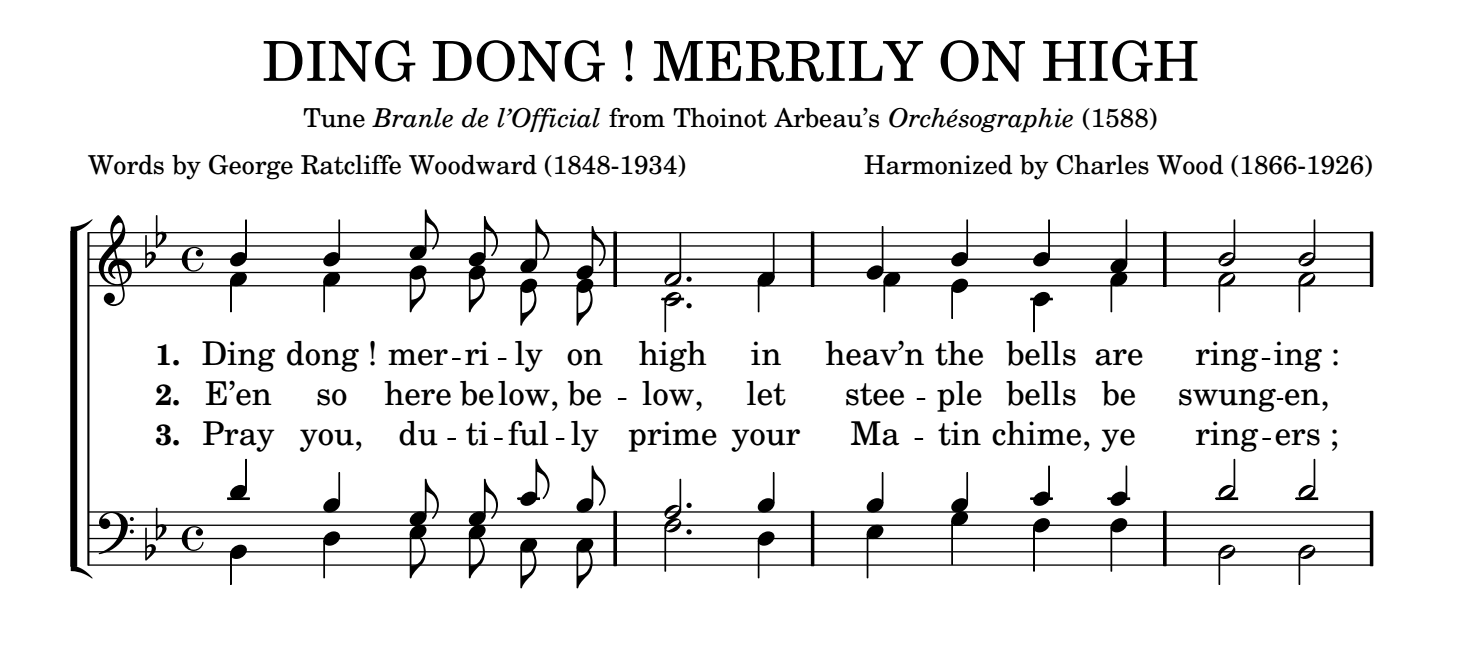
PREVIEW

Christmas Sheet Music

Carl Thiel (1902–1982) was a German composer and arranger known for his contributions to piano music. Thiel’s arrangements often featured a delicate balance of technical proficiency and emotional expressiveness, making them accessible to a wide range of pianists. Carl Thiel’s arrangement of “In Dulci Jubilo” for piano is a delightful and uplifting piece that brings the joy of the holiday …

“Es ist ein Ros entsprungen” is a traditional German Christmas carol. This version is the number 8 of Brahm’s 11 Chorale Preludes from Op. 122.

Tchaikovsky’s “Dance of the Sugar Plum Fairy” from the timeless ballet “The Nutcracker” is a masterpiece that has captivated audiences for generations. Bringing this enchanting piece to life on the piano requires skill and finesse, making it a delightful challenge for pianists of different levels. The delicate and magical melody of the “Dance of the Sugar Plum Fairy” is characterized …

Schubert’s “Ave Maria” is a poignant and reverent piece that has been embraced for its emotional depth and melodic richness. It has been widely used in religious ceremonies, including weddings and other solemn occasions. The lyrics are based on a German translation of Sir Walter Scott’s poem “The Lady of the Lake.”

“What Child Is This?” is a Christmas carol with lyrics written by William Chatterton Dix in 1865. The lyrics are set to the tune of the traditional English folk song “Greensleeves.” The carol focuses on the birth of Jesus Christ and reflects on the significance of His arrival. To play “What Child Is This” on the piano, a pianist should …

“Les Pifferari” or “The Pipers” is a piece for piano solo composed by Fernand Halphen. The title refers to the traditional Italian bagpipers who play during the Christmas season. The piece captures the festive and lively spirit associated with these musicians. Fernand Halphen, like Gounod, was a French composer, and his works encompass various genres, including orchestral, chamber, and vocal …

Daquin’s compositions are known for their expressive and emotive qualities. In the “Livre de Noëls,” he effectively captures the joy and spirit of the Christmas season through his inventive use of musical devices. Daquin’s “Livre de Noëls” is considered an important contribution to the French Baroque keyboard repertoire. It provides valuable insights into the musical tastes and practices of the …

The Alleluia from Exsultate Jubilate is a vocal motet originally composed for soprano solo and orchestra. However, its transcendent melody and harmonic richness have led to numerous arrangements for various instruments, including the piano. Playing Mozart’s Alleluia on the piano allows pianists to delve into the delicate intricacies of the composition and showcase their interpretative skills. This piece, with its …

“Frosty the Snowman” was written by Walter “Jack” Rollins and Steve Nelson. They composed the song in 1950. The song tells the story of Frosty, a snowman who comes to life when a magical hat is placed on his head. Frosty then leads the children in the song on various adventures before eventually melting away, promising to return again someday. …

“It Came Upon a Midnight Clear” is a Christmas carol that was written by American pastor and poet Edmund Hamilton Sears in 1849. The carol is set to music composed by Richard Storrs Willis, and it was first published in the “Christian Register” in Boston in December 1850. The lyrics of the carol reflect themes of peace and the message …

The “Coventry Carol” is one of the oldest known carols, dating back to the 16th century. It is traditionally sung as part of a mystery play called the “Pageant of the Shearmen and Tailors.” The play was performed in Coventry, England, and depicted the biblical story of the Massacre of the Innocents, which is found in the Gospel of Matthew. …

Adventlied, Op. 71 is a setting of a poem by Friedrich Rückert that speaks of the anticipation of the coming of Christ. The text is full of longing and hope, and Schumann’s music captures this mood perfectly. The work is written in a grand and festive style, with soaring melodies and rich harmonies. It is a popular choice for choral …

“The First Noel” is a traditional Christmas carol that dates back to the 18th century, possibly earlier. The exact origin of the song is unclear, but it is believed to have originated in England. The carol tells the story of the nativity of Jesus Christ and the shepherds who were the first to hear the news of His birth from …

“What Sweeter Music” is a Christmas carol composed by British composer John Rutter. Rutter is known for his contributions to modern choral music, and “What Sweeter Music” is one of his well-known compositions. The carol reflects the joy and celebration of the Christmas season, emphasizing the birth of Jesus Christ as a cause for great rejoicing. John Rutter’s musical setting …

“The Sussex Mummers’ Christmas Carol” lyrics often vary, as is common with many traditional folk carols, but the general narrative involves Mary asking Joseph to pick cherries from a tree to satisfy her cravings. Joseph reacts with surprise, expressing doubt about the child’s parentage. In the carol, the angel Gabriel appears to Joseph, explaining the divine nature of Mary’s pregnancy. …