
Amazing Grace

Home » Organ Sheet Music » Amazing Grace

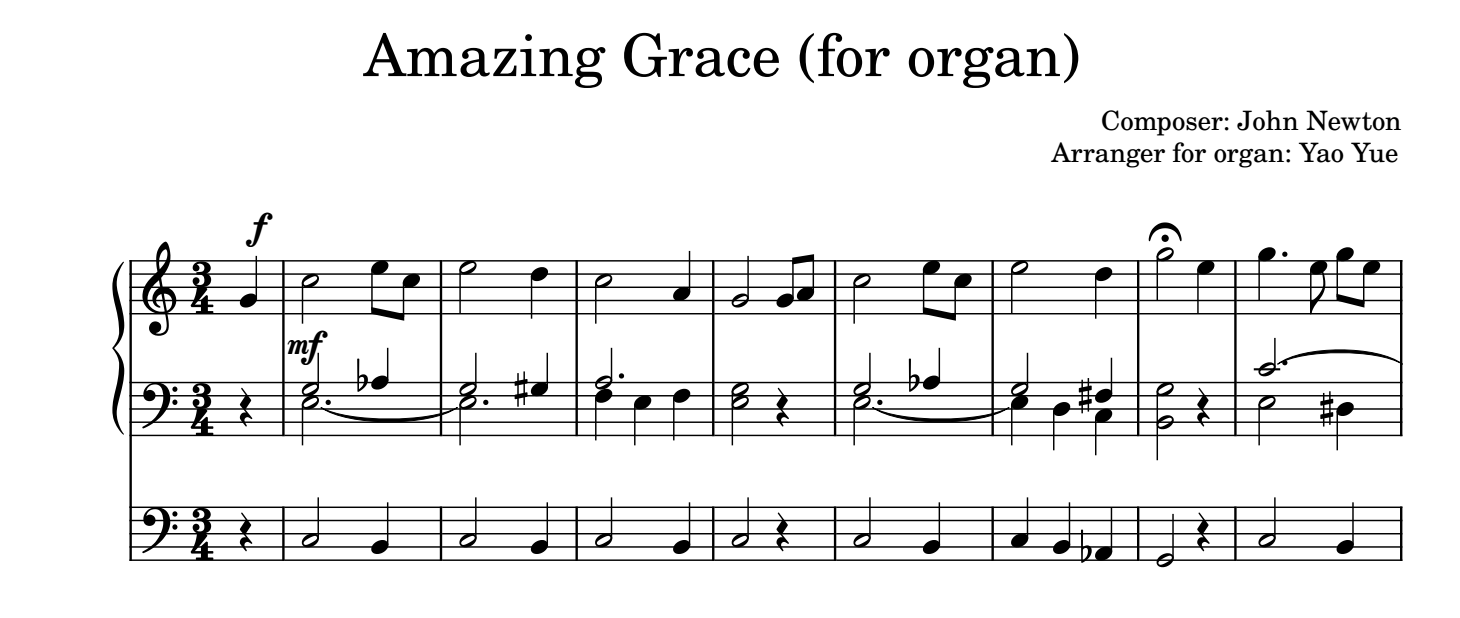
“Amazing Grace” is a well-known Christian hymn with a history that dates back to the 18th century. The lyrics were written by the English poet and clergyman John Newton, and the music is often attributed to an anonymous composer. The hymn has become a staple in Christian worship and is widely recognized and appreciated for its profound and uplifting message.
PREVIEW

Christmas Sheet Music

“The Night Before Christmas” also known as “A Visit from St. Nicholas,” is a famous poem written by Clement Clarke Moore. It was first published anonymously in 1823 and has since become a beloved and iconic Christmas poem. The poem is known for its depiction of Santa Claus and his reindeer on Christmas Eve, as they deliver presents to children. …

“Joy to the World” is a classic Christmas carol often arranged for a variety of instruments, including the cello. The rich and resonant tones of the cello can bring a deep, soulful quality to this joyous melody. The melody commonly associated with “Joy to the World” was arranged by Lowell Mason in 1836, an American music educator and composer. He …

“The Shepherds at the Manger” is a beautiful and evocative piece of classical music composed by the Hungarian composer Franz Liszt. This composition is part of his larger work known as “The Christmas Tree” (Weihnachtsbaum), which consists of a set of 12 short piano pieces. Each piece in this collection is inspired by various aspects of the Christmas season. “The …

Felix Mendelssohn, a prominent figure in the Romantic era of classical music, has left behind a treasure trove of compositions that continue to captivate audiences today. Among his many works, the “Six Children’s Pieces” for piano stand out as charming and delightful gems that showcase Mendelssohn’s ability to craft music that appeals to both young and mature audiences alike. Mendelssohn’s …

Hector Berlioz’s “L’Enfance du Christ” (The Childhood of Christ) is an oratorio composed between 1853 and 1854. The work is divided into three parts and tells the story of the Holy Family’s journey to Egypt to escape the massacre of infants ordered by King Herod. The oratorio consists of the following parts: The skill level required to play Berlioz’s “L’Enfance …

“O Heilige Nacht” is the German translation of the Christmas carol “O Holy Night,” which was composed by Adolphe Adam. This piece is part of Weihnachtsbaum which is a suite of 12 pieces written by Franz Liszt in 1873–1876. The original version of “O Holy Night” is already a challenging piece for pianists due to its wide-ranging melodies and emotive content. Liszt’s arrangement …

“I Heard the Bells on Christmas Day” is a Christmas carol with lyrics written by the American poet Henry Wadsworth Longfellow. The poem was initially composed on December 25, 1863, during the American Civil War. Longfellow had experienced personal tragedy, with his son Charles severely wounded in the war, and he was deeply affected by the state of the nation. …

“Three Christmas Songs” from “My First Songs” by Carl Reinecke. 1- Christmas Hymn, 2- Christmas Tree, 3- Cradle Song of the Infant Jesus Reinecke’s Three Christmas Songs are well-suited for intermediate to advanced pianists. While the technical demands are not overly challenging, a pianist with a solid foundation in technique and expressive playing will be better equipped to convey the …

Camille Saint-Saëns’ “Oratorio de Noël,” also known as his Christmas Oratorio, Op. 12, is a splendid and spiritually evocative composition. Written in 1858, this oratorio reflects Saint-Saëns’ mastery in blending sacred and festive elements. The piano rendition of Saint-Saëns’ Christmas Oratorio Op. 12 demands a pianist with an intermediate to advanced skill level. The piece presents challenges in terms of …

“Angels We Have Heard on High” is a traditional Christmas carol, originating from France. The song is best known for its “Gloria in excelsis Deo” refrain, which reflects the biblical story of angels proclaiming the birth of Jesus to shepherds. The melody, known as “Gloria”, is believed to have been written in the 18th century, while the English lyrics were …

“The Christmas Tree” (Elka in Russian), Op. 21 is a suite of piano pieces that depict scenes related to a Christmas tree and its decorations. The suite is often performed as a set of miniatures, each capturing a different aspect of the holiday season. It is considered one of Rebikov’s most well-known and charming works. The “Christmas Tree Waltz” is …

“Away in a Manger” is a traditional Christmas carol, often associated with nativity celebrations. Its origins are somewhat disputed, with the first two verses historically attributed to Martin Luther, though this claim is debated. The melody, most commonly associated with this carol, comes in two popular versions: one by William J. Kirkpatrick (1887) and another by James R. Murray (1885). …

“Les Pifferari” or “The Pipers” is a piece for piano solo composed by Fernand Halphen. The title refers to the traditional Italian bagpipers who play during the Christmas season. The piece captures the festive and lively spirit associated with these musicians. Fernand Halphen, like Gounod, was a French composer, and his works encompass various genres, including orchestral, chamber, and vocal …

“Rudolph the Red-Nosed Reindeer” is a beloved Christmas song written by Johnny Marks in 1949. The song was inspired by a storybook of the same name, written by Robert L. May in 1939. It tells the tale of Rudolph, a reindeer with a red, glowing nose, who becomes a hero when his unique feature helps Santa Claus guide his sleigh …

“Cathedral Windows” Op. 106, composed in 1914, showcases Karg-Elert’s innovative approach to harmonies, textures, and registrations. “Cathedral Windows” is a set of six pieces, each named after a specific stained glass window in a cathedral. Karg-Elert employs rich harmonies, intricate counterpoint, and expressive melodic lines to evoke the majestic and contemplative atmosphere of these imagined windows. The movements are titled: …