
Bach – Gloria in Excelsis Deo

Home » Organ Sheet Music » Bach – Gloria in Excelsis Deo

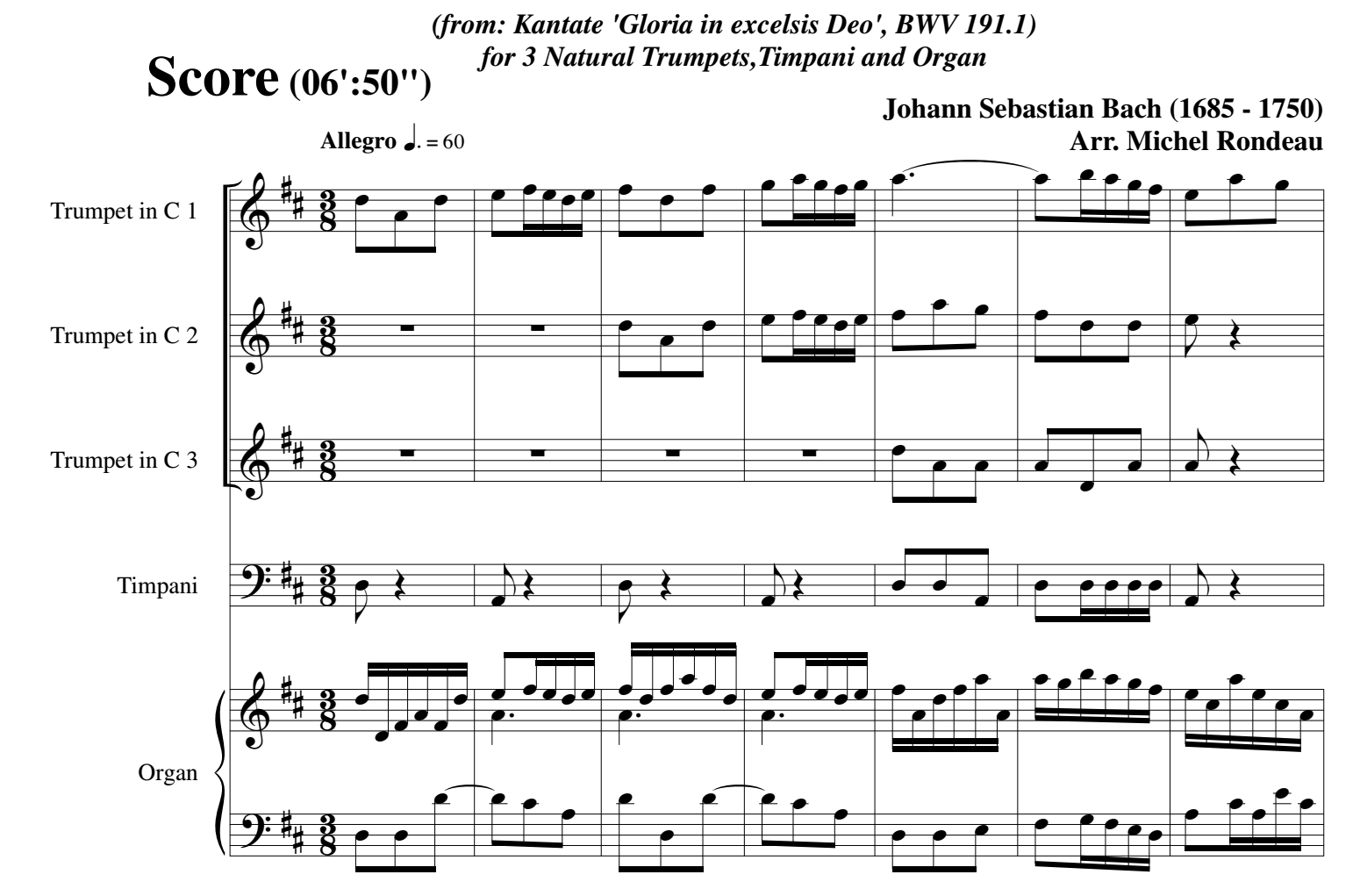
This piece is a setting of the Gloria text, a part of the Ordinary of the Roman Catholic Mass. It is a relatively concise work compared to some of Bach’s other choral compositions. The text “Gloria in excelsis Deo” is Latin for “Glory to God in the highest,” and it is a hymn of praise to the Holy Trinity. Arranged for organ.
PREVIEW

Christmas Sheet Music

“I Know That My Redeemer Liveth” is one of the most popular and recognizable movements from Handel’s Messiah. The aria opens with a powerful ascending melody sung by the soprano, conveying a sense of faith and hope. The music shifts between moments of quiet introspection and triumphant pronouncements, reflecting the text’s emotional journey. For pianists aspiring to master “I Know …

“Jesus Christ the Apple Tree” is a popular English hymn that dates back to the 18th century. The lyrics of this hymn are often attributed to an unknown author. It is sometimes referred to as “The Apple-Tree Song” or simply “The Apple Tree.” The hymn uses the metaphor of an apple tree to represent Jesus Christ, drawing parallels between the …

“What Child Is This?” is a Christmas carol with lyrics written by William Chatterton Dix in 1865. The lyrics are set to the tune of the traditional English folk song “Greensleeves.” The carol focuses on the birth of Jesus Christ and reflects on the significance of His arrival. To play “What Child Is This” on the piano, a pianist should …

“O Nata Lux de Lumine” or “O Light Born of Light” is a hymn often associated with the Christian liturgy, particularly the office of Compline. It is commonly used during the Advent season.

Liszt’s “Slumber Song” is a lovely and tranquil piano composition that showcases the composer’s ability to create delicate and melodic pieces. Although Liszt is often associated with virtuosic and dramatic works, “Slumber Song” is a departure from his more grandiose style, offering a gentle and soothing musical experience. This composition is part of Liszt’s collection titled “Weihnachtsbaum” (The Christmas Tree), …

“Deck the Halls” is a Welsh carol that dates back to the 16th century. The melody is believed to have originated from a traditional Welsh New Year’s Eve carol called “Nos Galan.” The song is known for its cheerful lyrics that celebrate the holiday season and the spirit of Christmas. The refrain “Fa-la-la-la-la, la-la-la-la” is a distinctive and memorable part …

“Fum, Fum, Fum” is a traditional Christmas carol that originated in Catalonia, a region in northeastern Spain. The lyrics of the carol are simple and joyful. The word “fum” means “smoke” in Catalan, and the repeated “fum, fum, fum” in the song is often interpreted as an onomatopoeic representation of a drum or a strumming sound. The carol typically celebrates …

“Song of the Bagpipers” in Neapolitan is known as “Canzone dei Zampognari.” This traditional Neapolitan Christmas song is often associated with the image of bagpipers playing festive music during the holiday season in Southern Italy. Due to the technical demands and nuanced expression required, “Song of the Bagpipers” is best suited for intermediate to advanced pianists. A solid understanding of …

The word “mirliton” refers to a toy kazoo-like instrument made from a paper tube and waxed paper, which produces a buzzing sound. The French translation aptly captures the lighthearted and playful nature of the music and choreography in this part of Tchaikovsky’s ballet classic, The Nutcracker. The music is characterized by its high-pitched, staccato notes, which mimic the sound of mirlitons.

“O Come, All Ye Faithful,” also known as “Adeste Fideles” in Latin, is a classic Christmas carol. The original Latin text is attributed to John Francis Wade, an 18th-century hymnist, and the English translation is often attributed to Frederick Oakeley. The melody is believed to have been written by John Reading in the 18th century. It is typically performed in …

“All My Heart This Night Rejoices” is a traditional German Christmas carol that originated in the 17th century. The lyrics were written by Paul Gerhardt, and the melody is attributed to Johann Georg Ebeling. The hymn beautifully captures the joy and wonder of the Christmas season, expressing gratitude for the birth of Jesus Christ. The hymn’s expressive nature invites pianists …

“Sing, O Sing, This Blessed Morn” is a traditional Christmas carol that has been adapted for the piano. Its jubilant and uplifting tune resonates with the joy and celebration of the holiday season, making it a perfect addition to your repertoire during Christmas gatherings or solo performances. The piece is characterized by its cheerful melody, adorned with lively rhythms and …

“The Christmas Song” is a classic Christmas song written by Mel Tormé and Bob Wells. It was first composed in 1945 and has since become one of the most iconic and beloved Christmas songs of all time. The song is also known by its opening line, “Chestnuts roasting on an open fire.” The original version of “The Christmas Song” is …

Dandrieu’s “A la Venue de Noël” is a lively and celebratory piece that perfectly embodies the warmth and excitement of Christmas. The composition is characterized by its spirited melodies, playful rhythmic elements, and joyful harmonies, making it an ideal choice for pianists looking to infuse their repertoire with a festive atmosphere. To bring out the essence of “A la Venue …

“Noel Nouvelet” is a traditional French Christmas carol that has been cherished for its beautiful melody and joyful lyrics. “Noel Nouvelet,” often simply referred to as “Noel,” dates back to the 15th century and is believed to have originated in the region of France. The carol is a celebration of the birth of Jesus Christ and has become a popular …